

Transforming Approaches to Prevent Child Marriage through Legal Education
11 October 2024
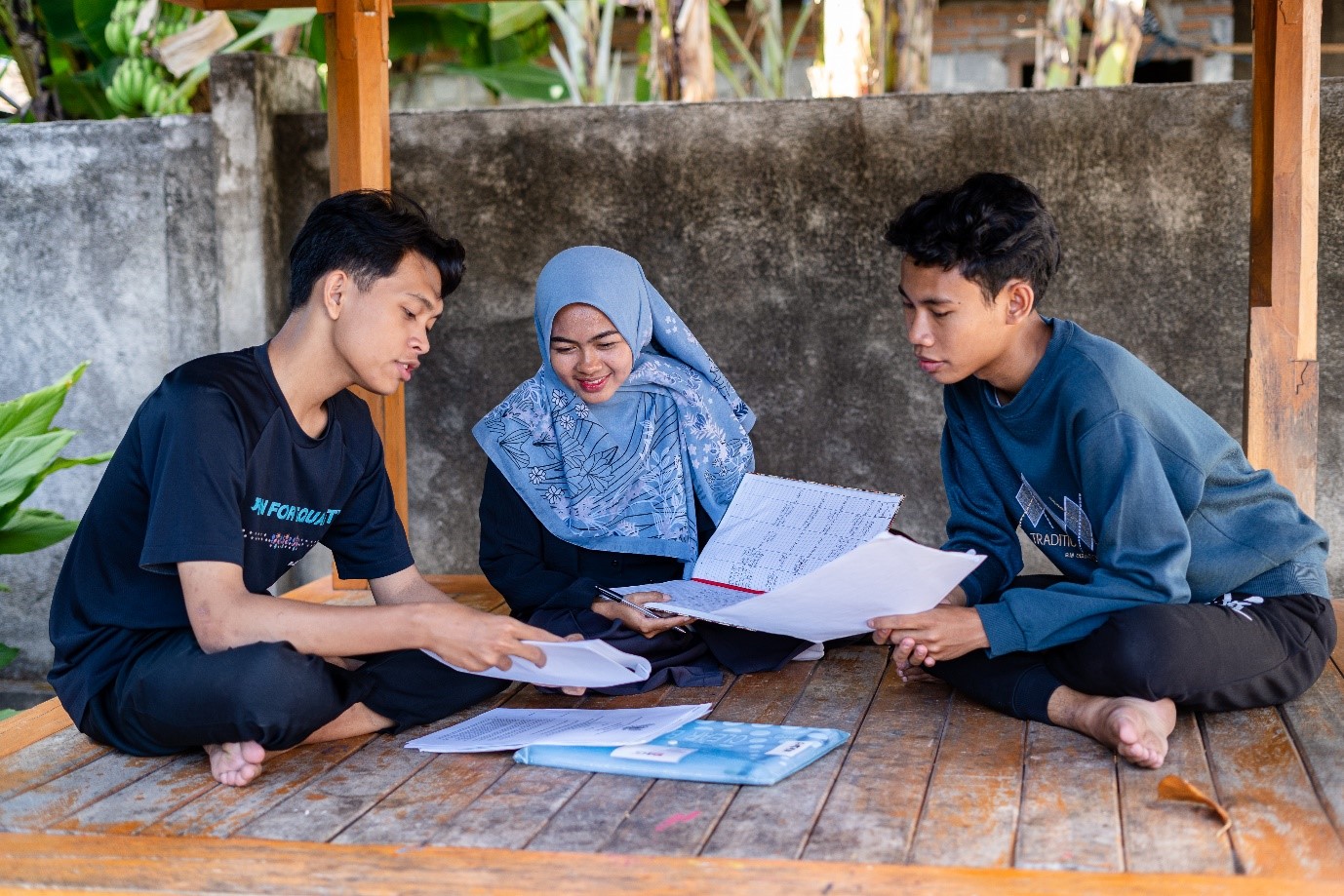
Fira, a law student at University of Mataram, West Nusa Tenggara, began her journey as a youth advocate during high school through her participation in programs organized by Plan Indonesia. At just 17 years old, she became a village master trainer for the GEMA CITA (End Child Marriage) Program.
Inspired by this experience, Fira now actively advocates against child marriage in her village, eventually inspiring her decision to pursue a degree in law. She realized that a solid legal foundation was crucial to supporting her advocacy work. As a master trainer, Fira worked closely with Village Government Officials (OPD), trained peer educators in both villages and schools, and also supported them in delivering sessions on child marriage prevention, with a focus on Sexual and Reproductive Health and Rights (SRHR).
Challenges and Setbacks
Child marriage rates in West Lombok remain alarmingly high. According to data from the Religious Court in Giri Menang, Mataram, 39 child marriage dispensations were recorded in 2022, rising to 56 cases in 2023. However, these numbers only represent reported cases, meaning the actual number of cases is likely much higher.
In this challenging environment, Fira, as a master trainer, along with the OPD team, successfully prevented four cases of child marriage in her village. Prevention efforts often begin with intense communication and negotiation with the families involved. When these approaches fail, the team involves local authorities, including the village head, village secretary, Community-Based Child Protection (PATBM) team, Child-Friendly Schools (SRA) team, and support from the local community police (Bhabinkamtibmas). “The village midwife also steps in, so every sector is involved in prevention efforts,” Fira explained.
One of the cases that deeply impacted Fira was when she had to accompany a young girl who was taken to a Safe House for psychological support. The PATBM team had sought Fira’s help to prevent the girl’s marriage, which led them to negotiate with both the girl’s and the boy’s families. They visited the girl’s family in her village and then the boy’s family in another village. It turned out that the boy was the same age as the girl.
After long negotiations, both families agreed to cancel the wedding. However, this decision impacted the girl’s mental health, requiring her to stay at the Safe House for a week for psychological support. Situations like this are common in child marriage prevention, particularly in Lombok, where the tradition of merariq (elopement) is prevalent, canceling a wedding often causes girls to be viewed as a source of shame if a marriage is called off.
After receiving psychological support, the girl was returned to her family with the assistance of the local Women’s and Children’s Protection Unit (UPPTDA). Despite the team’s best efforts, the girl was eventually married off once she returned home—a heartbreaking moment for Fira and the team, who felt blindsided by the situation. Still, Fira remained determined, working to ensure the girl could return to school and continue her education.
Through her legal studies she is currently pursuing, Fira has deepened her understanding of the Sexual Violence Crimes Law (TPKS) and its potential to protect children from child marriage. Unfortunately, local customs and informal practices often undermine these legal protections, making enforcement challengin.
From University to Policy
Now in her third semester, Fira has become increasingly aware of how legal frameworks can be leveraged to prevent child marriage. Her academic journey has shifted her focus toward policies, including reviewing Local Regulations (Perda), Regent Regulations (Perbup), and other laws related to child marriage prevention. Along with 10 to 11 other young advocates, Fira actively engages in dialogues with local government officials, including the Regent, to propose recommendations and review the existing regulations. These include the Regent’s Regulation, which should be an extension of Lombok Barat District Regulation No. 9 of 2019 on the Legal Age for Marriage.
Fira and her peers hope that by August 2024, their legal reviews and recommendations will lead to tangible changes in the fight against child marriage.
Transforming in Thought and Action
Before joining the GEMA CITA Program, Fira’s focus was primarily on addressing individual cases of child marriage in her village. However, her experience as a master trainer and her legal studies have broadened her perspective. She now sees child marriage prevention as a systematic and multi-layered effort that goes beyond peer education.
Initially, Fira concentrated on direct interventions by providing outreach and education to peer educators. Over time, she recognized the need for a broader approach, one that involves not only peer educators or PATBM teams but also other key community elements such as the police, Bhabinkamtibmas, and village governments.
“My perspective has really expanded. It turns out there are so many ways to prevent child marriage. For example, by utilizing existing policies such as Perda, Perbup, and the TPKS Law, and encouraging community members to implement them,” Fira said.
Fira understands that adopting a wider, systemic approach while leveraging existing legal frameworks is essential to creating sustainable change in preventing child marriage. This transformation in her thinking and perspective has strengthened her commitment to transforming her community’s approach to preventing child marriage.


