

The True Power of Humanity: Lessons from Nus and Yulita’s Humble Abode
01 September 2026
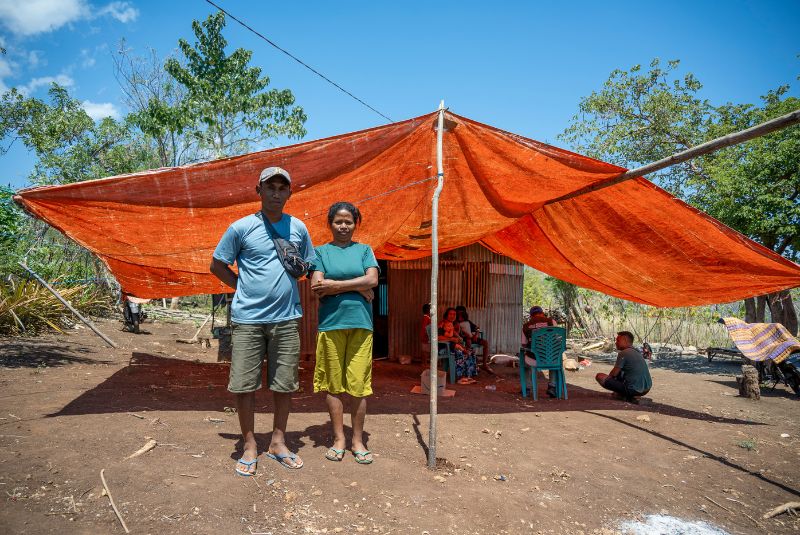
Nestled high on a hillside in Nagekeo, surrounded by their farm, lived a small, humble family. Nus and his wife, Yulita, were simple farmers who cherished their quiet life.
“We chose to live up here so we could stay close to our farm and protect our crops,” Nus shared. For years, their hilltop home was a sanctuary of peace.
Until disaster struck.
When the Earth Shook Flores
“It was a quiet morning. Some of the children hadn’t even woken up yet. I was preparing my tools to forage for livestock feed when, suddenly, a massive shock hit. We couldn’t even stand—we had to crouch low to the ground. As soon as it stopped, an even violent tremor followed. It was terrifying,” Nus recalled.
On August 15, 2026, at 05:55 AM WITA, a powerful 7.0 magnitude earthquake struck Flores Island, followed by a devastating 7.7 magnitude quake shortly after at 06:20 AM.
Panic and terror gripped the community. Tsunami warning sirens blared across the coast, sending a sea of frightened people running for their lives—heading upward, toward the mountains, searching for higher ground.
Amidst the chaos, Nus and his family stood in their yard, positioned safely away from large trees. Then, Nus witnessed a heart-wrenching sight: a crowd of terrified faces fleeing uphill without a clear destination.
Without hesitation, Nus called out to Yulita. Together, they raised their voices to call the fleeing survivors into their yard.
“Mai! Come in, rest here!” they called out. (Mai means ‘come’ in the local language)
“Mona! It doesn’t matter who you are. We are all human. Even if we aren’t blood relatives, I am a human being just like you. Come, let’s take shelter together where it’s safe,”* Nus reassured them. (Mona means ‘no’ or ‘it doesn’t matter’)
Social status and background did not matter. Nus and Yulita saw only fellow human beings in desperate need of safety and warmth.
“If they kept running further up, there was nothing but wild overgrown grass. My heart broke thinking about how they would survive or what they would eat up there,” Yulita expressed softly.
That day, the modest hilltop home transformed into a beacon of hope, welcoming families seeking refuge from continuous, frightening aftershocks.
Sharing Whatever Little They Had
By midnight, Nus realized their water supply was far from enough for the large group. Braving the pitch-black night and rugged terrain, he rode his motorcycle with water jerrycans to fetch clean water from a distant source. He brought it back so everyone could cook and survive another night.
Mama Yulita showed equal grace and fairness. She shared whatever meager bedding and supplies they owned. Under simple tarps that barely blocked the cold night winds, the displaced families lay side-by-side on plastic mats, looking up at the sky, sharing the same cold air, but warmth in their hearts.
Food, however, was a growing crisis. External aid had not yet reached this remote shelter on the hill. Yet, it was in this scarce moment that the true depth of Nus and Yulita’s generosity shone brightest.
They had no deep savings nor a grand granary. All they owned was a small cassava patch behind their house. To feed everyone through the crucial first 72 hours post-disaster, Nus invited his guests to join him in harvesting his cassava crop.
Mama Yulita worked alongside the other displaced mothers to boil the freshly dug cassava, serving warm meals to everyone staying in their yard.
“We eat whatever we have. To hold us over, we dig up the cassava we planted and share it together,” Nus said humbly.
Together, sitting on the dirt yard, hosts and displaced neighbors ate boiled cassava, comforting and lifting one another up. In the face of disaster, lines blurred; they were no longer hosts and strangers, but one big family bound by pure human solidarity.
A Light in the Dark
Om Nus and Mama Yulita are ordinary people. They, too, were victims of the earthquake. Their own home was damaged, and their livelihood was impacted. By all rights, they could have closed their doors to protect their own family’s survival.
Instead, Yulita simply stated: “We are all human beings. Those who ran here, those whose homes collapsed—we are all the same. We must help each other, with whatever little we have.”
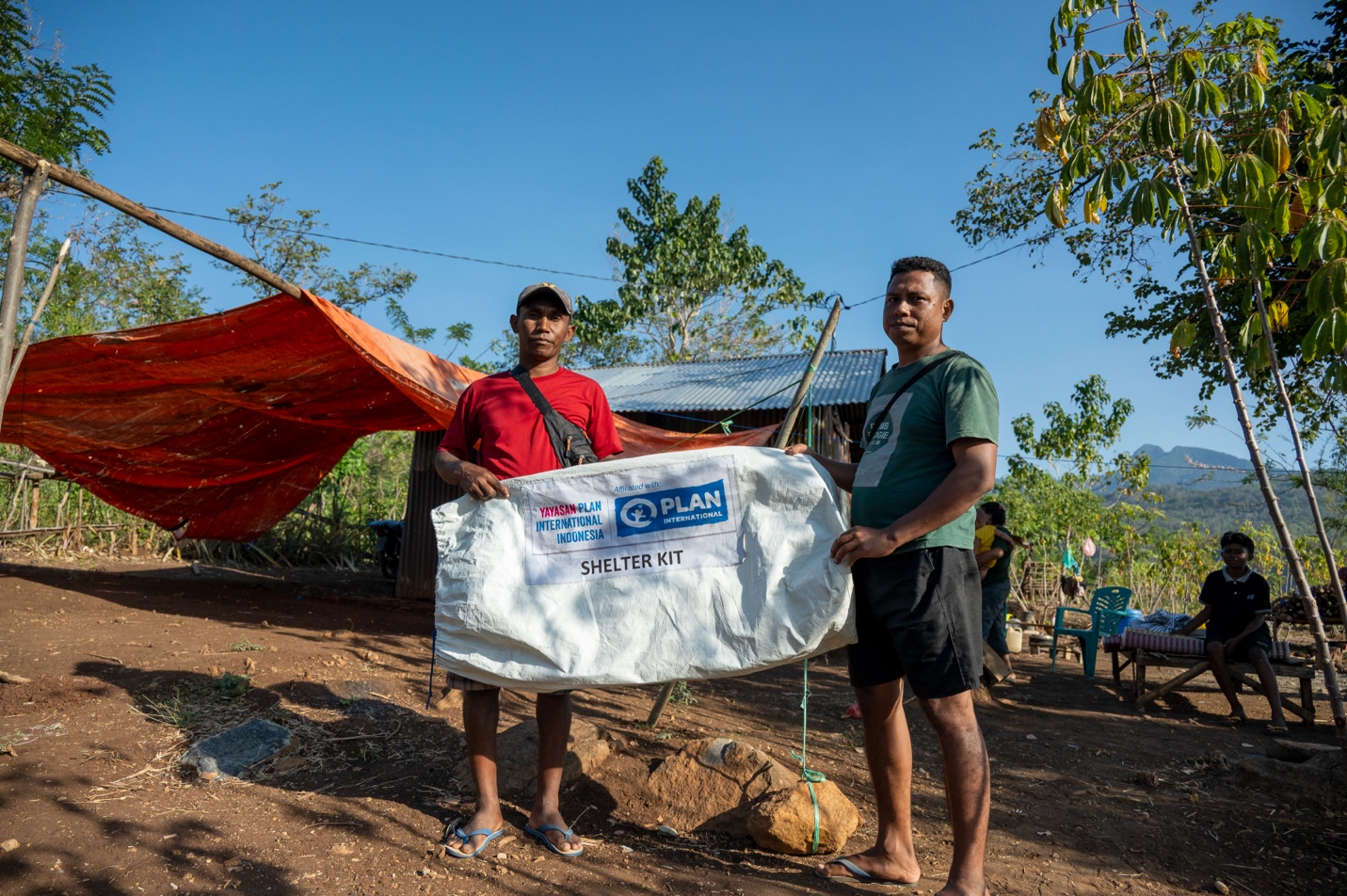
When Plan Indonesia’s Emergency Response Team (ERT) identified the makeshift emergency post at Nus’s home, they moved swiftly to deliver emergency shelter support—including heavy-duty tarpaulins, sleeping mats, blankets, emergency lamps, as well as dignity and hygiene kits.
“We are deeply grateful for these tarps and supplies, Sir. Most importantly, we can now build a proper shelter to protect the children and mothers, as it gets freezing cold here at night,” Nus expressed with heartfelt gratitude.
Written by: Alfred Ike Wurin / Plan Indonesia | Editor: Novita Destiana | Data & Photo Source: Ahmad Semar / Plan Indonesia


