

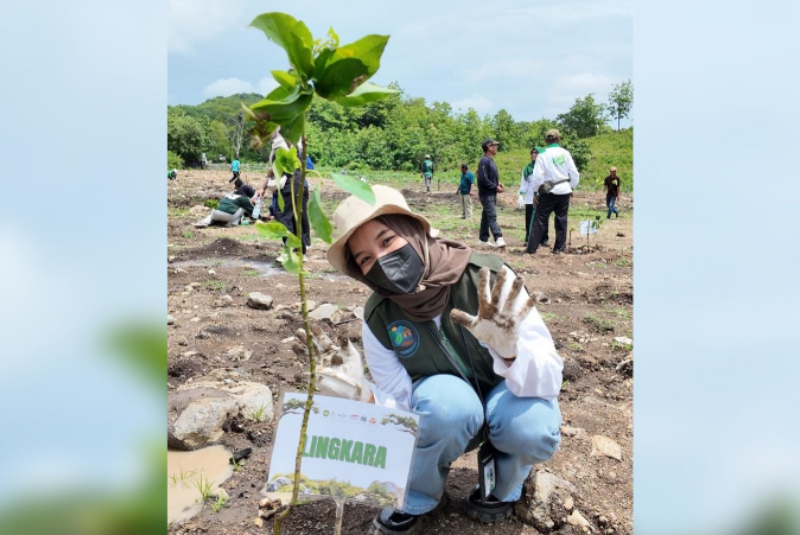
THE LINGKARA TROOPS, GUARDIANS OF SUMBAWA ISLAND’S NATURE
04 August 2026
Growing up as a young person in Sumbawa Regency meant growing up alongside nature. The vast sea, green hills, forests, rivers, and communities living in close harmony with nature had been part of my everyday life since childhood.
As I grew older, I began to understand that nature is not merely scenery, but a living space that shapes the way we understand life. Yet behind all that beauty, a sense of unease slowly began to grow within me.
I began to notice how waste was becoming increasingly common in public spaces, along the coast, and even in rivers. It was clear evidence that public awareness of protecting the environment remained low, while environmental degradation was gradually becoming accepted as something normal. At the same time, many young people were indifferent. Environmental issues seemed as though they had nothing to do with them. That concern kept returning. Every time I witnessed the worsening condition of the environment, I felt that it was not enough to simply be an observer. I believed that change had to begin with a small courageto care. It was from that concern that several of my peers and I began having discussions. At first, they were simply conversations about our dreams and hopes for Sumbawa. We talked about the environment, education, people’s behaviour, and how young people actually possess tremendous potential to create change if they are given the opportunity.
The small conversations gradually evolved into a shared learning space. We exchanged ideas, encouraged one another, and eventually the Lingkara Community was born.
For us, Lingkara is more than just a community. Lingkara is a home for young people who want to take action, learn, and grow together for the environment and society. We started with Lingkara to bring about a cleaner and more sustainable environment.
Igniting Awareness Through Simple Steps
Lingkara was established in 2025, born from the belief that concern alone is not enough to be talked about—it must be translated into concrete action. We then began inviting young people to engage directly with communities through social action, environmental education, and simple humanitarian activities.
One way we do this is through the Green Youth Movement, implemented through the EcoYouth movement.
Through this movement, young people are encouraged not only to become those who bear the impacts of environmental degradation, but also to become agents of change capable of creating real solutions in their own communities.
Plan Indonesia believes that young people play an important role in creating sustainable change. When they are provided with knowledge, opportunities to participate, and opportunities to lead, young people are able to become the driving force behind solutions to environmental and climate change challenges in their communities.
This environmentally friendly behaviour is instilled from the school years through the Adipura School Program and the Eschalator (Environment School Character and Behavior) Program in 2026.
Both programmes focus on character education and the development of daily habits in the school environment, such as sorting waste and maintaining cleanliness. By integrating environmental education into daily activities, students are guided to build positive habits that gradually develop into a sustainable shared culture.
Thanks to this initiative, the younger generation has begun to realise that preserving the environment is not only about the environment itself, but also an important foundation for building a better future.
Learning About the Environment, Gender, and Inclusion
My journey with Lingkara has also brought me through many new learning experiences. One of the most important was when I became one of the participants in the gender and inclusion training initiated by Plan Indonesia’s CERAH Program in 2026.
As a youth, especially as a woman, I often encountered various forms of gender inequality in my surroundings. Through this training, I also began to learn about gender and inclusion issues that had never previously been important issues for me. I also began to understand that environmental issues cannot be separated from gender and social inclusion issues. In reality, children, women, and persons with disabilities are among the groups most vulnerable to climate change and climate-related disasters. However, I believe that everyone—including women, young people, persons with disabilities, and other vulnerablegroups—must have equal opportunities to participate in the process of change.
Climate change and the environmental crisis often have a greater impact on vulnerable groups, including children, adolescent girls, and persons with disabilities. Therefore, efforts to protect water and land need to ensure that everyone has an equal opportunity to participate in the process of change. That awareness has since become an important part of the way Lingkara designs its programmes. We want to ensure that every initiative we build is not only about protecting nature, but also about creating a safe and open space that provides everyone with the opportunity to grow together. A healthy environment must go hand in hand with an inclusive and equitable society.
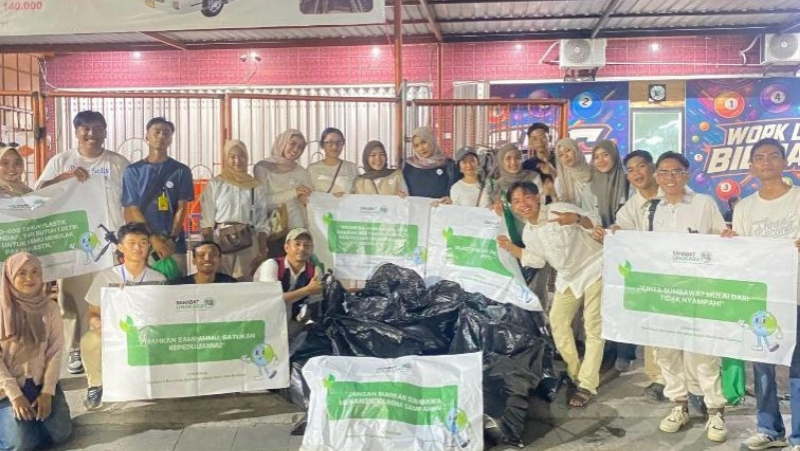
For me, the younger generation has a major role in the future of the environment. We are living in an era when climate change, the waste crisis, and environmental degradation have become real challenges. But I believe that young people are not merely the generation that will bear the impacts—they are the generation capable of creating solutions.
Through the CERAH Program, Plan Indonesia encourages young people not only to become beneficiaries of development, but also leaders who are capable of influencing change at the community level. Youth leadership is key to creating a healthy environment, strong climate resilience, and a better future for the next generation.
My hope is simple: that more young people in Sumbawa will believe that their small acts of care matter. Change does not always begin with something big, but with the courage to start taking action.
Written by: Devira Bunga Ayudya, S.I.Kom | Editor: Annisa Hanifa


