

Strengthening the Father’s Role through the Father’s Class: A Story from North Jenggik, East Lombok
20 April 2026
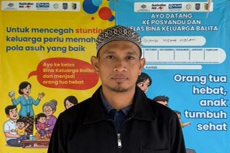
Being the manager of a local Early Childhood Education (PAUD) center doesn’t guarantee that they understand how crucial a father’s roles are in parenting. Zainul Hasan (39) was one of them but everything changed when he participated in the Father’s Class (Kelas Bina Keluarga Balita khusus Ayah) conducted by PARENTS Project at the North Jenggik Village in East Lombok. This simple decision became the starting point for a major shift in how he perceives his role as a father. Before joining the class, Pak Zainul as a father of three years old, felt he lacked sufficient knowledge regarding parenting, even though he is one of the managers of a local Early Childhood Education (PAUD) centre in his village. In his daily life, the parenting style he applied mostly followed the traditional habits passed down by his parents. He viewed his role in the household as typical of any father working to provide for the family’s needs, while domestic chores and child-rearing were primarily left to his wife.
Zainul’s concerns began to surface as he observed the challenges of today’s parenting, particularly concerning the excessive use of technology and smartphones. Previously, he had not set clear boundaries in controlling his child’s smartphone use. Although he routinely monitored his child’s growth and development twice a month through check-ups at the nearby PAUD, he felt that this was not enough. As the head of the family, he realized the need for a more holistic understanding of parenting. The desire to become a better father was his primary motivation for joining the Father’s Class. He wanted to ensure that his child received the best care, especially during the “Golden Age” of growth. Of all the materials presented, the two things he remembers most are the eight family functions and the importance of the First 1,000 Days of Life (1,000 HPK in Indonesian).
The facilitation method used in the Father’s Class left a unique impression on him. According to Zainul, the activity was very different from typical men’s meetings, which tend to be formal and rigid. Through the use of a “Snakes and Ladders” game, the classroom atmosphere became more relaxed and enjoyable. The fathers were actively involved laughing, discussing, and unconsciously absorbing vital information about parenting. Implementing the knowledges he gained turned out to be easier than he had imagined. Although it felt heavy at first, Zainul gradually grew accustomed to it. The most significant change he felt was a deeper understanding of the stages of child development and his specific role as a father. He realized that his duty is not only to earn a living but also to be actively involved in parenting alongside his wife.
Since attending the Father’s Class, Zainul has begun to share household responsibilities with his wife. When his wife is busy caring for the child, he does not hesitate to help with sweeping, washing, or even cooking. He also frequently accompanies his wife when taking their child to the Posyandu (Integrated Health Post). Tasks that he rarely performed before have now become part of his daily routine. Zainul’s confidence as a father has also grown. He now understands that a father’s presence and involvement are crucial for a child’s development. This awareness has driven him to share his knowledge with the surrounding community. In his role as a Friday preacher (Khatib) in a mosque, Zainul often weaves messages about the importance of parental roles, especially that of the father into his sermons.
The change is also clearly visible in his child. The relationship between Zainul and his child has grown closer, and the child is no longer dependent on gadgets because Zainul has begun to implement firm and consistent screen-time limits. His wife also feels immensely supported by his involvement in chores and parenting. For Zainul, the greatest benefit of the Father’s Class is the understanding that parenting and domestic matters are not just the wife’s responsibility, but a shared one. When roles within the family are shared equitably, the family functions well, and children can grow up healthy, safe, and happy.


