

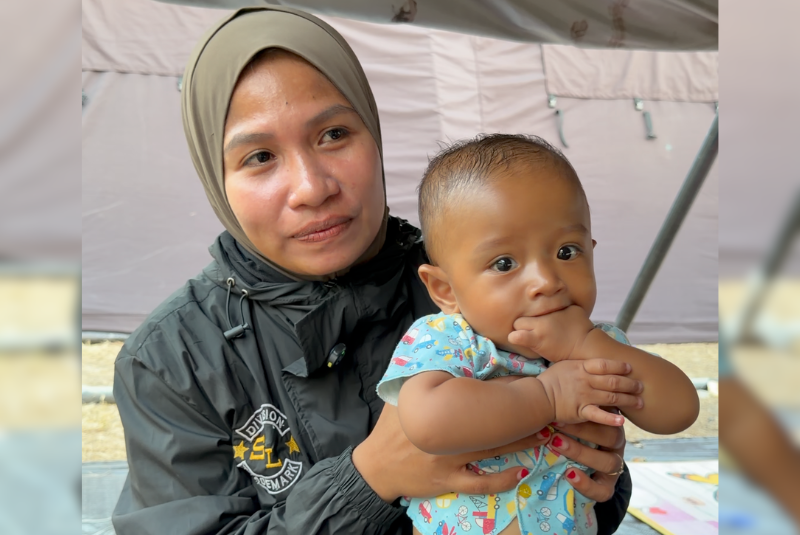
Shelter of Survival: Ibu Erna’s Story from the Evacuation Camp
21 August 2026
It was the third night Ibu Erna evacuated in a temporary shelter, following the powerful earthquake that struck Flores Island.
Saturday, August 15 began unlike any other morning. Instead of starting her usual household chores, Ibu Erna’s morning began in sheer panic. The ground shook violently. Belongings fell, dishes shattered into pieces, and fear filled every corner of the house. Holding her toddler, Ibu Erna and her husband rushed outside, desperately searching for a safer place.
Left with no choice, residents gathered in open fields to set up temporary shelter. Crude emergency tents were raised, with everyone hoping they would prove sturdy enough against harsh weather. Aftershocks continued into the next day, leaving Ibu Erna and her community with no breathing room to catch their breath.
Night after night, Ibu Erna, her husband, and their young child tried to sleep alongside other displaced families. Yet, basic comfort remained a luxury under such severe limitations. Low tent roofs and poor airflow made the living quarters stiflingly hot. Young children grew restless inside, prompting parents to keep them outdoors as much as possible.
Sanitation conditions were equally distressing. Sanitation and washing facilities were far, forcing residents to queue for public toilets. Due to the high number of evacuees, clean water often ran out, leaving many to wander elsewhere just to wash or change clothes.
Despite physical discomforts, fear of ongoing aftershocks remained the sole reason families chose not to return home immediately.
“It feels safer up here. Down below near our house, the area is much more vulnerable and too close to the sea. Even though staying in this shelter is far from comfortable, safety comes first,” shared Ibu Erna.
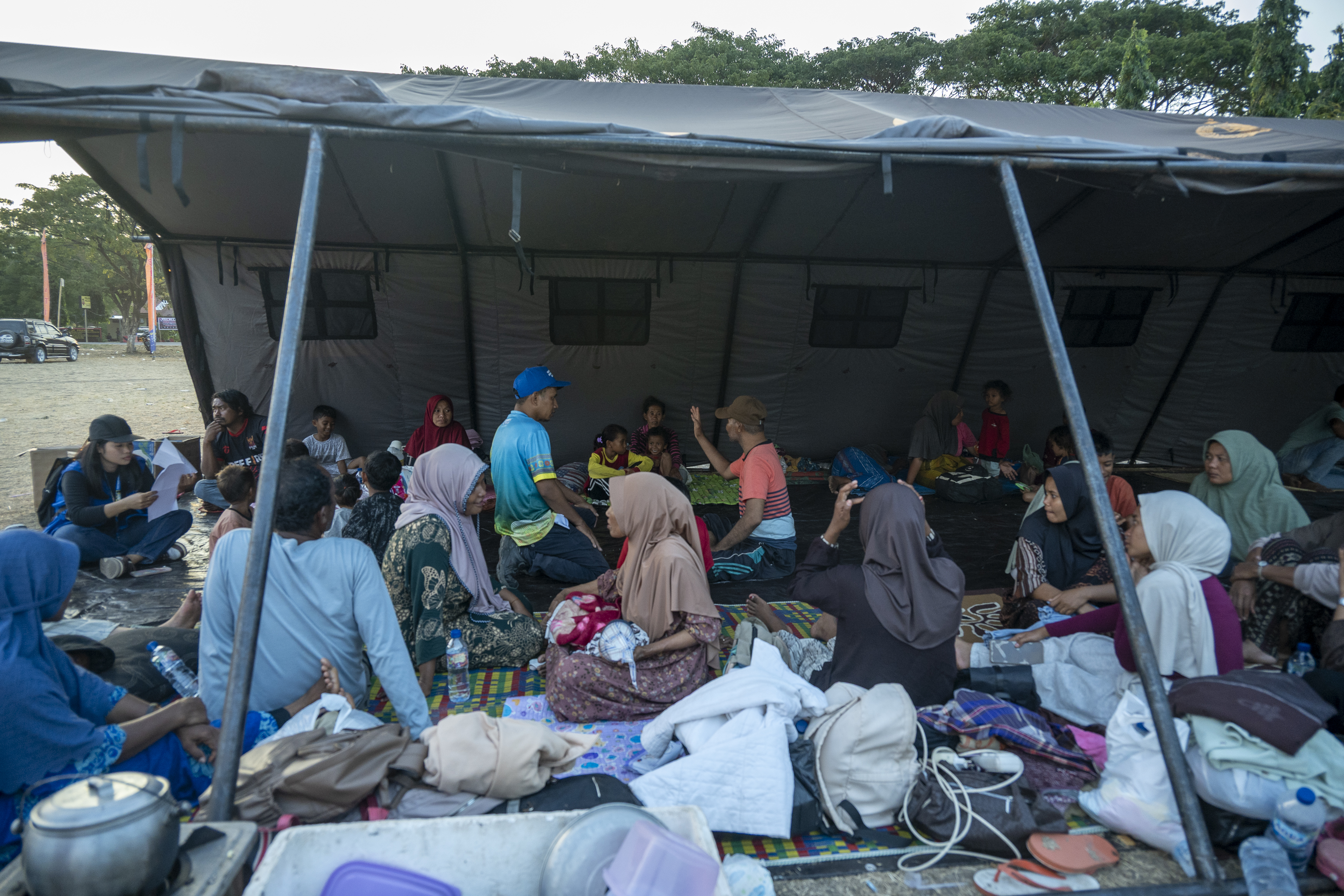
During emergencies, women and children are always the most vulnerable. A lack of private spaces and inadequate sanitation facilities in evacuee sites often heighten feelings of insecurity. Worse yet, amid such resource-deprived crises, children face an increased risk of violence and psychological trauma.
Seeing these critical conditions, Plan Indonesia is taking swift action on the ground alongside various partners. Plan Indonesia is dedicated to ensuring that children, especially girls and vulnerable groups, receive the essential protection and safety they need during times of emergency.
By establishing child-friendly spaces, providing psychosocial support, and distributing essential hygiene and sanitation kits, ongoing assistance is being delivered so children can smile again and feel protected. Together, let us ensure that no child is left behind or deprived of their right to feel safe during these difficult times.


