

Redefining Equality: A Story of Shared Parenting from the Highlands of Naileu, Timor Tengah Selatan
20 April 2026
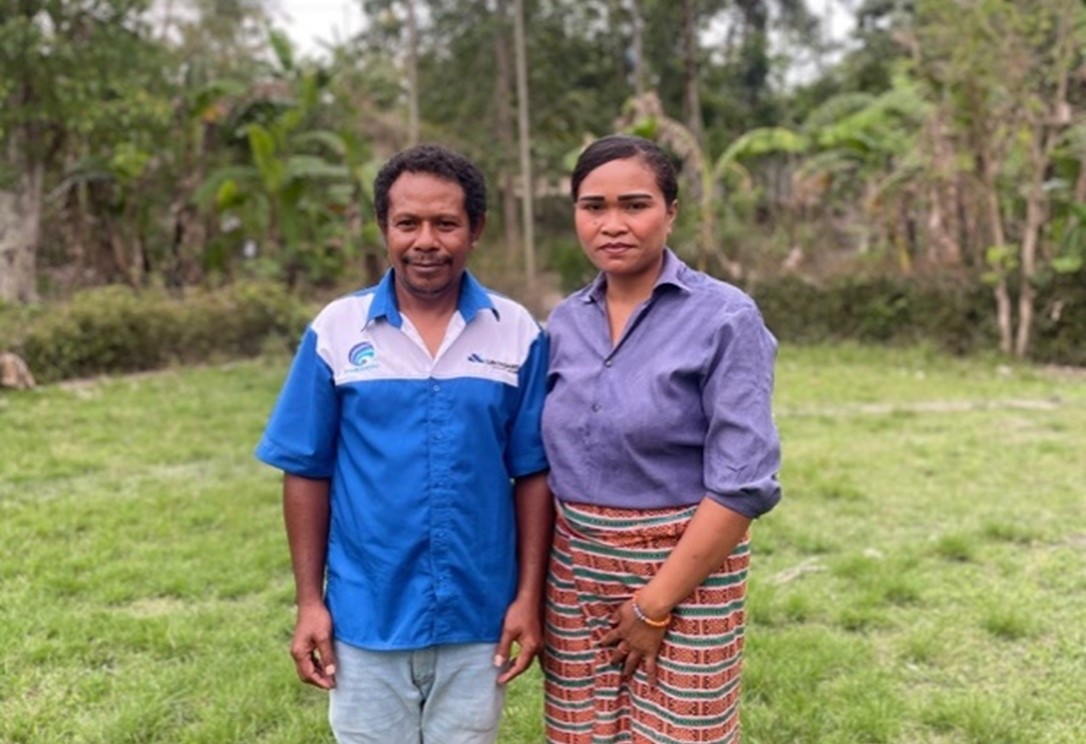
In the village of Naileu, South Central Timor, Meki and Aprilia are quietly dismantling a long-standing cultural dogma. In a region where the Belis (bride price) tradition is often misinterpreted as granting husbands “ownership” over their wives relegating women to the sole burden of domestic labor, this couple has chosen a path of equitable partnership. Before this shift, Aprilia, a Christian education teacher, struggled with deep resentment as she balanced teaching and child-rearing alone, while Meki, an ojek driver, believed his only duty was to provide financially. Growing up as an only child who was always served by his parents, Meki simply did not know how to be an active father until he joined the Father’s Class (Kelas Ayah) in 2024.
The class was a revelation for Meki. He expressed profound regret upon learning about the importance of the First 1,000 Days of Life, realizing he had missed that critical window for his older children. However, this regret turned into action. He abandoned his previous harsh disciplinary style recalling a time they were so frustrated they smashed a phone and replaced it with dialogue and patience. Inspired by the interactive “Snakes and Ladders” edutainment used by his facilitator, Pak Ramli, Meki began using play-based learning at home. He now uses marbles and posters to teach his children numbers and letters, finding that the joy of play makes education far more effective.
Today, their household is a model of shared responsibility. Their daily schedule is carefully coordinated: while Aprilia teaches from 7:00 AM to 1:00 PM, Meki stays home to care for the children. In the afternoon, Aprilia takes over the parenting duties so Meki can work his ojek shift. By nightfall, they continue to support one another in managing the home. The impact has been transformative; the children, who were once afraid of their father, now share a close and affectionate bond with him. Aprilia feels a newfound happiness, no longer burdened by a double role, while Meki has found fulfillment in his active presence at home.
When asked if he feels ashamed of performing tasks traditionally labeled as “women’s work” in a conservative society, Meki’s response is unwavering. “No, I am not ashamed,” he says firmly. “I am happy to care for my family. It doesn’t matter what people say; what matters is my family’s well-being. Besides, the Village Head and other fathers in the program support this too.” Their journey serves as a powerful testament that when the burden of parenting is shared, the family becomes a space of safety and happiness. In the heart of Timor, Meki and Aprilia are proving that equality is not just a concept, but a practice that allows every family member to reach their full potential.


