

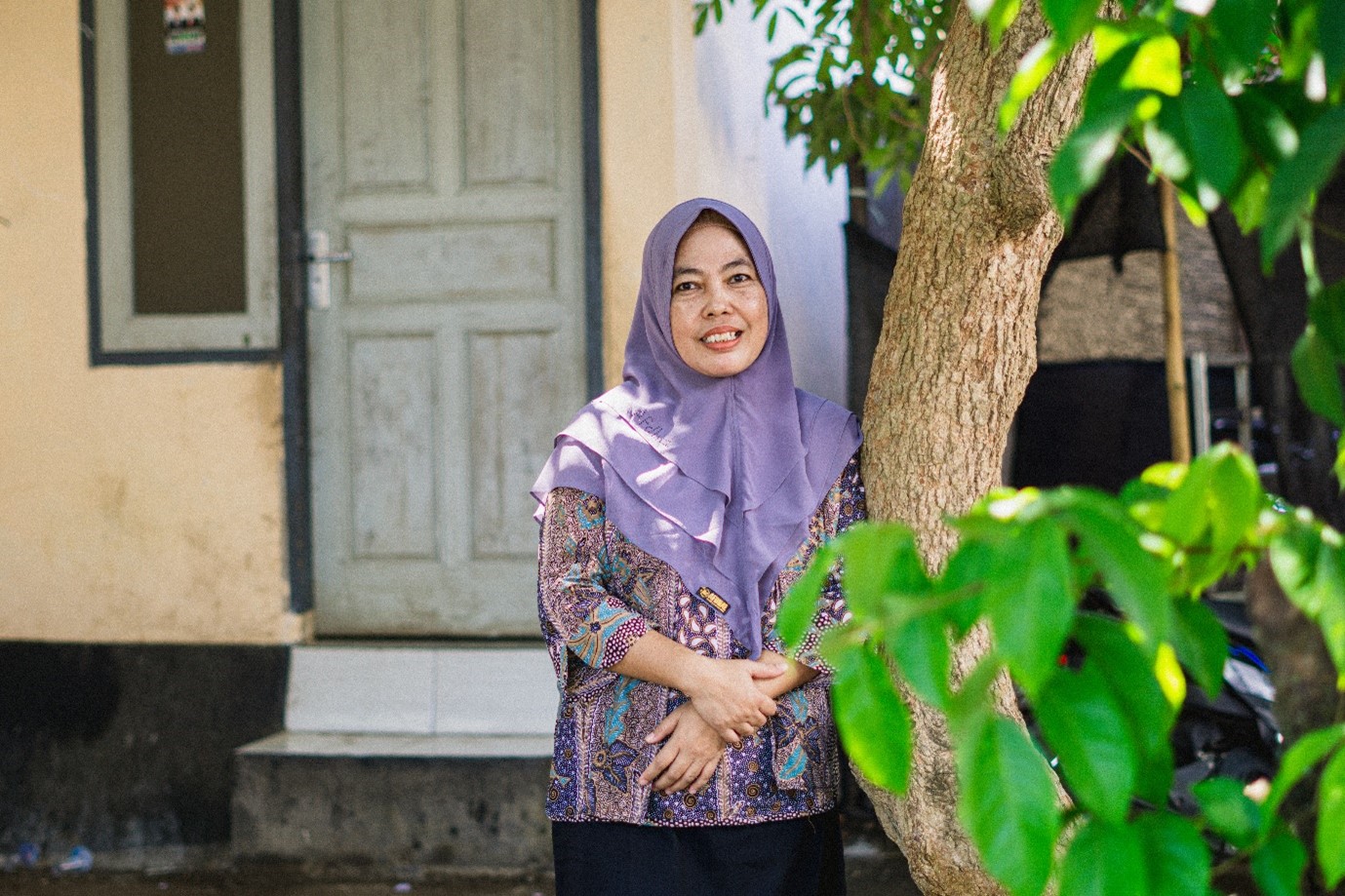
The Inspiring Posyandu Cadres From Mambalan Village
05 October 2024
Becoming a posyandu (Pos Layanan Terpadu, village health services) cadre is no easy task. Despite modest financial rewards, posyandu cadres dedicate significant time, energy, and thought to serve their communities
===
Nurdiana (46) simply smiled when asked how long she had been a posyandu cadre in Mambalan Village, West Lombok. She has dedicated half of her life committed to her role at the posyandu.
“I’ve been doing this (being a posyandu cadre) since I was a teenager,” she said with a smile during an interview in late June 2024.
This mother of two didn’t recall exactly when she began serving as a posyandu cadre in Mambalan Village, but for as long as she remembered, she has been serving since her youth. To this day, she remains fully committed.
With decades of experience, Nurdiana has experienced the highs and lows of being a posyandu cadre. Despite the modest rewards, she embraces the role wholeheartedly.
Her journey to becoming a cadre wasn’t intentional. According to Nurdiana, at that time, few people in her village were willing to assist the health workers who visited, which motivated her to volunteer.
“I felt bad seeing that no one was willing to become a cadre. I felt sorry for the local health workers, so I decided to volunteer as a cadre,” she explained.
Today, Nurdiana is one of the senior cadres in her village and has been appointed as the head of Posyandu Permata Hati in Mambalan Village. She now leads about 40 village cadres.
One of the things that keeps her passionate about being a posyandu cadre is the opportunity to share experiences and knowledge with fellow villagers. Many residents frequently ask questions and seek advice, so cadres are expected to have a broad understanding of health matters.
The role of a cadre has become even more critical today, as they serve as the frontline for various public health programs, including efforts to reduce stunting.
Regarding stunting, she observed that residents are very eager to learn more, as it has become a widely discussed issue. Many parents actively check whether their children are at risk of stunting.
The involvement of external stakeholders has also been highly beneficial, particularly Yayasan Plan International (Plan Indonesia), through their capacity-building program for family planning cadres aimed at preventing stunting (PARENTS).
“The PARENTS program is relatively new, but it has greatly supported us as cadres,” she said.
In this program, cadres receive a wealth of materials on the first 1,000 days of life (HPK) and educational health modules, which they then share with the community.
BKB Educator

Sri Ayuningsih, a family planning educator and supervisor of Bina Keluarga Balita (BKB) at Posyandu Permata Hati in Mambalan Village, explained that the PARENTS program is integrated into BKB activities. This initiative focuses on educating parents about proper child-rearing practices to support their children’s development.
She explained that BKB targets children aged 0-6 years. There are two types of BKB: regular BKB for children aged 0-6 years, and BKB Emas, a more specific development program targeting parents with children aged 0-2 years and pregnant mothers.
“We educate parents on child-rearing practices, starting from pregnancy until the child is 2 years old, a period often referred to as the golden period, to prevent stunting in their children,” Sri explained.
Involving Adolescents
Adolescents are also included in the PARENTS program, as both young men and women need to understand reproductive health. As future parents, they must be in good health, with their reproductive systems fully prepared before marriage.
Maturity in the age of marriage is also vital. Preventing child marriages is one way to combat stunting.
“We start working with them in adolescence, then guide them as they become prospective brides and grooms, through pregnancy and childbirth,” she added.
Lacking Father’s Role
Sri Ayuningsih acknowledged that the involvement of fathers in addressing stunting remains very limited. This is evident from the low attendance of fathers in BKB classes. In reality, child-rearing is not solely the responsibility of mothers but also of fathers.
“We are pleased that Plan Indonesia, through the PARENTS program, has shared experiences from their supported areas in NTT, demonstrating how to involve fathers or male caregivers in child-rearing,” she said.
“For example, when the mother is breastfeeding, the father can massage her, which helps improve both the quantity and quality of her breast milk, while also reducing stress. Stress can affect breast milk production,” she explained.
Sri admitted that there are still challenges in educating parents about child-rearing practices, including the limited scope of activities due to budget constraints. Each meeting can only accommodate 25 participants. Another challenge is that some families are not yet open about their parenting practices.
“Fortunately, the village government is now providing support through village funds for these activities. This allows us to continue raising awareness in the community about proper parenting,” she said.
“Forms of support provided by the village government include increasing and distributing monitoring forms for families with pregnant women, children aged 0-12 months, and children aged 13-24 months.”
According to her, Plan Indonesia’s program has been very helpful in overcoming various obstacles and challenges. “Together with Plan Indonesia, we have collected family profiles of the beneficiaries of the PARENTS Project, including young families who married at a young age, migrant workers who leave their children with relatives.”
“Plan Indonesia has been extraordinarily helpful in reaching out to adolescents, offering training on menstrual health management, maturity in marriage age, and stunting prevention through Community-Based Total Sanitation (STBM),” she concluded.


