

Playing and Healing Together: Psychosocial Support Helps Children Recover After the Flores Earthquake
11 September 2026
Playing and Healing Together: Psychosocial Support Helps Children Recover After the Flores Earthquake
Laughter and joyful voices have returned to schoolyards and displacement sites across Manggarai Regency. Through interactive games, creative activities, and engaging psychosocial care, children are gradually recovering from the traumatic experience following the magnitude 7.7 earthquake that struck major parts of Flores Island on August 15.
Beyond damaging infrastructure and disrupting daily life, the disaster took a significant psychological toll on young minds, leaving many struggling with fear, anxiety, sleeplessness, and lost routines. Schools—normally safe havens for learning and play—were forced to close for over two weeks to ensure community safety.
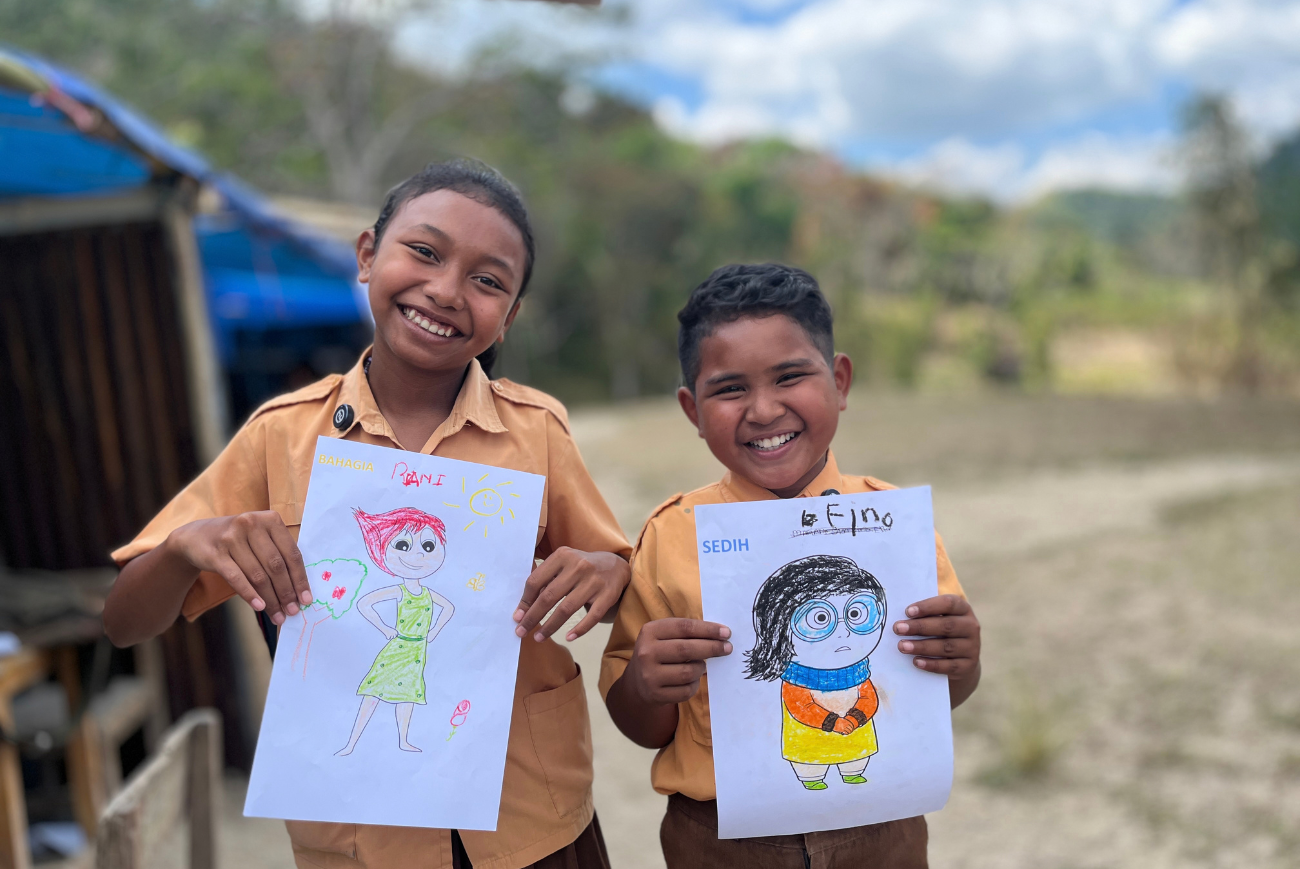
Like many of their peers, 11-year-olds Riani and Fino directly experienced the terrifying moments of the earthquake. Alongside their fear, both shared a deep longing: to return to school and reunite with friends.
In response, Plan Indonesia moved quickly to deliver psychosocial support to affected children across 60 locations in schools and evacuation centers. In Manggarai Regency specifically, activities ran for a full month, led by ten trained facilitators. Using child-friendly approaches—including group games, singing, drawing, and storytelling—facilitators created safe spaces for children to express their feelings and rebuild their sense of security.
This initiative provided a vital space for children to rediscover joy amidst a situation that had not yet fully recovered.
“We are so happy to be playing with our friends again,” shared Fino, an 11-year-old student who participated in the psychosocial support activities in his area.
Fino still clearly remembers the moments when the massive earthquake struck. At the time, he had just woken up from sleep when the powerful shaking began. “When the earthquake happened, I had just woken up. I immediately ran out of the house,” he recalled.
Although he felt afraid at first, Fino is now regaining his enthusiasm after taking part in the various organized activities. For him, playing with friends helped ease his anxiety while bringing back his happiness.
Behind his smile, Fino holds a big dream. He aspires to become a famous singer, drawing inspiration from Manggarai-born singer Betrand Peto, who is his idol.
“I want to be a singer like Betrand Peto,” he said enthusiastically. Aside from enjoying singing, Fino actively participates in group games and activities guided by the facilitators. Through these sessions, he has learned to regain his self-confidence and interact bravely with his peers after experiencing such a shocking event.
Similarly, 11-year-old Riani also vividly remembers her experience when the earthquake shook her home. At that moment, she was fast asleep and unaware of the disaster unfolding. “I was still sleeping when the earthquake happened. My older sibling immediately pulled me out of bed so we could get out of the house quickly,” she remembered.
The incident left Riani feeling frightened. However, the presence of psychosocial support activities helped her gradually feel calmer. One of her favorite activities is drawing, as it allows her to channel her imagination while expressing her feelings.
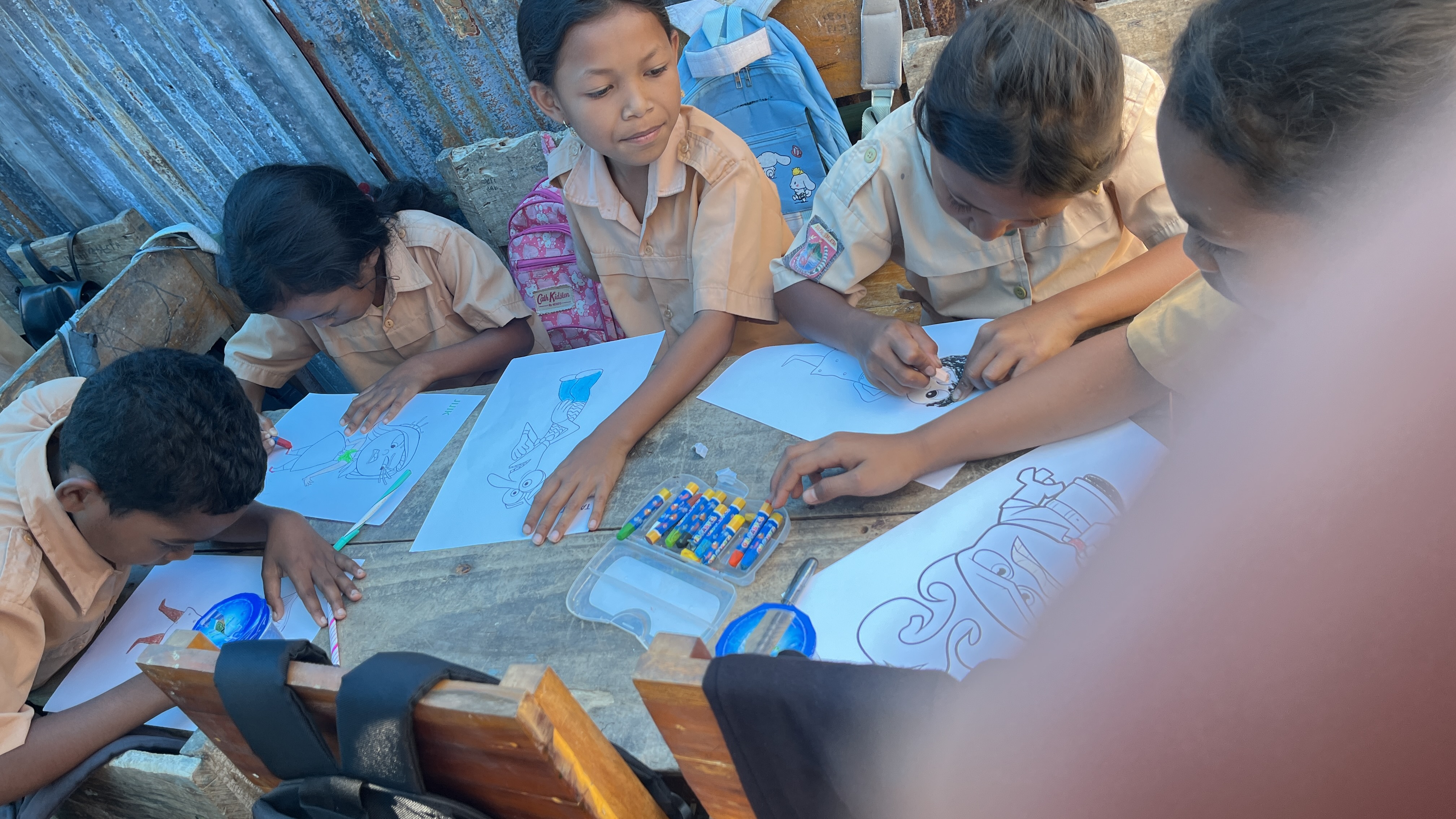
Riani dreams of becoming a fashion designer. Ever since she was young, she has enjoyed drawing various shapes and colors. To her, studying diligently and practicing drawing regularly are the keys to achieving her dream. “If you want to be a designer, you have to study hard and draw often,” Riani shared.
The psychosocial support provided not only helps children overcome their post-disaster fears, but also gives them room to keep dreaming about their future. Through engaging activities, children are encouraged to recognize their abilities, build confidence, and maintain their enthusiasm for learning despite facing difficult circumstances.
For many children, the opportunity to play with peers serves as an essential part of the healing process. Through positive games and social interaction, they can experience togetherness once again, reduce stress, and rebuild routines that were temporarily disrupted by the disaster.
Throughout the program’s implementation, facilitators ensured that every child received attention suited to their individual needs. They created safe and comfortable environments where children felt free to speak, play, and express their feelings.
Plan Indonesia’s psychosocial support program demonstrates that disaster response extends beyond meeting physical needs to encompass children’s mental health and emotional well-being. Psychological recovery is a crucial element so that children can return to their daily lives smoothly.
Now, amid the ongoing post-earthquake recovery process, Riani and Fino’s smiles have returned.
They play, laugh, and learn together with their friends. Behind the difficult experience they endured, both continue to hold onto big dreams for the future. Fino wants to become a singer who inspires many, while Riani aims to become a creative designer. With the right support, children like them have the opportunity to heal, grow, and pursue their aspirations with hope.
Written by: Agus Haru │ Editor: Dewi Sri Sumanah │ Photo: Plan IndonesiaAgus Haru


