

People of the North After the Flores Earthquake
14 September 2026
Northern Communities Rebuilding After the Flores Earthquake
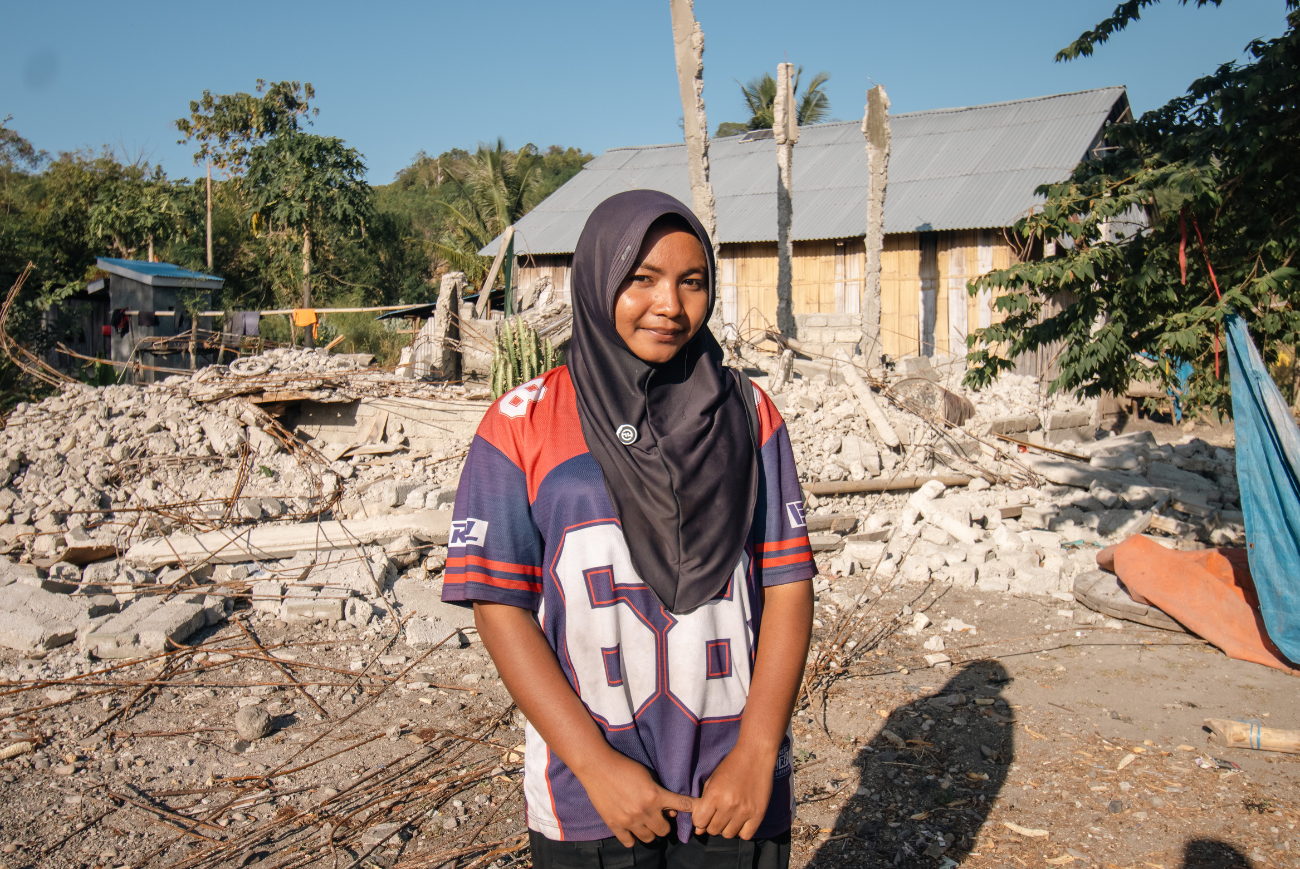
It was early morning on August 15, 2026, when Azisa was straightening up her bedroom.
“I was inside my room when a massive earthquake suddenly struck, and the room collapsed instantly,” Azisa recalled. “I hid next to a wardrobe that was pinned down by a wall. Once the shaking stopped, I ran outside immediately.”
Her panicked father searched for her among the ruins of their home. Reunited, they gathered with neighbors in an open field and built a temporary emergency tent.
“Every home in our hamlet was damaged, but we are deeply grateful that everyone survived,” Azisa shared.
During the initial Emergency Response phase, Plan Indonesia’s Emergency Response Team (ERT) conducted Rapid Needs Assessments (RNA) and delivered early relief. Operating across Ngada and East Manggarai regencies, the team navigated the northern coastal route of Flores Island.
On August 16, 2026, the team reached a coastal hamlet defined by its scenic landscape, yet heavily devastated by the quake. Houses, places of worship, granaries, and schools had collapsed. Only a single wooden house remained standing, appearing fragile.
There, the team met Azisa, a young local leader who spoke directly with the responders. Along with conducting the assessment, the ERT distributed temporary shelter tarpaulins, Menstrual Hygiene Management (MHM) kits, and essential hygiene packs—containing soap, toothpaste, and toothbrushes—providing crucial short-term support for the coming days.
During their conversation, Azisa highlighted the urgent challenges facing women and girls in the camp.
“Honestly, as a young woman, I desperately need a private bathroom and toilet—even a simple one made of tarpaulins or plywood,” she explained. “It is impossible for us to use facilities in open spaces like this. Every home here collapsed. A few bathrooms survived, but we are terrified of standing walls because aftershocks keep happening.”
Azisa also noted a critical shortage of sanitary pads, as families had fled without saving personal items, and local shops were destroyed. Dozens of adolescent girls and women in the hamlet faced the same urgent need.
After completing initial distributions at the camp, the ERT continued west to conduct further assessments. Upon reaching a damaged bridge lined with downed power lines, team members checked in with the camp coordinator, Zainudin, via text message regarding their power situation.
Zainudin confirmed the hamlet had been without electricity since the initial quake, relying solely on two small solar panels from the local mosque.
“The light is dim and doesn’t last until midnight; we remain in the dark until morning,” Zainudin texted back.
Days later, the ERT returned with emergency solar lanterns, comprehensive shelter kits—including family tents, mosquito nets, and blankets—as well as expanded MHM supplies, hygiene packs, and baby diapers.
Though Azisa was out during the return visit, the community’s proactive spirit was evident. Residents worked together to salvage timber beams and metal roofing sheets from collapsed homes to construct transitional shelters (hunian sementara). Women and girls were busy drying harvested rice to secure their family food reserves.
“We know the rainy season is approaching,” explained Zainudin. “Staying in basic tents during heavy rains will be difficult for our families. Furthermore, women and young girls urgently need private emergency sanitation facilities, so we are coming together to build them ourselves.”
The coastal hamlet stands as a clear example of active participation and community resilience. Women’s voices were heard and prioritized, leading directly to the community-led construction of safe, dignified sanitation spaces.
“We live along a quiet, hard-to-reach northern route,” Zainudin reflected. “We are thankful that responders reached us with lanterns, tents, hygiene supplies, and necessities for women. For everything else, we rely on our own strength and unity to move forward.”


