

MURO: Guarding the Sea, Preserving Heritage – Lembata’s Customary Solution to Climate Change
21 August 2025
Climate change has brought complex challenges for coastal communities in Lembata Regency, East Nusa Tenggara (NTT). Unpredictable weather, high waves, and fluctuating sea temperatures make it increasingly difficult for fishers to determine the best time to go to sea. As a result, catches have drastically declined—barely enough for daily consumption, let alone to sustain household income.
Amid these threats, the indigenous people of Lembata demonstrate that sustainable solutions can emerge from their own cultural roots through the Muro tradition.
The challenges they face—ranging from extreme weather to unsustainable fishing practices—have made it clear to fishers that the ocean’s condition will continue to worsen without change. Recognizing this, Yayasan Plan International Indonesia (Plan Indonesia), together with the people of Lembata, has initiated ecosystem-based adaptation by revitalizing Muro as a key strategy.
Muro is a centuries-old customary system among coastal communities that regulates the use of marine space through sacred zoning. It is not merely a prohibition on accessing or exploiting certain marine areas, but a smart, sustainable form of ecological adaptation.
Customary Ratification: A Collective Commitment to Protect the Sea
The ratification of Muro zones is carried out through customary rituals, beginning at the village center—called Nude—as a tribute to the ancestors and rightful custodians of the land.
Through inclusive customary deliberations involving fishers, traditional leaders, village governments, women’s groups, and youth, Muro zones are determined based on careful oceanographic mapping.
This mapping incorporates scientific considerations such as water circulation, sea surface temperature, wave length, depth and seabed topography, coral reef conditions, seagrass coverage, and seawater pH levels.
The results divide the marine territory into three main zones:
- Core Zone: Ecologically valuable areas closed off (6 months to 1 year) for ecosystem regeneration.
- Buffer Zone: Transitional areas that support the protection of the core zone.
- Utilization Zone: Areas where resources can be accessed responsibly and in moderation by the community.
When a zone is “closed,” fishing and harvesting are strictly prohibited. When it is “opened,” resource use is allowed in a controlled and mindful manner, ensuring ecological balance.
Violations of Muro are seen as violations of customary law and are subject to social sanctions. These sanctions strengthen collective discipline and reinforce respect for nature, reminding the community that the sea is not just a source of livelihood, but also part of their identity and spirituality.
Bridging Tradition, Innovation, and Technology
The Muro tradition strengthens social solidarity and collective values. Importantly, women and youth voices are integral to the decision-making process.
Young people are actively involved and trained to understand marine ecology, conduct participatory mapping, and develop adaptation strategies grounded in data and technology. The hope is for the younger generation to become pioneers of modern, innovative, and sustainable conservation.
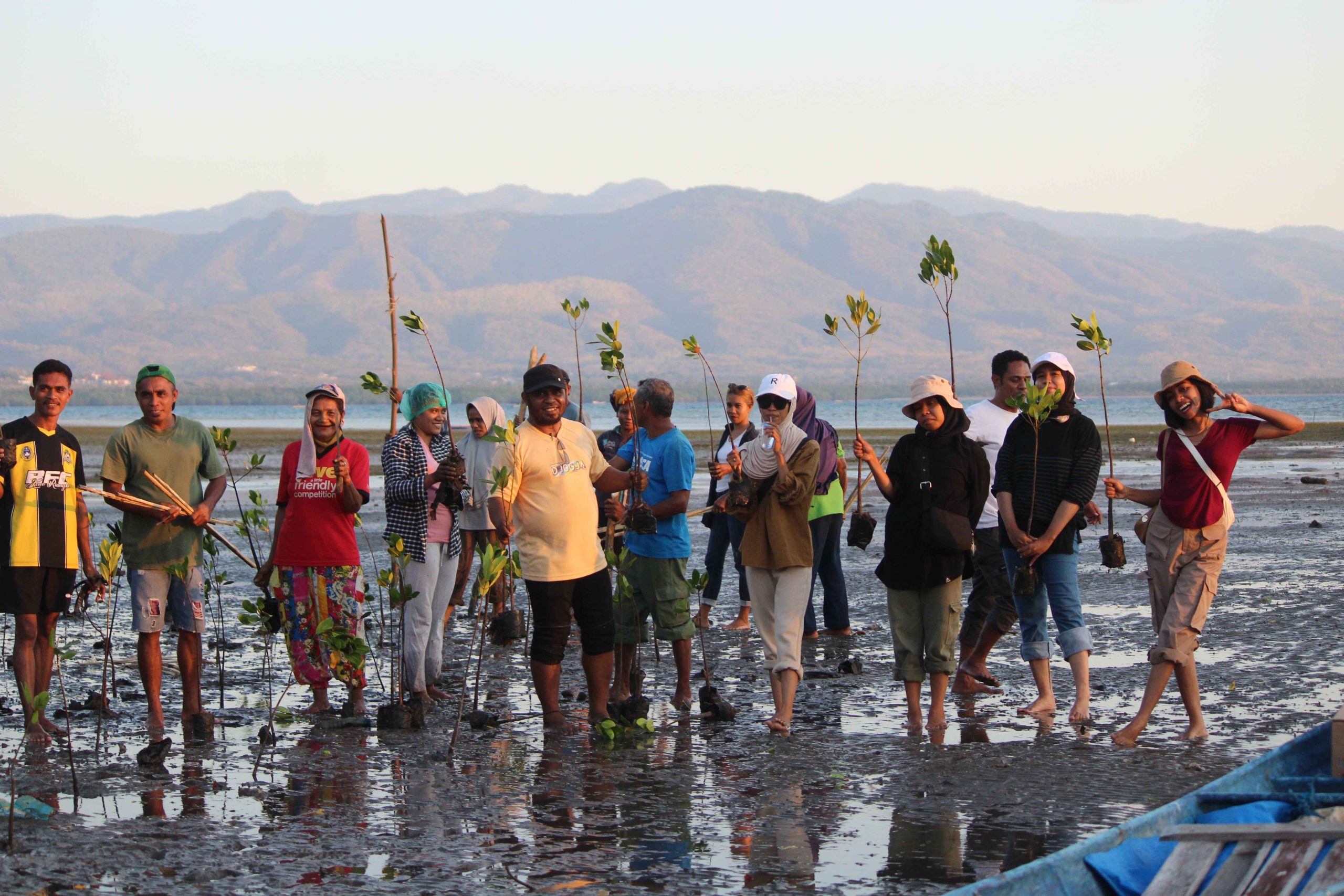
As part of the customary ratification, communities also carry out mangrove planting—symbolizing their commitment to coastal preservation and providing safe habitats for marine life. The planting serves as a reminder that mangroves are essential for restoring the environment and protecting against natural hazards such as coastal erosion and tidal flooding.
Ancestral Legacy for Future Generations
Nikolaus Notan (63), Head of the Customary Institution of Petuntawa Village, affirmed with conviction:
“Muro ceremonies always begin at the village center, which we call Nude, as a form of respect to the custodians of this land.”
He added the local wisdom: “Tere Tula, Tere Gena Ana Titen, Luge Terpahang Bai”—meaning what we do today is what our ancestors did, for the sake of future generations.
The Muro tradition proves that local wisdom can offer answers to global challenges. With the right space and support, indigenous communities safeguard the ocean ecologically while also preserving cultural values. For them, the sea is not merely a livelihood—it is a spiritual and social space.
Muro reminds us: to protect the ocean is to protect life. When culture and ecology work hand in hand, what is preserved is not only nature but also ancestral heritage for generations to come. Coastal conservation, therefore, is not solely the duty of indigenous communities, but a shared responsibility to support, nurture, and safeguard the sea as an inseparable part of human life.


