

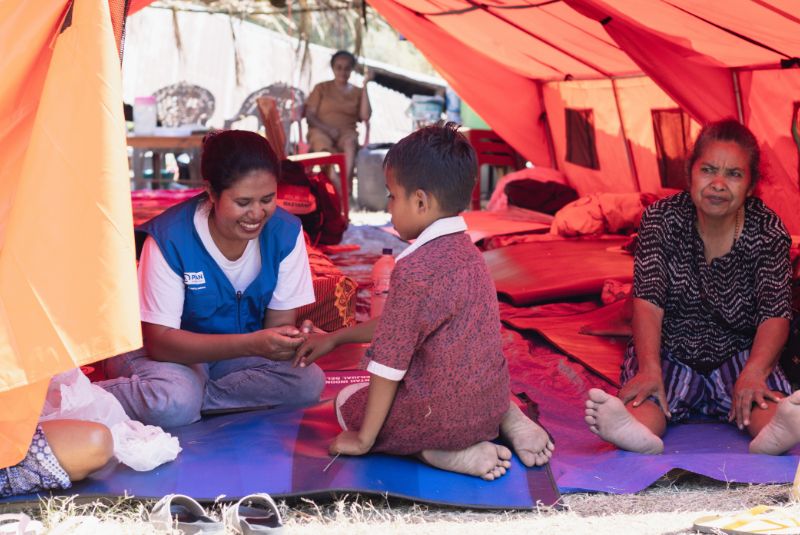
Maria: The Heart and Meaning of a Humanitarian Mission
29 August 2026
That afternoon, right after handing a small pack of sanitary pads to a menstruating teenager at the displacement shelter, Maria immediately urged the rest of us—members of the Emergency Response Team (ERT)—to head to Ruteng. It was about thirty kilometers from our basecamp in North Lamba Leda.
“We also need to buy baby supplies in a bit. There’s a three-week-old baby at the mountain shelter born via C-section, so we need to get a baby mattress and a mosquito net. Her mother told me earlier that they desperately need telon oil and baby clothes,” Maria said, breaking our daydreaming during the ride. As usual, her enthusiasm burned bright, like a bonfire on the 14th of August.
Maria was a true warrior—endowed with fierce spirit and incredible stamina. Yet behind the resilience she displayed while navigating the displacement camps, she carried a vulnerable side that she shared with us in complete honesty. Early in her assignment, her heart was plagued with layers of anxiety. She had to leave her family behind in Nagekeo, the epicenter of the 7.7-magnitude earthquake.
Yet, amid the turmoil of longing and worry, one thing kept her grounded and drove her to keep serving: seeing the joyful smiles of the children in the shelter.
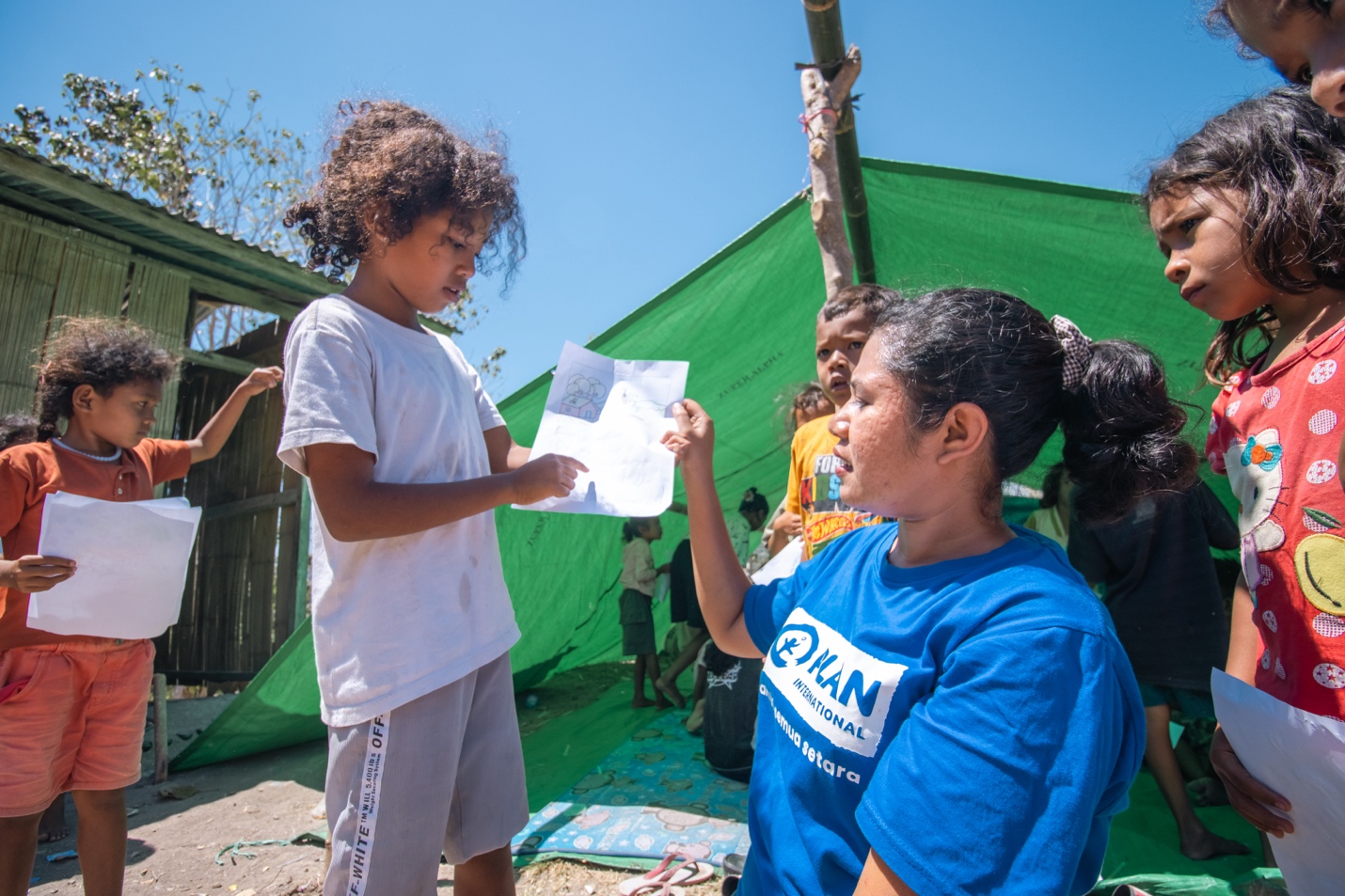
“You know, the baby’s older sibling was playing with us at the PSS (Psychosocial Support) post earlier. Their house was right behind the school,” she recalled.
Maria also shared that the family’s home was completely destroyed. Of course, it wasn’t just theirs; every single house in that neighborhood had been reduced to rubble.
Upon arriving in Ruteng, we immediately shopped for all the essentials: MHM (Menstrual Hygiene Management) kits, hygiene kits, mosquito nets, mats, sarongs, and blankets. For Mama Ophy and her baby, Maria searched for a baby mattress complete with an integrated mosquito net, several sets of baby clothes, telon oil, baby soap, as well as clothes and blankets for the mother. With everything packed, we headed back to North Lamba Leda.
The next day, as evening approached, we returned to the mountain shelter. After wrapping up a long distribution across two shelters, Maria quickly grabbed the package meant for the mother and baby. Our team approached them and handed the items directly to Mama Ophy and her little one.
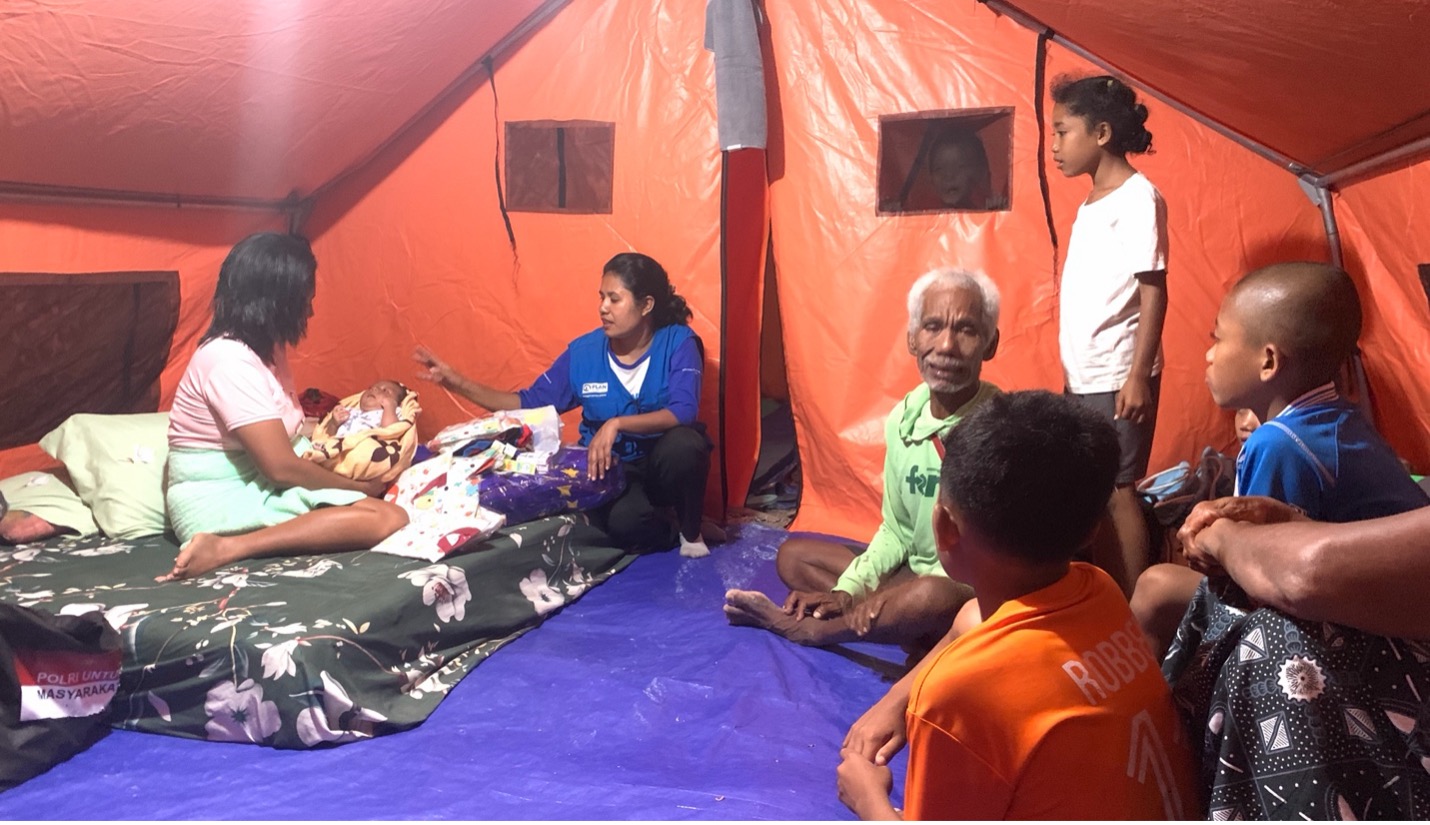
An emotional hush fell over the scene. No one said a word—neither us nor the small family. We all just gazed at the tiny blessing lying down and playing on her bed, occasionally letting out a soft chuckle. Watching her antics, everyone smiled. A quiet sense of relief washed over us, as if the tragedy and immense hardship had vanished for a moment.
“Thank you so much. During the first earthquake, a neighbor gave us a bottle of telon oil for the baby, but it ran out. Thank you… now there’s a little mattress to keep her cozy when she sleeps,” Mama Ophy said with a trembling voice.
We returned to the basecamp. It was our final day of duty for the emergency response in North Lamba Leda. That night, accompanied by steam rising from cups of hot Arabica coffee, we organized all the documents and gear we needed to bring home.
As we finalized our tasks, Maria’s mind wandered back to her hometown. In truth, Maria was also a survivor of the earthquake in Nagekeo. Yet that painful experience served as the fuel that kept her dedication to this humanitarian mission burning strong.
“How are you feeling right now?” I asked in between our busywork.
Maria paused for a moment, staring at the hot cup in front of her, before replying, “It is heavy, but after going through all this, I feel happy. I also feel valuable because despite this disaster—despite the earthquake—my family survived, and I am able to help the people here too.”
We simply smiled at her, and silence settled over the room. Everyone stayed busy—or pretended to be busy—so as not to seem overly sentimental in front of Maria.
Then Maria spoke again, her voice thick with emotion.
“I am deeply fulfilled, and I know my husband must be proud of me! The impact back home was severe, but as you can see, it is devastating here—nothing is left. I truly believe that when we help people in need with a sincere heart, their prayers will guide our path and bring us blessings!”
The night at the basecamp suddenly fell quiet, letting the cool wind of Lamba Leda carry away the day’s lingering fatigue. After a few minutes, Maria spoke once more, her tone much softer.
“This is my first time taking on an assignment like this. I realized that we truly can be present to help fellow human beings who are hurting and struggling. I remember when we were playing with the children, their parents would often watch. Sometimes, tears would stream down a parent’s face just seeing their child play so happily again.”
She shared how the parents expressed their deep gratitude, thanking her for taking the time to play with their little ones and bringing laughter back into their lives amidst the adversity.
We smiled in silence, continuing our light conversations while reminiscing about the dynamic 14 days of our deployment in North Lamba Leda. She said that once she returned home, she would tell her husband and family that this humanitarian mission was beautiful, leaving a profound meaning on her journey through life.
Written by: Alfred Ike Wurin | Editor: Novita Destiana | Photo & Data: Alfred Ike Wurin / Plan Indonesia


