

Initiating an Organic Vegetable Garden from the Remote Corners of Indonesia
17 July 2025
In a small corner of Dusun A, Degalea Village, Nangaroro Subdistrict, Nagekeo Regency, a group of extraordinary women stand firm against the challenges of their time. They are the housewives of the Dasawisma Merpati II group.
Twelve resilient women, not only skilled in managing savings, loans, and daily groceries, but also deeply committed to safeguarding their families’ health and resilience.
From Worry Came a Movement
Amidst climate uncertainty and soaring food prices, a shared concern began to grow: How can children thrive if the kitchen no longer provides proper nutrition?
From this concern, hope began to sprout. Inspired by maternal instincts and care for the future of the next generation, a simple yet revolutionary idea emerged — to build an organic vegetable garden independently. A step toward food security, economic self-reliance, and collective learning.
The garden was built on three core goals: to meet household nutritional needs in a healthy and self-sufficient way, to reduce financial burdens by utilizing productive land, and to create a shared learning space for climate-smart, resilient farming.
With the spirit of mutual cooperation (gotong royong), the group leader offered a plot of land free of charge. Members contributed seeds, organic fertilizer, and labor. This collective energy became the roots of a movement that continues to grow today.
Nurturing the Earth, Cultivating Hope
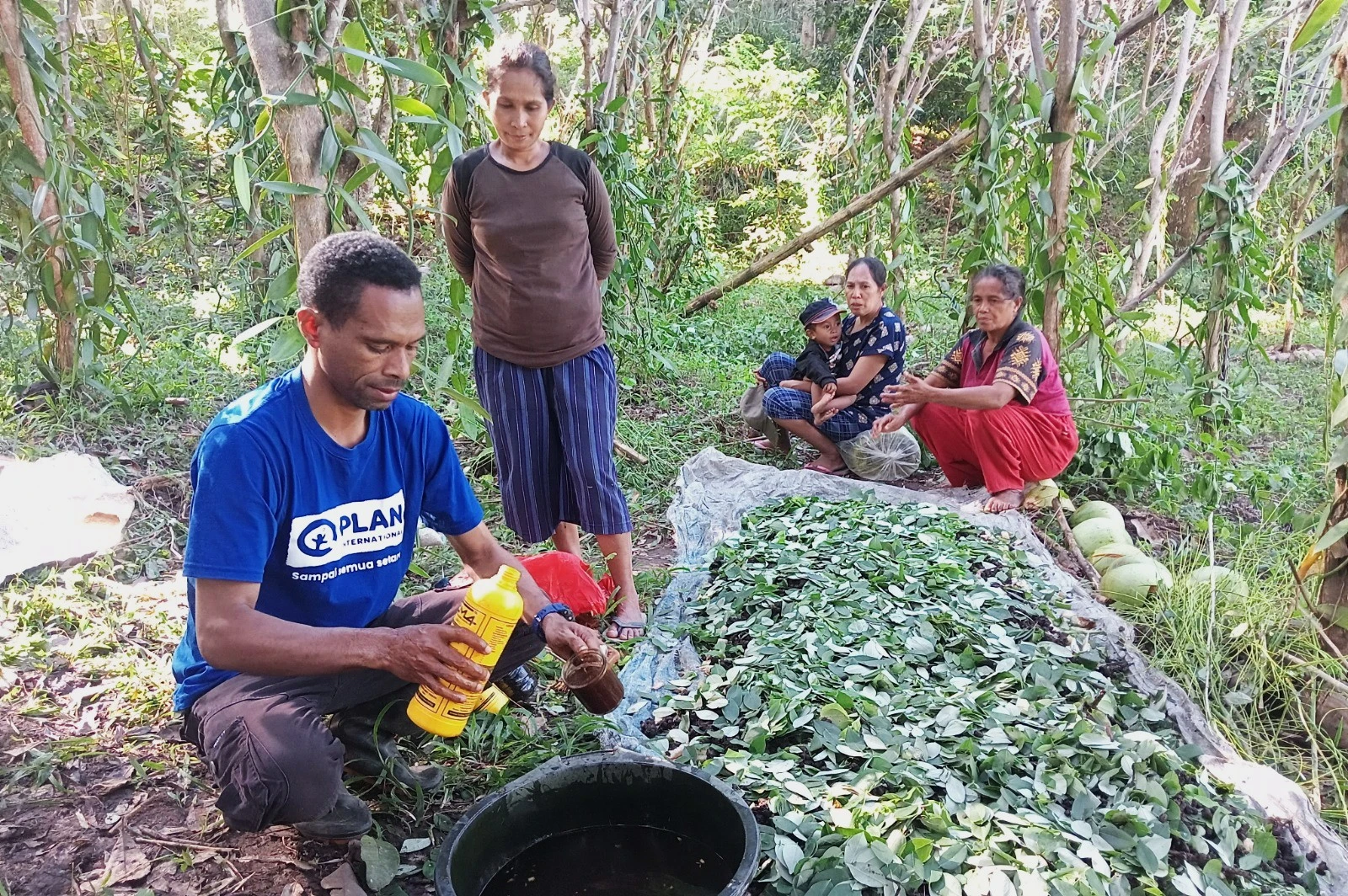
The garden was built hand-in-hand. They began by clearing what was once barren land, building protective fencing, preparing planting beds, and creating organic fertilizer from simple ingredients like dry leaves, kitchen scraps, and livestock manure. Plants are watered manually using a nearby stream, with a schedule shared among the members. More than just a food source, the garden has also nurtured a deep sense of solidarity and togetherness.
Harvesting Not Just Vegetables, But Nutrition, Knowledge, and Income
At harvest time, the smiles on the Merpati II mothers’ faces say it all. Fresh vegetables now brighten their dining tables, fulfilling their families’ nutritional needs. Surplus produce is sold to neighbors and in small village markets, strengthening the group’s collective fund and serving as an extra source of income. Beyond that, the garden has become an open-air classroom, where members learn about natural farming principles, making their own compost, crop cycles that adapt to extreme weather, and the importance of sustainable soil care.
A total of 49 people have directly benefited — 15 children and 34 adults. Children learn to identify plant types, observe growth cycles, and witness how hard work produces healthy food. Meanwhile, the adults gain vital knowledge on climate-resilient agriculture — a critical skill in facing an uncertain future.
Mr. Alfianus, Head of Dusun A, fully supports the women’s initiative. “We’ve learned that making compost is easy. The materials are all around us — we just need the will to act,” he said proudly. Support from the village government serves as added fertilizer for the spirit of this movement.
The Dove Doesn’t Just Fly — It Symbolizes Resilience
Today, that modest garden is no longer just a patch of green on once-barren land. It has become a symbol of change, resilience, and hope. The Merpati II group proves that from small steps, from the hands of mothers filled with love and determination, a healthier, more empowered, and self-reliant future can flourish.
Written by: Aloysius Doe │ Edited by: Moudy Alfiana │ Photos: Aloysius Doe/Plan Indonesia


