

Built for Climate Resilience, Tested by an Earthquake: The Story of Youth Organisation Kebun Lestari Salama
10 September 2026
“We hope that this disaster, along with the crops from the garden, can grow communities’ awareness of the importance of food security at the village level, so that they aren’t solely dependent on the market.” – member of KELAS
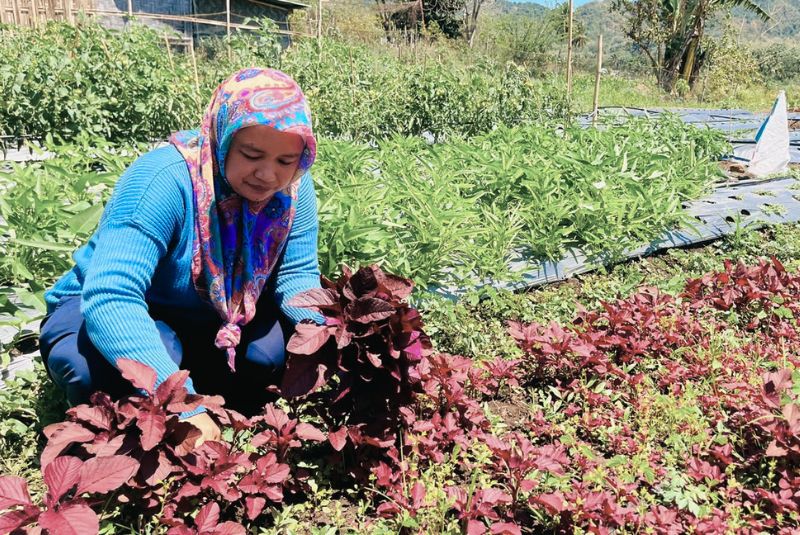
In the village of Salama, Reok, on the northern coast of Flores – Indonesia, three young women and four young men under 30 had been quietly building something ambitious. With support from IKI Small Grants through Plan Indonesia, they founded Kebun Lestari Salama (KELAS), an organic vegetable garden meant to double as a climate mitigation and adaptation classroom: composting, water-efficient beds, drip irrigation, and crops chosen for Flores’ shifting rainy seasons. The long-term vision was economic as much as environmental: a business incubator that could give village youth a stake in sustainable farming and, eventually, put Salama on the map as a new tourism spot.
They didn’t know their garden was about to be tested in a completely different way.
On August 15, 2026, a magnitude 7.7 earthquake struck off the northern coast of Flores, one of the strongest to hit the island in years. Reok, in Manggarai regency, was among the areas hit hardest. Homes collapsed, water and power lines went down, and thousands of families across Manggarai and neighboring regencies were forced from their homes into evacuation sites and makeshift camps of tarpaulin and wood.
A garden becomes a shelter
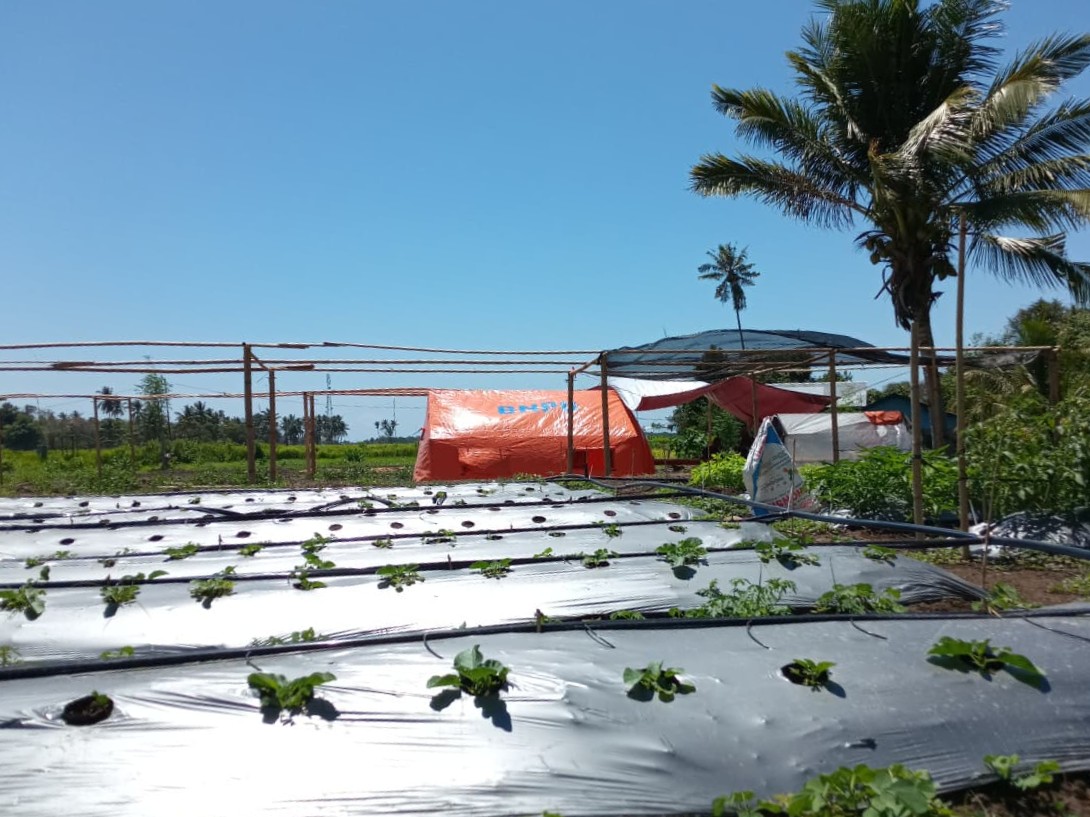
Five houses stood directly in front of the KELAS garden. When the ground stopped shaking, their occupants had nowhere sturdy to go, so they came to the garden. The unplanted front plot, originally set aside for a flower garden, became the site of emergency tents; it remains standing there today. As one KELAS member put it, home yards in the area simply weren’t big enough for shelter, and the garden was one of the few open spaces large enough to hold a crowd.
The timing carried a note of luck: the day before the earthquake, the garden’s water tank had been fully filled. With piped water and electricity down across the area, and most residents’ bore wells useless without power, that full tank became an emergency water source. Large buckets meant for storing organic fertilizer were repurposed to store rice aid, alongside water gallons and a dispenser pressed into service to store water too.
Feeding people when the market couldn’t
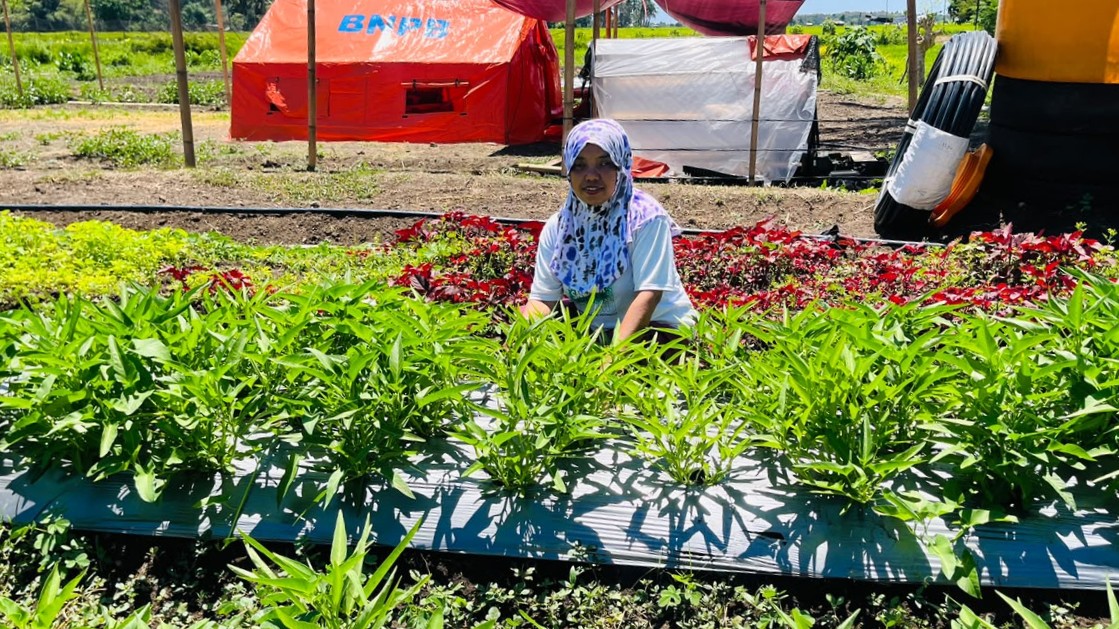
Local markets stayed closed through the first week after the quake. In that gap, vegetables already close to harvest. Kale, water spinach, and spinach were picked straight from the beds by displaced residents and eaten. All of it was given away free; KELAS asked nothing in return and told residents to take as much as they needed.
While the three KELAS members themselves couldn’t get to the garden to tend it, the displaced families sheltering there kept the plants alive. They watered and weeded, led by the village head’s wife. In effect, the community that had taken shelter in the garden ended up growing its own food supply and reaping it.
Today, the garden and its harvest reach three evacuation posts in Reok, totaling 71 people: Posko Kebun Lestari Salama (33 people, sited at the garden itself), Posko Gadong (7 households, 29 people), and Posko Mandiri Wae Selung (9 people). Together spanning infants, toddlers, children, adults, and elderly residents.
An unplanned lesson in food security
For communities, the garden also became an unexpected classroom. Residents encountered vegetables many had never grown or eaten before, such as cosmos plant, radishes, edamame. The residents got a hands-on look at the drip irrigation system KELAS had built. One resident marveled that the garden’s short tomato plants, grown with organic fertilizer, still produced fruit so abundantly. The communities also learned that vegetables which seem impossible to grow in the lowlands such as spring onion, curly lettuce, and radish, can actually thrive here with the right care.
KELAS’s founders say they hope the experience and the harvest would grow lasting awareness in Salama about food security at the village level, so the community isn’t left solely dependent on the market when the next shock hits. It’s a hard-won silver lining: the group has struggled since the start to attract participation from local village youth, most of KELAS’s own members being from outside Salama. During recent visits, that condition has been changed. Parent started asking whether their child could join the group managing the garden.
It’s a small-scale response to an enormous need. Tens of thousands of people across East Nusa Tenggara remain displaced, but it makes a point Plan Indonesia’s climate programming has argued from the start: resilience isn’t hazard-specific. The grants let youth experiment with diversified, low-input local agricultural systems — and when the earthquake hit, that same diversification held, bringing communities together around a shared lesson.
This project is supported by the IKI Small Grants programme strengthening local solutions for effective climate and biodiversity action. IKI Small Grants is funded by the Federal Ministry for the Environment, Climate Action, Nature Conservation and Nuclear Safety (BMUKN) and is run by Deutsche Gesellschaft für Internationale Zusammenarbeit (GIZ) GmbH. It is part of Germany’s International Climate Initiative (IKI).


