

Breaking the Stigma for Women’s Health
12 June 2026
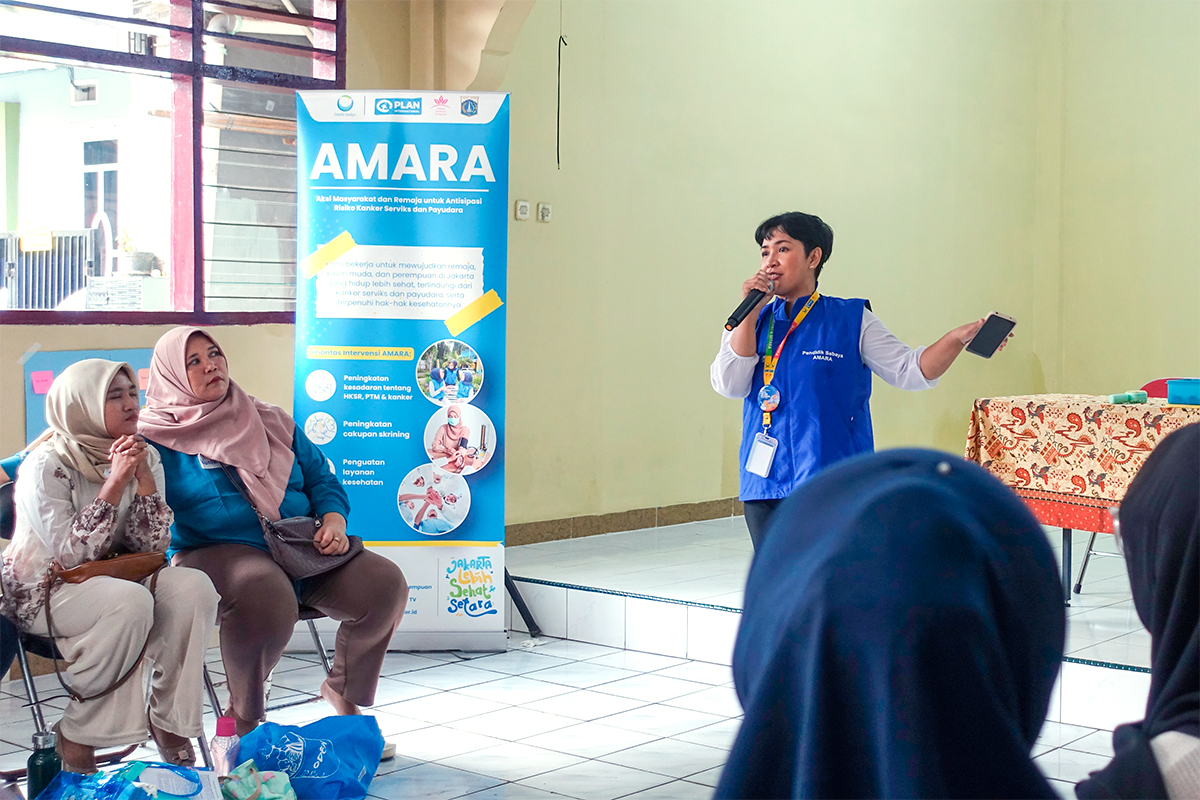
In a community hall in Cempaka Baru, Central Jakarta, the passionate voice of a woman can be heard from across the room. Putri Ekowati never imagined that one day she would stand before a group of women, speaking about cervical cancer, breast cancer, and the importance of early detection. Like many others, she once viewed cancer as something distant, frightening, and synonymous with death.
The 52-year-old mother is widely known in her neighborhood for her active involvement in environmental initiatives. Together with her community, she develops urban farming and hydroponic projects and collaborates with various stakeholders to promote environmental awareness. Yet behind her busy daily activities lies a series of experiences that gradually shaped her understanding of the importance of women’s health.
One of the most significant experiences was losing a close friend before joining Plan Indonesia’s AMARA (Community and Youth Action for Anticipating Cervical and Breast Cancer Risks) programme as an Adult Peer Educator.
“I had a close friend from university. She often complained about pain in her breast. At that time, I simply advised her to see a doctor,” Putri recalled.
Not long afterward, her friend was diagnosed with breast cancer and sought treatment abroad. Then came the devastating news that Putri never expected. Her friend passed away before she had the opportunity to support and care for her.
The loss left her with a lingering sense of regret.
For years, Putri found herself wondering what might have happened if she had known more about cancer, if she could have offered greater support, or encouraged her friend to seek medical attention sooner.
Unfortunately, this was not the only case she witnessed. She also saw women around her struggling with cervical cancer without adequate support. Some were abandoned by their partners during treatment, while others were not even allowed by their husbands to undergo reproductive health examinations.
“Many women actually want to get checked, but they are still afraid, embarrassed, or simply not given permission,” she said.
These experiences led Putri to realize that cancer is not solely a medical issue. Behind it lie challenges related to knowledge, stigma, gender dynamics, and access to healthcare, issues that many women in Indonesia face every day.
Her awareness deepened when she encountered her own health challenges.
Four years ago, Putri experienced abnormal menstrual bleeding. For a long time, she assumed it was normal. Eventually, however, her condition became so severe that her body could no longer cope.
Medical examinations revealed that her hemoglobin level had dropped to just 7 grams per deciliter, far below the normal range. She was referred to a hospital and was even advised to undergo a hysterectomy.
“I thought I was perfectly healthy. It turned out I wasn’t,” she said.
Several years later, similar symptoms returned. This time, however, she did not wait. She immediately sought medical attention and underwent a series of examinations, including a biopsy.
Fortunately, the results showed that she had a benign uterine polyp. Yet the experience profoundly changed the way she viewed health. She realized that understanding one’s own body and seeking timely medical examinations can make a significant difference.
Through the AMARA programme, Putri gained more than just knowledge about disease prevention. She learned about reproductive health, psychosocial support, and the importance of empowering women to make informed decisions about their own health.
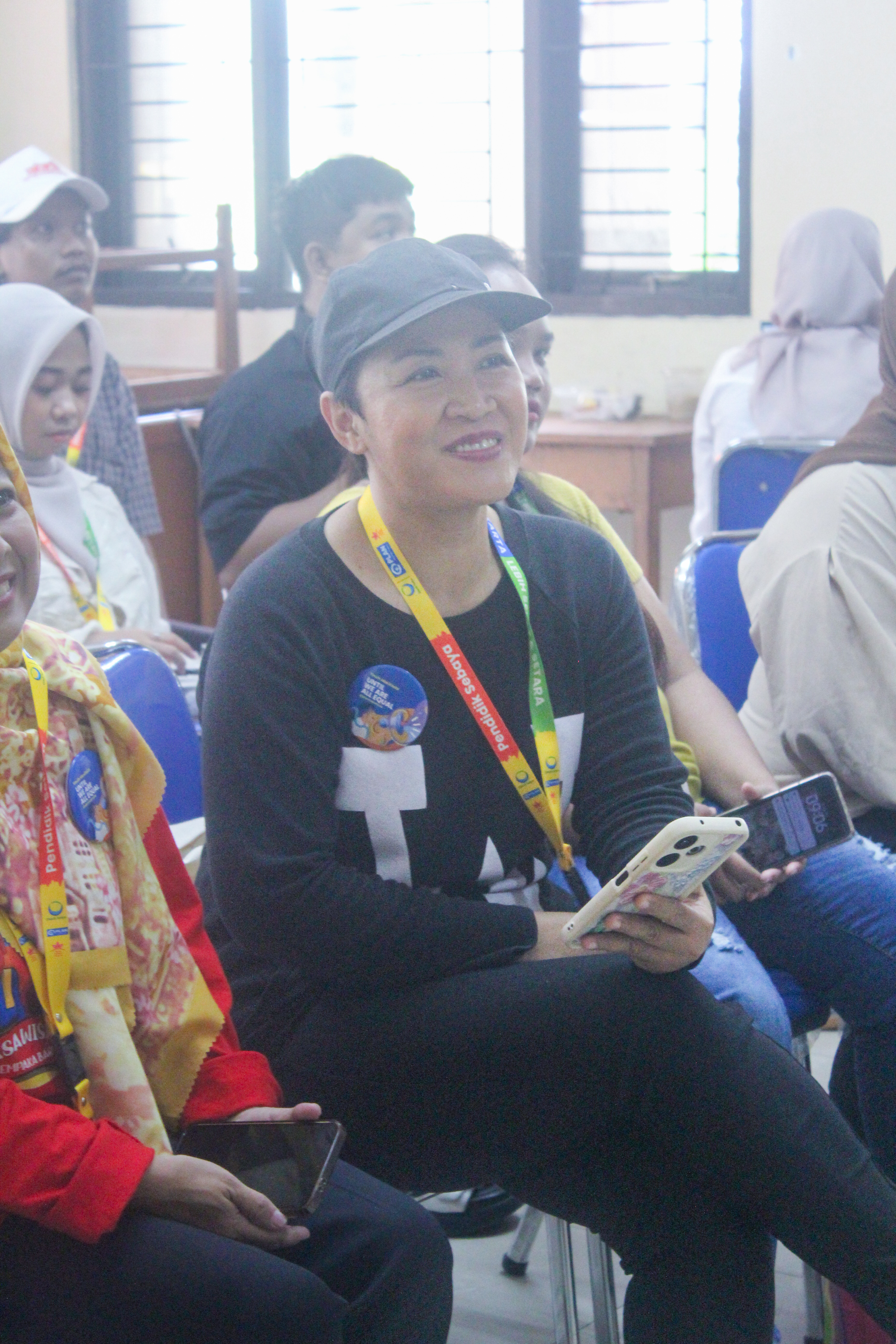
Photo 2: Putri listening attentively to a fellow peer educator during a community session. (Photo Credit: Anisa Farisyah/Plan Indonesia)
As a peer educator, Putri is responsible for sharing information about cervical and breast cancer with community members. It is not an easy task, as reproductive health remains a sensitive topic for many people.
To overcome these barriers, she uses simple language and relatable analogies. When explaining the cervix and Visual Inspection with Acetic Acid (VIA) screening, she compares the uterus to a house and the cervix to its front door.
This simple approach has proven highly effective. One of the most memorable moments in her journey involved a 23-year-old woman who had married at the age of 19 and already had three children. After learning about the risk factors associated with cervical cancer, she became the first participant to register for a VIA screening.
Collaboration between the Cempaka Baru Auxiliary Health Center (Pustu) and the local village administration has also been instrumental in supporting educational activities and expanding access to screening services.
Despite her efforts to educate others, Putri believes the greatest transformation occurred within herself.
Today, she performs regular breast self-examinations (BSE), pays closer attention to changes in her body, and no longer dismisses health concerns as insignificant.
AMARA focuses on increasing knowledge, awareness, and access to healthcare services for women, adolescents, and young people, enabling them to make informed decisions about their health and exercise their right to safe, inclusive, and quality healthcare. Through its peer education approach, the programme encourages communities not only to understand the importance of cervical and breast cancer prevention and early detection but also to challenge the stigma that often prevents women from seeking healthcare services.
This approach aligns with Plan Indonesia’s commitment to ensuring children and young people, especially girls, can realize their rights and access the information and health services they need to lead healthy and fulfilling lives.
As the mother of two sons, Putri also believes it is important to involve boys and men in conversations about reproductive health and cancer prevention.
“Women’s health is not just a women’s issue,” she emphasized.
For Putri, the biggest challenge in cancer prevention is not a lack of technology or healthcare facilities. Rather, it is the fear and stigma that discourage women from seeking help.
“Breaking down the walls of stigma so women can be healthy,” is how she describes her journey through the AMARA programme.
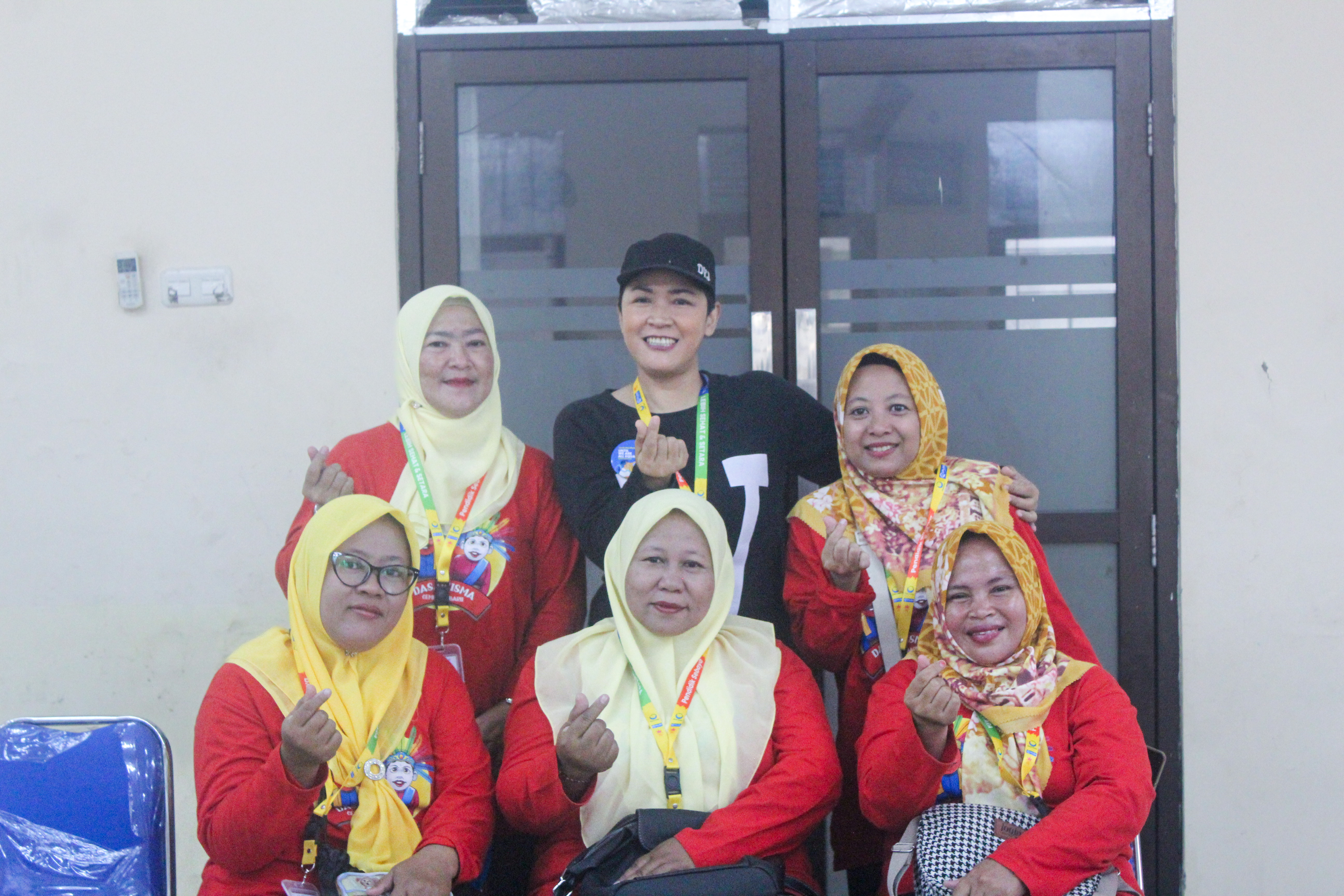
Photo 3: Putri together with programme participants in Cempaka Baru. (Photo Credit: Anisa Farisyah/Plan Indonesia)
As trust within the community continues to grow, improvements have also been made to local screening facilities. The Cempaka Baru Auxiliary Health Center has upgraded its examination space, creating a safer and more comfortable environment for women seeking screening services.
Today, the woman who once viewed cancer as something distant and terrifying has become a powerful advocate encouraging other women to take charge of their health.
Because for Putri, taking care of one’s health is not an act of selfishness. It is an act of love, for oneself, for one’s family, and for the future that is still worth fighting for.


