

Efforts of Bilebante Village to Prevent Stunting by Stopping Child Marriages
05 October 2024
The issue of impaired child growth, commonly known as stunting, is not just about the delayed height development of children—it is much broader than that. Stunting prevention depends on the first 1,000 days of life (HPK), which includes pregnancy and early parenting.
Yayasan Plan International Indonesia (Plan Indonesia), through the Capacity Building for Family Planning Cadres for Stunting Prevention (PARENTS) project, focuses on intervening in parenting and child development issues by holding in-depth consultations with stakeholders at the national and village levels, as well as strategic partners, to identify challenges, needs, and knowledge gaps. One of the areas where the PARENTS project is implemented is Bilebante Village, Central Lombok Regency, West Nusa Tenggara (NTB), which has over 500 households.
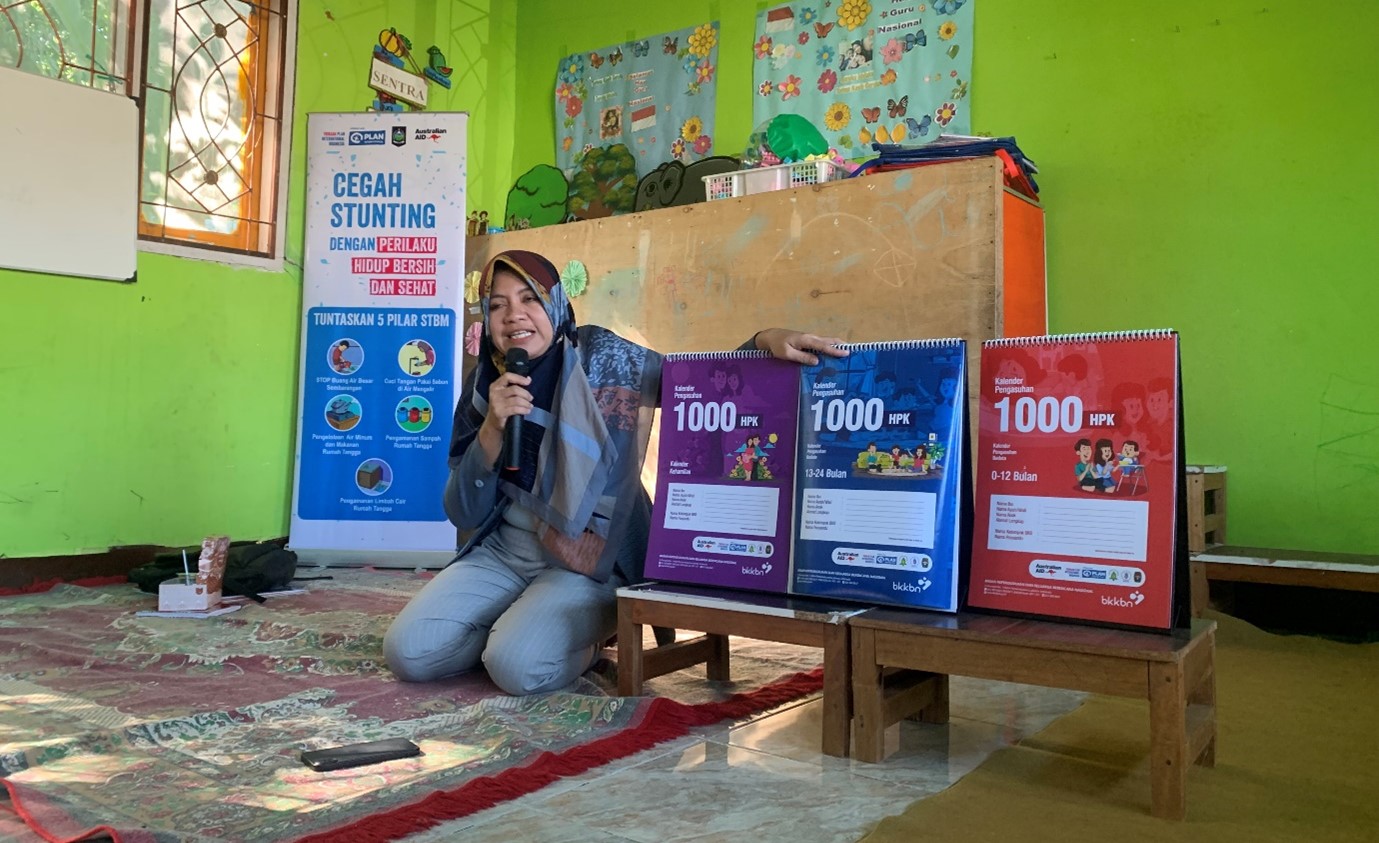
There are many challenges faced by the Posyandu (Pos Layanan Terpadu, village health services) and Puskesmas (Pusat Kesehatan Masyarakat, community health centre) cadres in assisting parents to prevent stunting. However, this has not dampened the determination and enthusiasm of Syahidaturrokyah in conducting outreach and engaging parents. As the leader of the Permata Bunda Bilebante cadres, Syahida mobilizes her team to regularly approach parents, using the modules from the PARENTS project as a reference.
“In the past, many people in this village married at a young age, but slowly, the number has decreased, and for the past three years, there have been no child marriages,” said Syahida with a proud gaze.
Working together with the Family Welfare Empowerment (PKK) program, the rate of child marriages—one of the factors contributing to stunting due to risky parenting practices and pregnancies—has decreased to zero in Bilebante Village by 2024. As the head of PKK and the wife of the Village Head of Bilebante, Nita has a vision to eliminate stunting through the prevention of child marriages and by improving the capacity of the youth in Bilebante.
“Now the children’s mindset has changed, with many realizing that education is more important than getting married. Furthermore, the village government has implemented strong regulations that reject child marriages or unregistered marriages, even involving law enforcement if necessary,” Nita added. In addition, high parental commitment to not approving child marriages, and the dedication of village officials, especially the village heads who refuse to grant permission for child marriages, have been key to eliminating child marriages in Bilebante.
The enthusiasm is not just coming from the cadres. The residents of Bilebante are also fully determined to eliminate. This is evident in the commitment of the village government and volunteers to build a Posyandu facility in 2024. The effort began with purchasing land and gradually constructing the Posyandu, funded by the village budget and donations from the residents, including the cadres. Each activity typically allocates a portion of the Family Planning Operational Assistance (BOKB) fund for land acquisition, while the building, worth approximately 200 million IDR, is funded by the village government.
Since most men in the village work as farmers or have jobs that require them to travel far, it is typical for mothers to bear the burden alone during pregnancy and childbirth. For this reason, the support and guidance from the cadres are very beneficial in preventing stunting from the first 1,000 HPK, including outreach on parenting and nutrition for both parents and children.
“I’ve learned new things. I used to be quick to anger, but now I can control my emotions and give more attention to my child. Since hitting is not good, I now try to explain things to my child when they make a mistake,” said Mira, one of the parents who received outreach from the BKB Kabar Indah. Mira admitted that she used to use physical punishment as she believed it was necessary to discipline children, but her perception gradually changed after receiving outreach from the cadres.
Together with other mothers, Mira still faces challenges in getting her husband to participate in the outreach activities, as their jobs often keep them away, leaving the mothers to attend alone. For them, the presence of their husbands is crucial in gaining the knowledge shared, as it directly impacts their children’s development.
Although challenges remain, Bilebante Village is optimistic about eradicating stunting through collective effort. The village, still vibrant with the sounds of children playing, has a strong vision to continue prioritizing the future of its children. Stunting prevention outreach efforts are also ongoing.
“The hope is that the program will continue to provide support. Whatever assistance can be given, including the necessary infrastructure to continue this effort,” added Syahida with great hope and enthusiasm. (**)


