

Behind the Evacuation Tent, Kori Voices the Needs of Adolescent Girls
24 August 2026
Kori (12) gazes quietly toward the evacuation tent that has become her temporary home, where she now lives with her parents and siblings. The youngest of seven children from a village in Manggarai Regency, East Nusa Tenggara (NTT), she is one of the survivors of the magnitude 7.7 earthquake that struck Flores on 15 August 2026.
Since the earthquake, Kori and her family have remained at the evacuation site because they are still afraid to return home. The continued aftershocks have heightened their concerns for the safety of their family. Amid the limited conditions, meeting basic needs has become a daily challenge, particularly for children and adolescent girls.
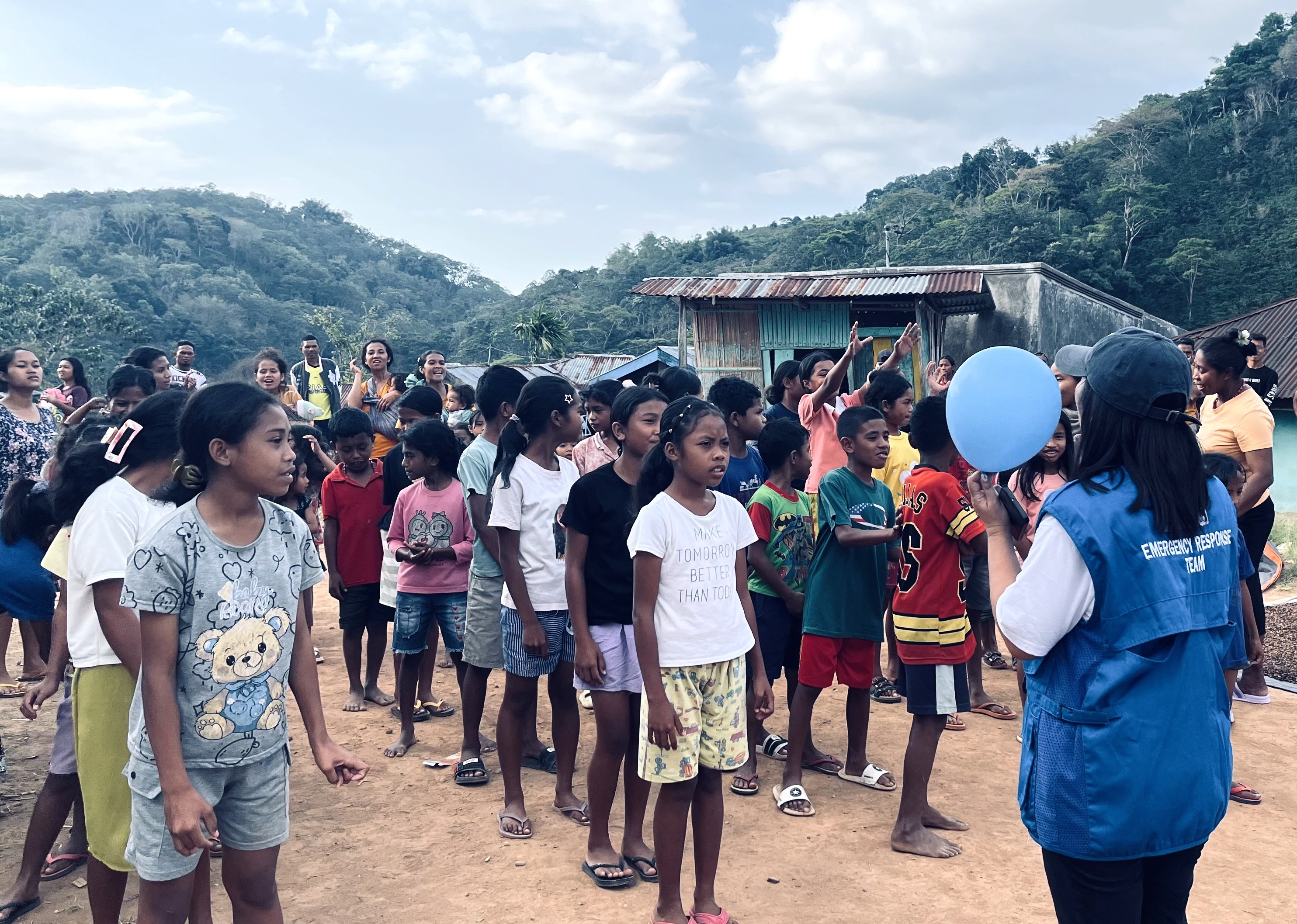
When visited by Plan Indonesia’s Emergency Response Team (ERT), Kori initially appeared quiet and withdrawn. However, her smile slowly returned when she and other children her age were invited to take part in psychosocial support activities. They were divided into four groups and participated in various games, including guessing songs, moving balloons, singing together, and other group activities designed to help them temporarily forget the fear and anxiety caused by the earthquake.
In between the activities, Kori shared some of her most urgent needs as an adolescent girl currently in her second year of junior high school. In a soft voice, she told a member of Plan Indonesia’s ERT that she urgently needed sanitary pads, bathing soap, and other personal hygiene supplies.
“Those items are very important to us, especially while living in an evacuation tent,” she said.
Kori’s story reflects the reality faced by many adolescent girls living in evacuation sites following a disaster. Beyond food and safe shelter, access to menstrual hygiene products and personal hygiene supplies is an urgent need that can often be overlooked. Yet limited access to these essentials can affect the health, comfort, and confidence of adolescent girls during their time in evacuation shelters.
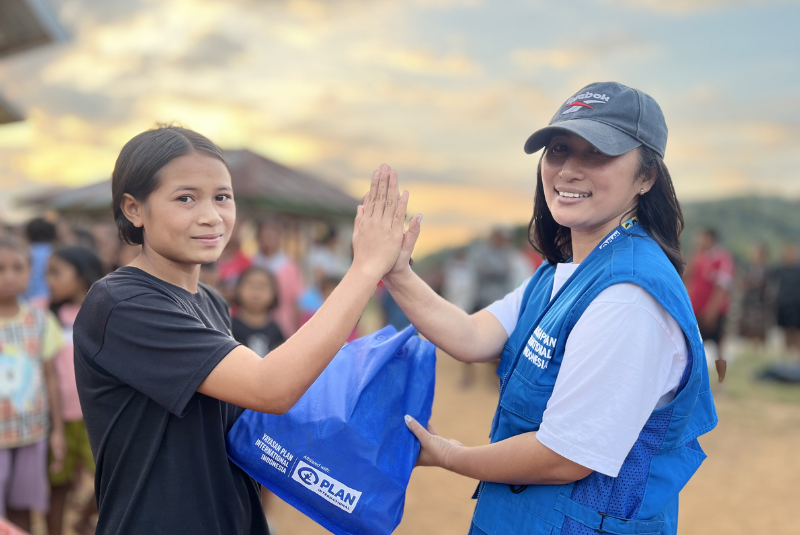
To address these needs, Plan Indonesia’s ERT distributed menstrual hygiene kits to Kori and other adolescent girls at the evacuation camp. The kits contained essential supplies to help them maintain their health and hygiene while living in the evacuation site. Children also received educational play kits containing drawing books, coloured pencils, pens, rulers, and other learning materials.
The distribution of menstrual hygiene kits and educational play kits was part of a Rapid Needs Assessment (RNA) conducted by Plan Indonesia’s ERT. The assessment aims to identify urgent needs and ensure that the specific needs of women, girls, children, and other vulnerable groups are addressed quickly and appropriately.
Although she is still living in an evacuation site, Kori is beginning to find hope. She shared that her school has announced plans to resume classes on 28 August. The news is something she is eagerly looking forward to.
As the daughter of a farmer, Kori dreams of becoming a nun. She hopes to follow in the footsteps of one of her older brothers, who is now a Catholic brother serving in a church in Jakarta and previously served in the Philippines.
Amid the uncertainty caused by ongoing aftershocks, Kori says she longs for life to return to normal. She misses having a safe home, studying with her friends at school, and going through her days without fear. For now, urgent needs such as menstrual hygiene products, bathing soap, and psychosocial support remain essential in helping adolescent girls like Kori stay healthy, safe, and hopeful during an emergency.
Written by: Agus Haru │Editor: Dewi Sumanah │Photo: Plan Indonesia/Agus Haru


