

A Promising Future: Transforming Fatherhood in South Central Timor
20 April 2026
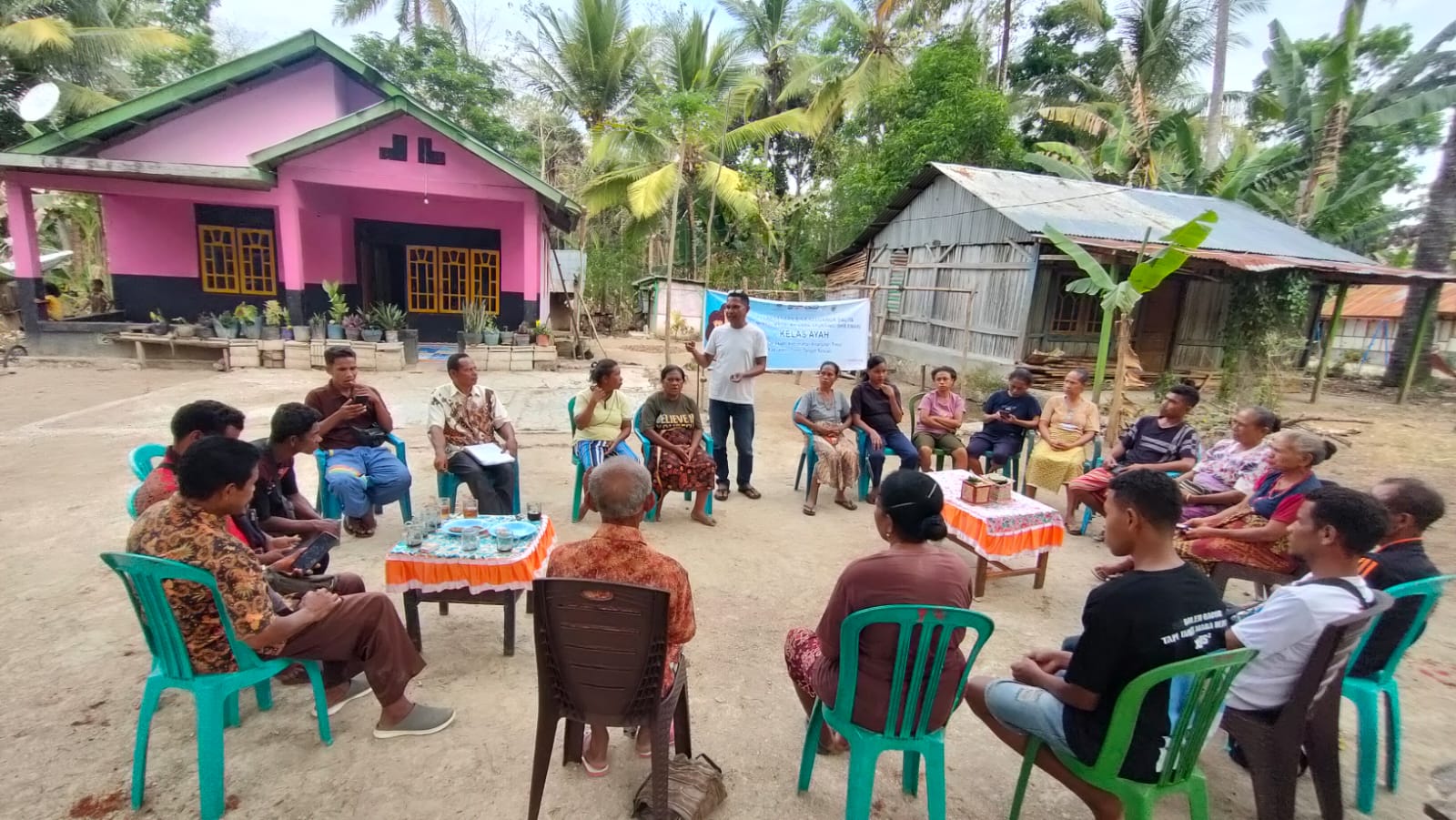
The implementation of the exclusive Bina Keluarga Balita (BKB) parenting class for fathers –Father’s Class— across nine villages in South Central Timor (TTS) marks a significant shift in the region’s social fabric. Launched in October 2024 through Project PARENTS and expanded in 2025 via replication projects, these classes were designed to tackle stunting and redefine gender roles. Traditionally, in TTS, child-rearing was seen strictly as “the mother’s job,” while fathers were solely breadwinners. However, project facilitators recognized that this was a deep-seated habit rather than an unchangeable culture, a challenge of awareness that could be overcome through strategic engagement.
The breakthrough began with “triggering” sessions. One of the facilitators used powerful, heart-stirring reflections, reminding fathers that children are a “trust from God” and a “family asset beyond material meanings,” not a burden. They challenged the men with a blunt reality: “We often know how to make a child, but not how to raise one.” These words sparked a sense of responsibility and even healthy shame, leading to a surge in participation simultaneously with the implementation of social behavior change communication strategies. Attendance consistently exceeded targets, and the commitment was so strong that if a father couldn’t attend, the mother would step in to ensure no lesson was missed.
The impact is most visible at the local Posyandu (health posts). Previously, the father who are attending a check-up for their child would offer excuses, such as his wife being ill or at the market, so she cannot do it herself. Today, 8 out of 10 fathers interviewed state firmly: “This is my child; it is my responsibility to be here.” They now attend to monitor their child’s height, weight, and nutritional needs. Beyond health visits, fathers have taken on heavy domestic tasks like fetching water, doing laundry, and feeding children—recognizing that their wives are partners, not servants.
For the mothers, the change has been life-altering. They report feeling more valued and respected. “We are no longer working alone like slaves in our own homes,” one mother shared. The shift has also fostered deeper emotional bonds; children who were once distant or fearful now eagerly await their fathers’ return from work and play with them. Parents have also noted a stark difference in the development of their younger children compared to their older siblings. By prioritizing the First 1,000 Days of Life (HPK) and replacing instant foods with local, nutritious options, families are seeing better growth and brain development.
Through the collaboration of village governments, churches, and health workers, these nine villages have united under a shared goal: ensuring no new cases of stunting. The Father’s Class has proven that when a man’s perspective shifts, the entire family thrives. As the project continues into 2026, it carries the weight of a powerful local reflection:
“To change a family, a village, or even the world, the change must first begin within oneself.”
Author: Ramlinus│Editor: Annisa Hanifa│Photo: Plan Indonesia/Ramlinus


