

Your Trash, My Money
06 November 2024
If you can afford to buy bottled water, then why can’t you afford to dispose of the waste? The picture above gives us an idea of how visitors to a park in Kupang City simply put the used bottled water down, without disposing of it in the trash bins that have been placed not far from the seating location. This is an example of unconcerned behavior related to building the habit of disposing of waste in its proper place. So, what about us?
These habits and examples do not invite us to be wise in generating waste, but rather to ignore or agree that we can throw our waste anywhere, even acknowledging that there are others who are responsible for collecting our waste. This thinking is far from encouraging good habits for environmentally conscious behavior. Widespread technological developments present a lot of information and data through social media regarding the impact of littering, especially plastic waste, on the environment.
It is easy for us to read and listen and follow the example, but the fact is that the presentation of data and the impact of littering has damaged the environment and brought other impacts such as being a source of disease, and other impacts have not been able to encourage sustainable behavior change.
The news that we see everywhere does not seem to be able to encourage awareness of the importance of environmental principles; the information has not been able to change our daily behavior or habits. There are park cleaners and trash bins at every point in Kupang, but keeping the park clean by disposing of trash in its proper place is still a challenge. We always assume that the cleaners will pick up and dispose of the leftovers from our consumption. If this is the case, then the awareness of generating and disposing of waste carelessly is still increasing and requires a more strategic approach to handling it. Changing behavior is a long process and requires support and cooperation from all parties, social media has a role in helping to succeed in better waste management. But success takes time and continuous awareness raising.
Understanding the development of waste management today, we find many circular economy approaches, with good waste management it will have good economic value too, supporting the increase of economic value for everyone, then we need to have the knowledge and skills of how the remaining goods used can be valuable. In Indonesia, the circular economy involves a lot of young people to encourage the reduction of waste.
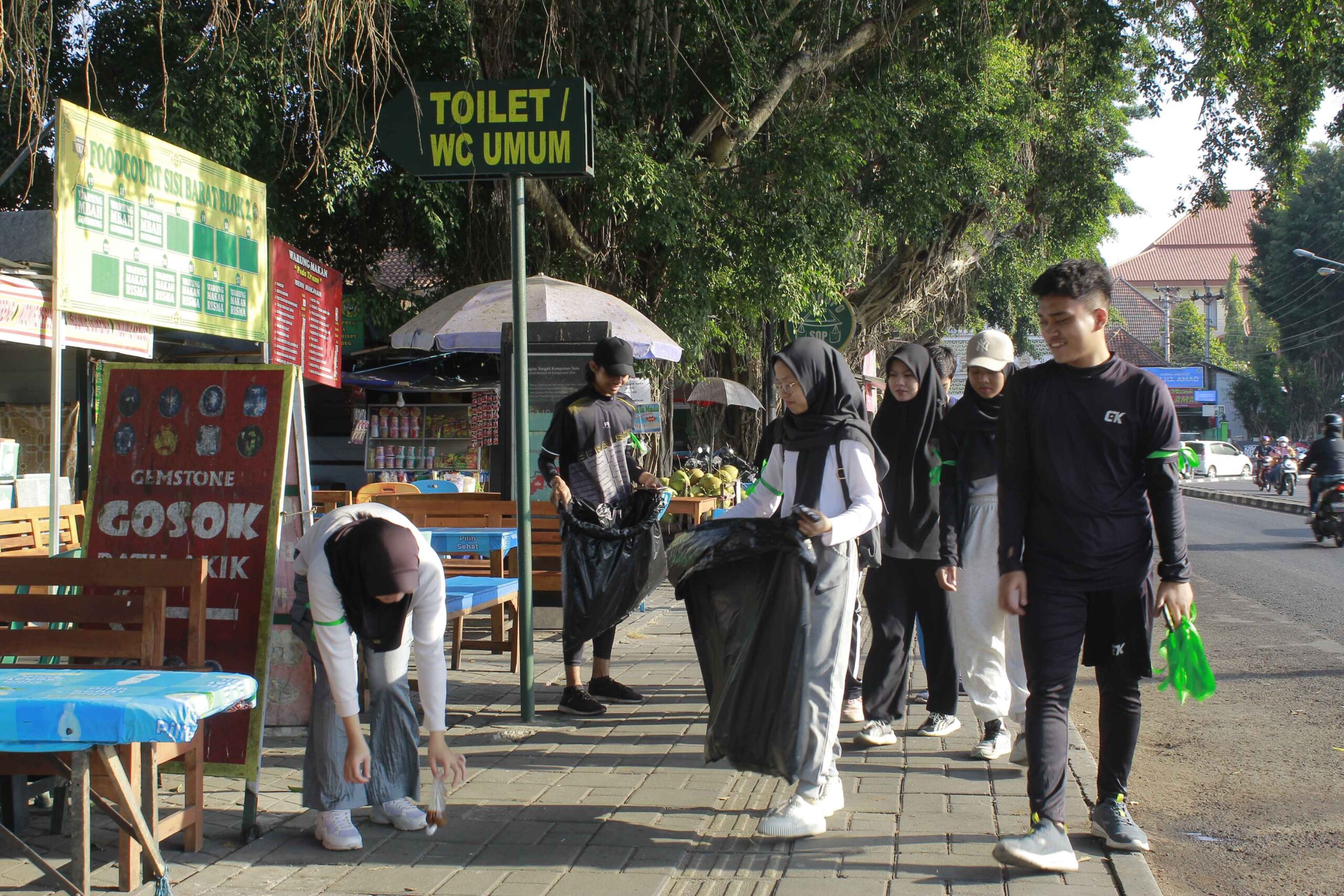
Young people are the ones who have the knowledge and power to take action and collaborate. Young people are agents of change who are able to work individually and in groups, with many opportunities and spaces given to take part in waste sorting until waste can become a livelihood. The role of young people in Kupang City is often linked to economically valuable waste, as this activity is expected to reduce the amount of waste in landfills and also encourage wiser waste management. As a generation with knowledge and strength, young people should play a role in waste management.
Kupang is a growing city, with an increasing population, it is certain that there is an increase in the amount of waste every day. Data shows that one person produces 0.7kg of waste per day and accumulates to 2.5kg/family/day. This amount is the biggest threat to landfills and also threatens public health, so it is necessary to improve waste management more efficiently and effectively through the circular economy, which is when materials and products left over from consumption are not directly disposed of but can be managed by Recycle, Reuse and Reduce (3R), when waste gets a change of form, sorted and reused it will have a price.
The circular economy approach is not only knowledgeable in its management but has been able to increase the income of waste operators and waste pickers, because with waste in its place helps them sort waste more easily, saves time because it is no longer going around, and makes it easier to pack so that more waste is ready to be sold and of course its economic value increases.
Waste is the residue of consumption that should be placed in the trash, but now we need to open the insight that waste has economic value, the habit of throwing garbage in its place will help scavengers or young waste activists increase their income. The simple behavior of disposing of waste in its place is a behavior that needs to be introduced early on to children, families and communities, it may not have a direct impact when you throw food waste into the organic waste bin, or throw bottled water into the inorganic waste bin, but do we know that by doing this we have helped protect the environment for the better, organic waste can be managed into organic fertilizer, or animal feed, as well as inorganic waste can be recycled into valuable products with a little change in shape. When behavior is improved by not generating waste, reusing plastic waste, managing organic waste into fertilizer, we indirectly participate in reducing the impact of climate change and promoting sustainable development.
As innovative promoters, young people have the ability to be leaders in engaging their peers and collaborating with others to promote the circular economy. Kupang City already has a waste bank, which should function as a bank to collect waste and process it for sorting, categorizing and forwarding to the recycling industry. The waste bank is managed by young people and has collaborated with many other parties, such as scavenger groups, housewives and neighborhoods as well as the private sector. In addition to providing economic value, waste banks have also created jobs for young people.
As agents of change, young people must continue to conduct environmental campaigns, promote the circular economy of waste through social media and continue to share so that more and more people become aware. Being promoters and leaders is the future of young people, one action will help many other young friends and certainly contribute to saving the environment and encouraging the reduction of disease rates. Through the support of adults, influential parties, young people will be able to play a role in the development sector and be able to reduce existing problems.
If so, the problem of low awareness of disposing of garbage in its place can be overcome, by giving leadership roles to young people, with space and opportunities, their role will be optimal and bring better results. Waste is not something that appeals to young people, so there are not many who look at it, because of the labeling of smelly and dirty, but with the support and opportunities provided and the knowledge of the circular economy continues to be tempting, many young people will want to get involved and play an active role and will even use social media as a means to disseminate their activities. What young people do determines the future of the environment, we must work together to preserve and promote sustainability.
Hopefully there will be more communities in Kupang City like @Donasisampahmu.id to encourage young people and communities to care about waste, more people to sort and more people to help. With the financial support that will be provided by Plan Indonesia through young leaders in the future, we hope that more young people, and schools will have waste selection and donate their waste to become money. Said Fajar, Donasisampahmu.id Kupang
Writer: Fredrika Rambu


