

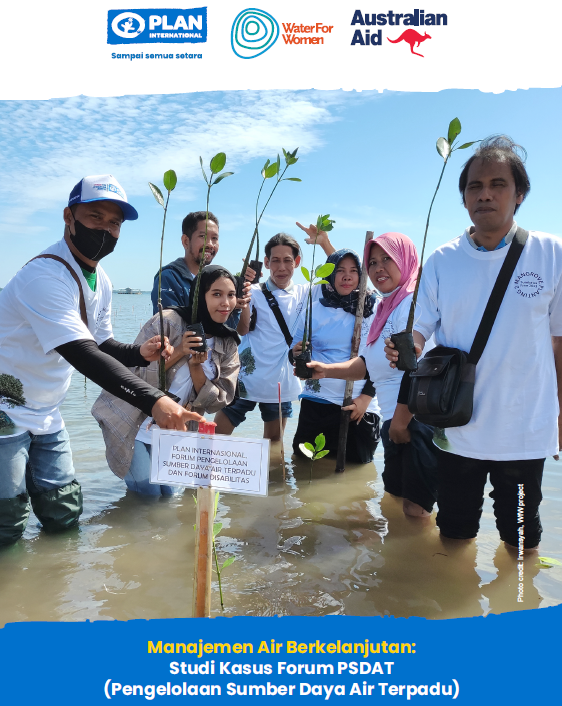
Sustainable Water Management: PSDAT Forum Case Study
17 December 2024
Indonesia is highly vulnerable to climate change, which has the potential to threaten and disrupt people’s livelihoods and pose other disaster threats. Climate change can generally be measured by increases in temperature and rainfall. The increase in temperature threatens extreme weather that can be seen in the level of rainfall, wind speed, sea level rise, drought and flooding. In the water sector, climate change will cause groundwater shortages and sea level rise, which can affect water availability.
Water shortages can also lead to crop failure due to the death of productive or non-productive land due to the threat of drought or prolonged dry seasons. Drought will also have an impact on the availability of water, sanitation and hygiene (WASH) which affects the unmet needs of the community, especially vulnerable people, such as children, women, people with disabilities and the elderly. In addition, the occurrence of water crises such as lack of access to water and sanitation sources, the death of water sources due to disaster threats, poor water quality due to pollution and the degredation of ecosystems and the death of biodiversity are also a threat.
Climate change is currently in the global spotlight, where the resulting impacts have the potential to damage access and services for water, sanitation and hygiene (WASH) on a large scale. This impact is predicted to continue to grow in the future, and has implications for the targets of fulfilling WASH access and services that have been mandated by the government in the RPJMN in 2024 and the SDGs in 2030. Therefore, a well-managed adaptation pattern is needed, especially in the WASH sector.


