

Story of Farmer Group in East Nusa Tenggara Who Rises After Cyclone Seroja 2021
28 June 2023
Tropical Cyclone Seroja in East Nusa Tenggara (NTT) in April 2021 also affected the agricultural sector. This storm caused damage to the agricultural land of residents, including those belonging to the Climate Smart Farmer Group in Waimantan Village, Lembata Regency, NTT. They struggled to reopen agricultural land while being relocated to new housing.
This is the story of Mama Martina and dozens of other farmers who are members of the Climate Smart Farmer Group in Waimatan village, East Ile Ape District, Lembata Regency, East Nusa Tenggara. They were forced to open new agricultural land due to the tropical cyclone in April 2021.
Flash floods brought avalanche material from the eruption of Mount Ile Lewotok which was washed away by the seroja cyclone. This made all Waimatan villagers have to be relocated to Tanah Merah Village, Ile Ape District—including Mama Martina. In an effort to maintain livelihoods, Mama Martina and other farmers then opened new garden land located close to the relocation settlement area. From the beginning, their efforts to get communal land to cultivate were not easy. This farmer group once obtained land with fertile land characteristics, but the location is far from the relocation occupancy so it requires large costs for transportation.
“Previously it was 10 days in the field, but it was too far. Using an ojek costs Rp 20 thousand and you have to go back and forth morning and evening to water,” said mama Martina. 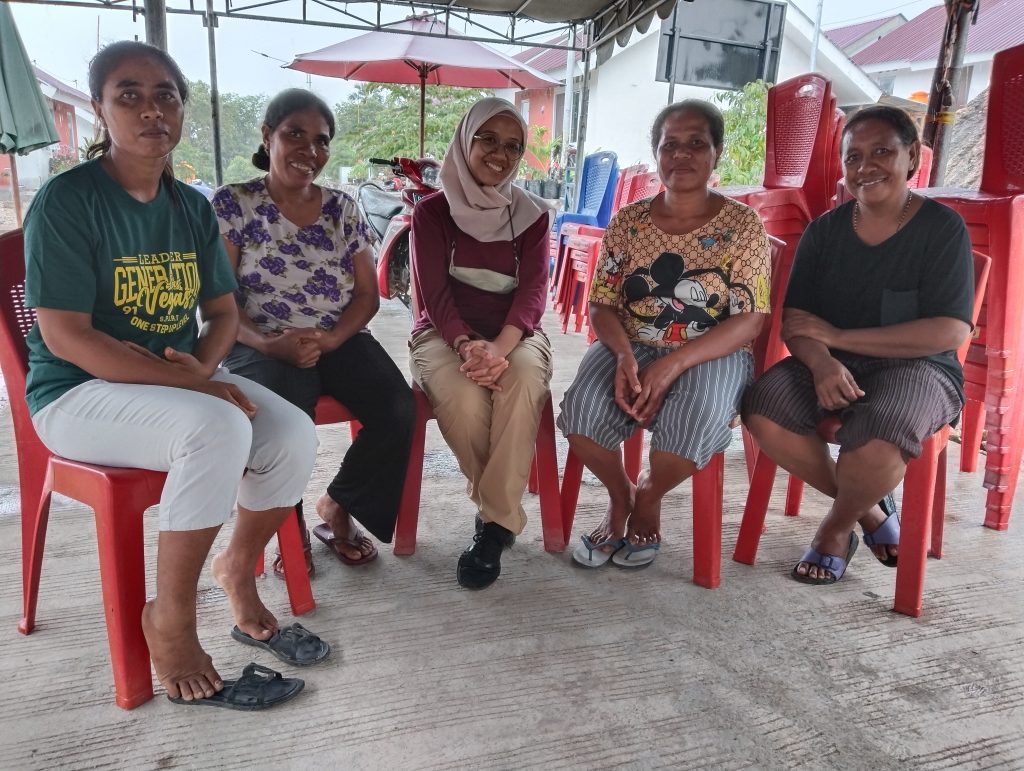 Foto penulis (tengah) bersama dengan Kelompok Tani Cerdas Iklim di lembata yang dipimpin oleh Mama Martina (Paling ujung kanan) (Foto: Yayasan Plan International Indonesia/Ayu Lestari)
The head of Waimatan Village, Mus, then tried to ask permission from the landowner near the relocation residence, so that the land could be cultivated by farmer groups. This effort bore fruit, the landowner allowed for the use of about one hectare of land as a communal garden cultivated by farmer groups.
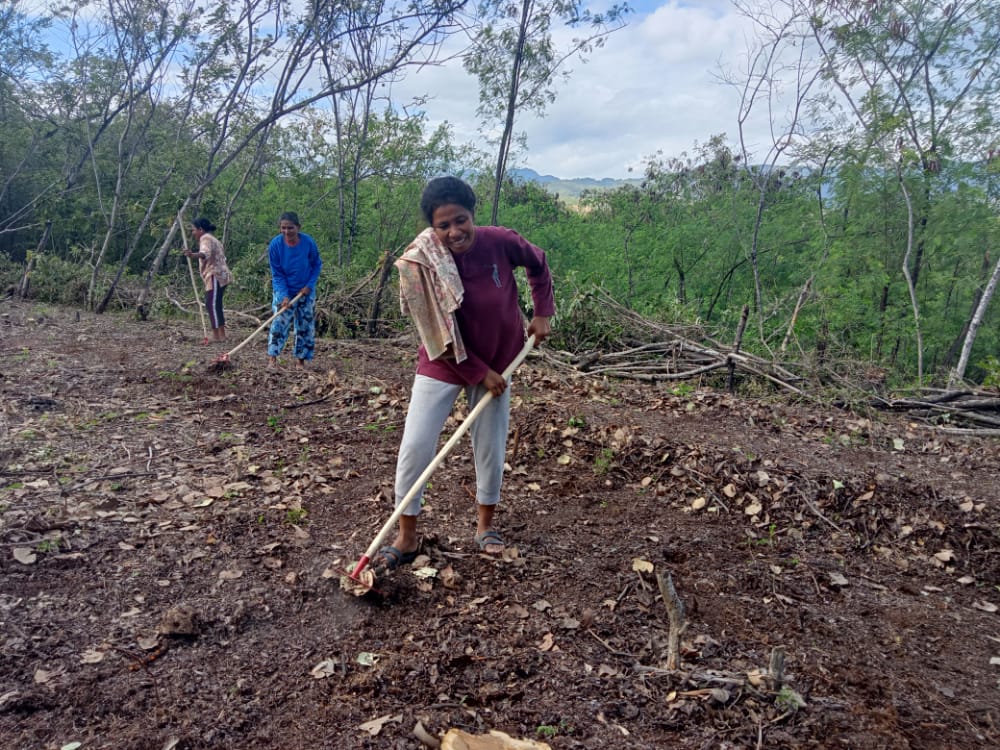
Mama Martina and the farmers also cultivate the land so that it can be cultivated and ready for planting. The activity begins with clearing land and coating the surface of the land with a mixture of husk, compost, and manure, preparing this land for about a week until the communal garden is ready for planting.
“After the land is ready, we plant kale, spinach, pariah, and long beans, this is what we plant directly. Meanwhile, if what is seeded first is chili, eggplant, and papaya,” said Mama Martina who is the head of the Waimatan Village climate-smart farmer group.
During the processing period, Mama Martina and her group had experienced problems related to pests. As a result of pest attacks, a number of crops, such as cucumbers and bitter melon, die and cannot be harvested.
Even so, they did not despair. To prevent pest attacks, Mama Martina and other farmers use plant-based pesticides from plants, such as neem leaves. The Lembata Agriculture and Resilience Office also assists and provides counseling to farmer groups to overcome pest problems. Plan Indonesia Encourages Farmer Resilience
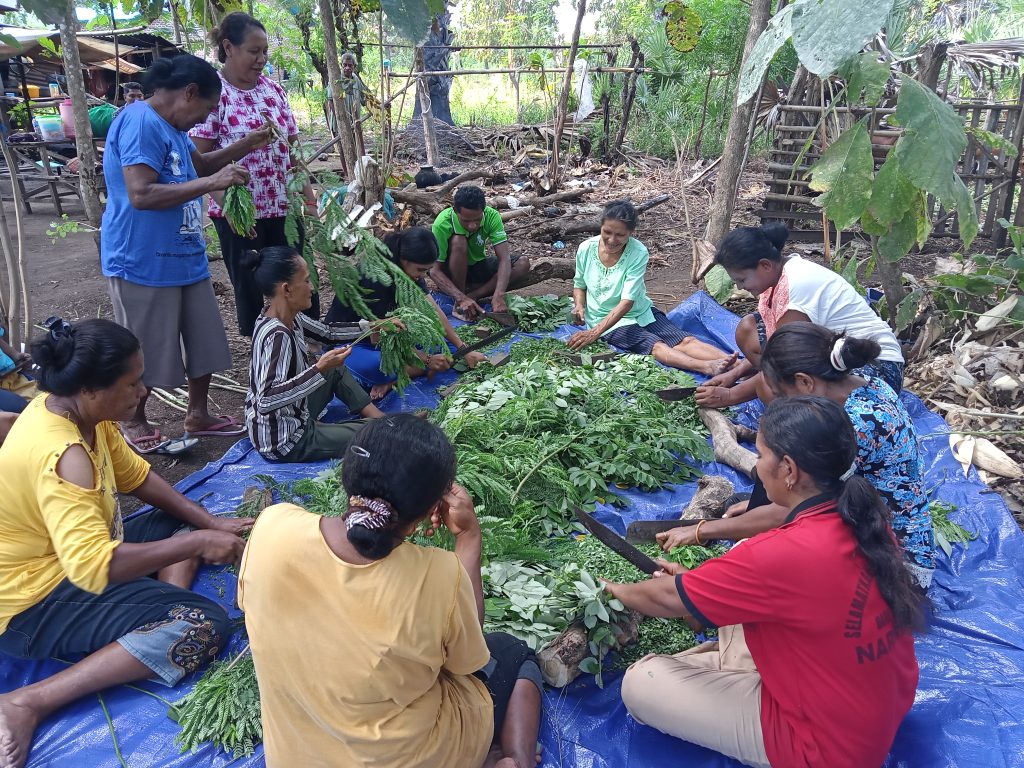
Climate smart agriculture is one of the activities carried out in Plan Indonesia’s assisted villages under the Lembata Program Implementation Area (PIA). This activity empowers farmer groups in the village to manage communal gardens organically as one of the efforts to adapt to climate change. Climate Smart Agriculture in eight villages namely Lamawara, Waowala, Amakaka, Tanjung Batu, Waimatan, Lamawolo, Wowong and Wailolong villages.
Plan Indonesia’s Program Implementation Area Manager in Lembata, Erlina Dangu, revealed that this empowerment program aims to support the economic recovery of the community, including flood and landslide survivors who are currently living in relocation houses.
“Climate smart agriculture is the first program we initiated in response to the disaster caused by the storm that hit in April 2021. Therefore, we work together with the village government and the Lembata Regency Agriculture Office to assist farmer groups,” said Erlina.
Erlina detailed a number of activities that have been carried out with farmers, namely training on climate-related vulnerability and capacity assessments, action plans made with farmer groups, agricultural extension workers and village governments, training on making fertilizers, preparing agricultural land for vegetable crops or horticulture.
The results of this communal garden have been enjoyed several times by farmers either for sale or their own consumption. The proceeds from the sale are included in the farmer group’s treasury to be stored and managed together. Financial management in this farmer group by implementing a savings and loans system. Farmer group members can borrow money from the group’s cash fund with a certain interest rate. The interest from this loan is returned to the cash fund that will be used for investment capital in communal gardens.
The planting season carried out by the Waimantan village farmer group is carried out in the summer, starting from July 2021. Entering the rainy season, which usually starts in November-December, they then work on their respective gardens. By summer, the farmer group will again prepare land in communal gardens for replanting.
Climate smart agriculture is an approach to developing agricultural strategies to secure sustainable food security in the face of climate change conditions. Climate Smart Agriculture is the main key in increasing productivity in the face of climate change. The use of vegetable/natural pesticides, low-emission high-yielding rice varieties, water-saving irrigation techniques, balanced fertilization and the use of organic matter are expected to contribute to increasing productivity and crop index both rice / non-rice.1
-
- https://pertanian-mesuji.id/mengenal-implementasi-pertanian-cerdas-iklim/
Author: Ayu Lestari – MER Specialist Plan Indonesia
Editor : Muhammad Reysa – Programme Communication Specialist Plan Indonesia


