

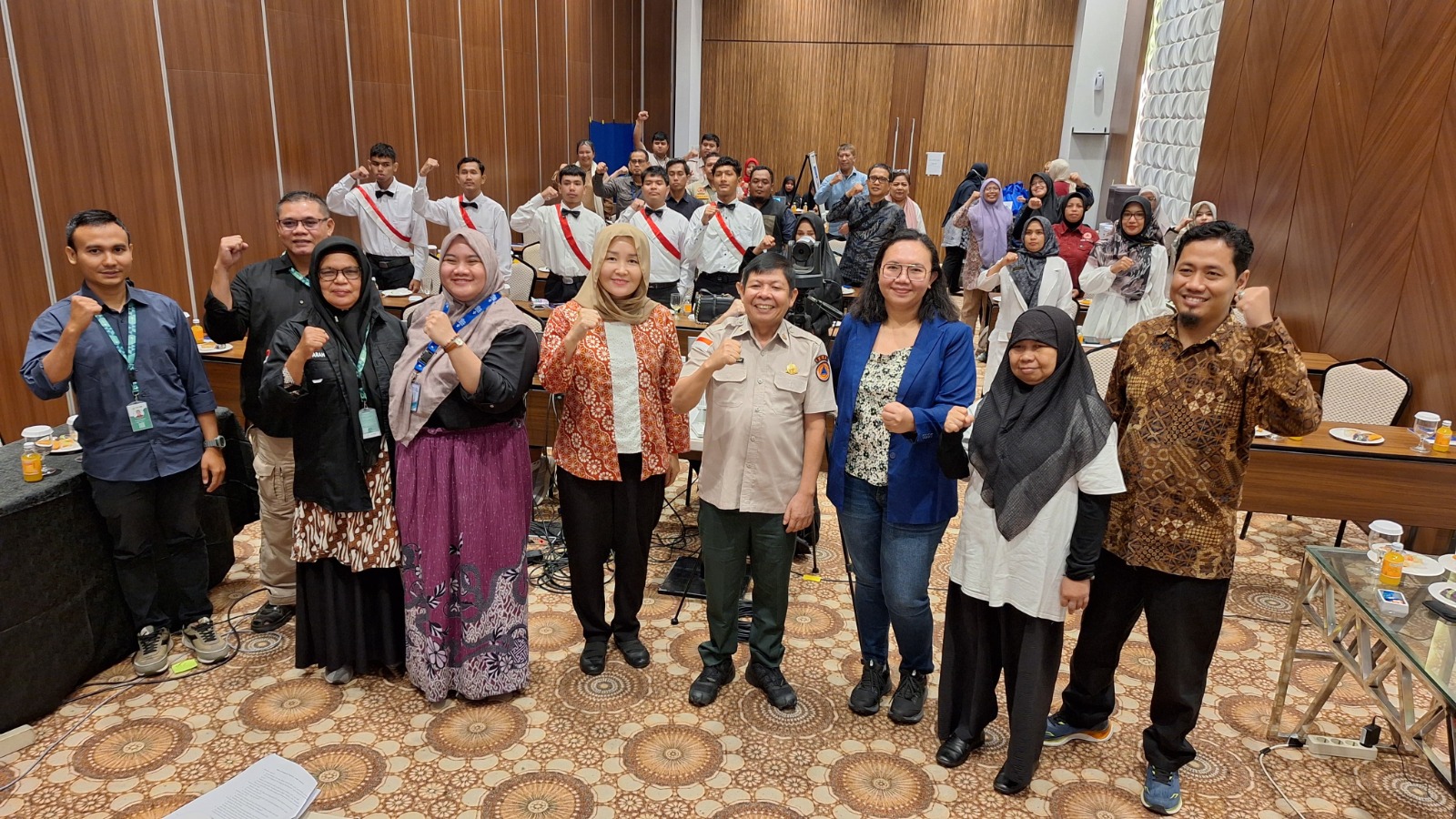
Plan Indonesia Calls for Involvement of Vulnerable Groups in Disaster Risk Reduction Efforts
10 October 2024
Banda Aceh, Aceh, October 10, 2024 – Effective Disaster Risk Reduction (DRR) must be based on the principle of inclusiveness that actively involves every member of society, especially vulnerable groups such as women, people with disabilities, children, and the elderly. A study from the World Bank (2017) shows that policies that accommodate the needs of vulnerable groups can reduce economic losses due to disasters by up to 20%.
The National Disaster Management Agency (BNPB) also noted that inclusive DRR programs can reduce disaster losses by 15-20% in disaster-prone areas such as East Nusa Tenggara (NTT) and Aceh. Thus, as a country that is frequently hit by disasters, ensuring that no group is left behind is key to building community resilience and disaster response.
Ida Ngurah, Resilience and Humanitarian Program Manager, Yayasan Plan Internationl Indonesia (Plan Indonesia), emphasized that the issue of inclusiveness is a topic that must be voiced in this year’s DRR Month commemoration. Plan Indonesia as an organization that has a dual mandate in both development and humanitarian is committed to ensuring that all community groups have equal access to information, services, and opportunities to actively participate in disaster planning, implementation, and recovery.
“In an inclusive DRR program, vulnerable communities are not only the recipients of assistance, but also the main actors in risk reduction. As we did in the Data-Driven Inclusion program in Klaten, Central Java. This program involves vulnerable groups, especially in disaster-prone areas such as the Merapi eruption area to collect and analyze data that is not only demographic but also identifies the specific needs of vulnerable groups such as women, children, the elderly, and people with disabilities, who are often the most severely affected in disaster situations,” said Ida at the peak of the DRR Month commemoration in Aceh, 10 October 2024.
Inclusive disaster risk reduction efforts have been carried out since the 2004 Aceh Tsunami response. As part of the humanitarian response at that time, Plan Indonesia participated in rebuilding earthquake-resistant schools and providing child-friendly play and learning spaces by paying attention to disability needs, such as the existence of wheelchair paths or ramps.
In addition, Plan Indonesia also supports the creation of a comfortable and safe environment for the emotional and psychological recovery of children including children with special needs affected by the tsunami. As a long-term effort, Plan Indonesia trains educators and local communities including young people for disaster preparedness such as earthquakes and tsunamis.
Youth Encourage Inclusivity
Young people have an important role in leading inclusive DRR actions. Rifqa (23), a young Deaf woman from Semarang City, Central Java, initiated the #TuliTanggapBencana action that provides education related to climate change and disaster resilience to Deaf friends in Semarang and Yogyakarta.
“I feel uneasy actually, why are there still many Deaf friends who have not received information about disasters and climate change. Therefore, I initiated the #TuliTangguhBencana action with the hope that Deaf friends can be actively involved both with communities, organizations and individuals,” said Rifqa.
Rifqa was selected as a participant in the Young Leaders for Climate activity organized by Plan Indonesia with Teens Go Green Indonesia. This activity is part of the Urban Nexus program, a resilience and humanitarian program for young people supported by ANCP-DFAT and Plan Australia.
The Urban Nexus program increases the capacity of young people including youth with disabilities related to climate crisis; gender equality, disability, and social inclusion; and program management, social campaigns and reporting.
In addition to Urban Nexus, in the Special Region of Yogyakarta and Bali, Plan Indonesia implements the Disaster Safe Education Unit (SPAB) Model Province program. This program encourages the involvement of vulnerable groups in DRR efforts in schools, including in special schools (SLB), the establishment of a SPAB Joint Secretariat (SEKBER) involving communities from vulnerable groups, the preparation of roadmaps and youth-led SPAB implementation campaigns and innovations.
“More than 360 SMA / SMK / including SLB are under our authority in the Bali Provincial Government. We are committed to encouraging and assisting schools to become. Our target is that by 2026 the entire education sector under the authority of the Bali Provincial Government will be realized as a Disaster Safe Education Unit,” said the Acting Head of the Bali Regional Disaster Management Agency (BPBD) Made Rentin.
In commemoration of the DRR month in October this year, Plan Indonesia filled various discussion sessions including discussing gender localization and social inclusion (gesi) in humanitarian response activities in Indonesia, building the resilience of young women and at-risk groups in facing the climate crisis and sharing good practices in responding to early warnings.
In addition, Plan Indonesia through the Inclusive Data Management program also launched a guidebook on inclusive data management methods for the Merapi volcanic eruption risk area. The guidebook, which was developed over 8 months (May – December 2023) in Kemalang and Manisrenggo sub-districts, Klaten, Central Java, aims to encourage fundamental changes in the understanding of disaster risk and its triggers, and improve governance to reduce disaster risk, especially in vulnerable groups.
Also introduced was online learning related to education in disaster situations through the GenTa or Generasi Muda Tangguh Bencana online platform. This material has been developed by various young people from all walks of life including disabilities together with various stakeholders with the aim of increasing youth awareness of the importance of education when facing emergency situations such as disasters.


