

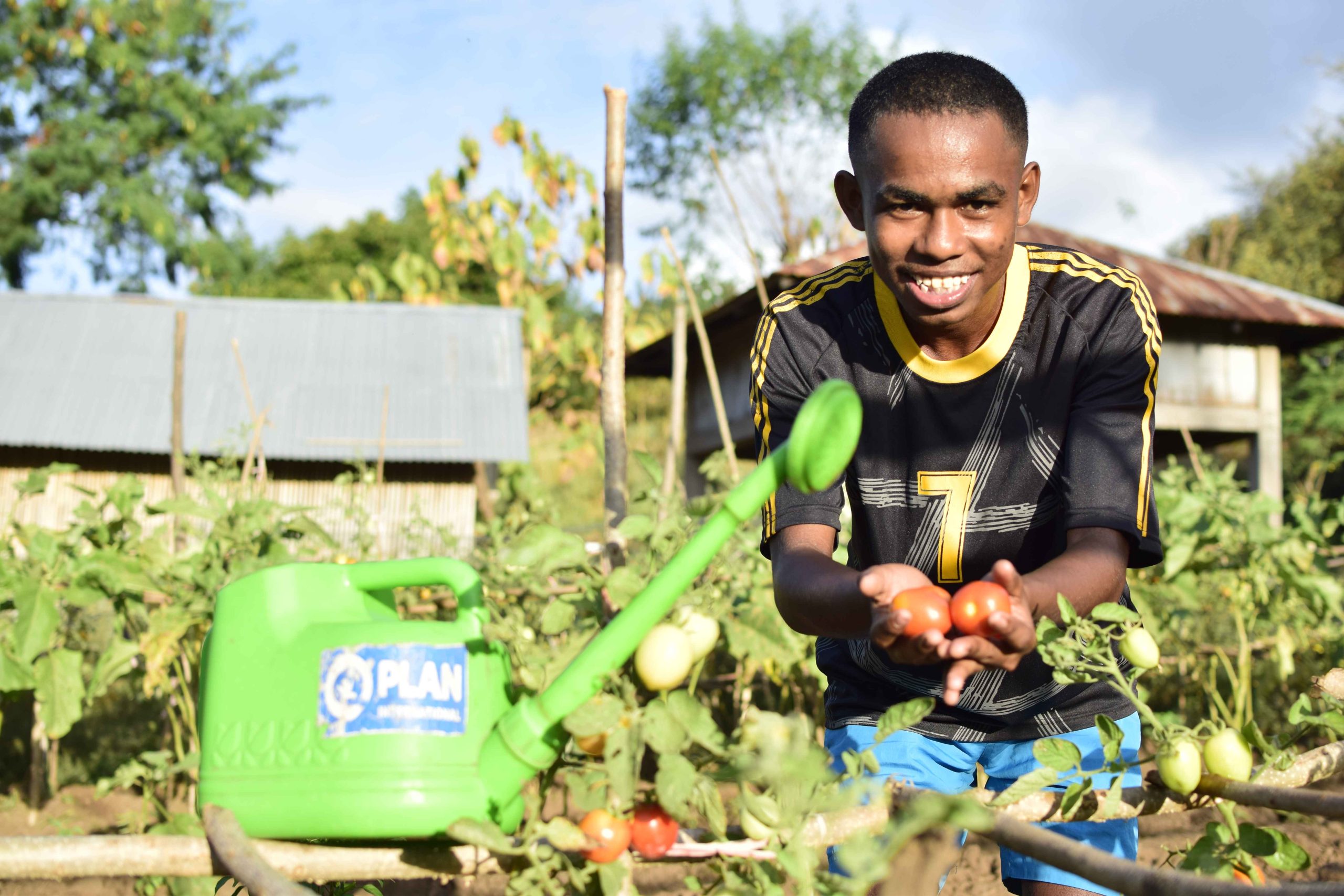
Paul and Taran: Planting Dreams in the Vegetable Garden
18 June 2025
In a small, quiet village on Lembata Island, the sound of hoes hitting the ground slowly chases away the morning silence. There, young men Paul and Taran, each 20 years old, are busy setting up new beds in their vegetable garden. On no more than 10×10 metres of land, the two are planting something more than tomatoes and eggplants, they are planting hope, determination and a future.
A few months ago, their lives were like most teenagers in the village: waking up early, helping their parents, sweeping the yard, looking after their younger siblings, and playing their favourite sport, football. Long-term productive activities were never a real option. Not because they were lazy, but because there wasn’t enough room for growth. Their formal education stopped after graduating from high school, and there were no steady jobs to be had around the village. Neither of them were interested in continuing their education to university because they aspired to be soldiers serving their country and nation.
‘At that time I was confused too, every day seemed to just pass by,’ said Paul when met in between gardening activities. ‘I also thought about migrating, but we had just graduated from high school, so we did two physical exercises to wait for the police or army test schedule,’ said Taran.
Until one day, Plan Indonesia came to bring a climate-smart agriculture training programme for village youth. This programme targets children, young people who do not have regular activities, with the aim of restoring young people’s relationship with their own land, reviving agriculture as a dignified way of life.
Paul and Taran signed up with no great expectations. The three-day training introduced them to simple farming techniques, seed selection, organic fertiliser production, and crop management. At the end of the training, each participant was asked to make a small plan, and one of them was to open a vegetable garden at home.
‘We thought we were just learning, but we received further assistance, then we were provided with tools, farming tools such as nets, goosenecks and aunties for eggplants and tomatoes,’ said Taran as he lifted a gooseneck to water the flourishing eggplants. “We started planting, planting after the training was completed. The capital came from seedlings donated by Plan Indonesia.”
Five months have passed since they started planting. From that small garden, they have 4 beds with 131 tomato trees and 3 beds with 118 eggplant trees. They sell the fresh vegetables to the villagers. The total sales result since the first harvest until this article was written reached two million five hundred thousand rupiah. A small amount for some people, but extraordinary for two village teenagers who had never imagined earning an income from the land behind their house.
More than money, what grew from the garden was confidence. Paul and Taran are not only young farmers, but also an inspiration to their peers.
The village government also took note of their steps. “We see their seriousness, not just joining in. This is a clear example of commitment and hard work,” said Muslimin, the local village head, in a brief interview. The village government then provided a stimulant fund of three million rupiah so that they could expand their gardens, add crop varieties, and buy simple farming tools.
But the support didn’t stop there. The village government also presented a strategic plan: if the garden grows and produces a stable supply of vegetables, Paul and Taran’s garden will become an official vendor to supply vegetables for the free nutritious meal programme being developed at the sub-district level.
This means that from a simple garden in their backyard, two young people can enter the supply chain of the local food system, which has a direct impact on the welfare of the community.
‘I didn’t think that growing tomatoes and eggplants could go this far,’ Paul says with a twinkle in his eye. “I used to just help my parents plant corn. Now I can manage my own garden, we sell from house to house, now they come to buy from the garden.”
Now, every morning they no longer wake up aimlessly. They have a planting calendar, production targets, and plans to add more land. More than that, they are building a system of organic farming, crop rotation, and simple financial records.
They are currently learning how to make natural compost and building simple seedling houses from bamboo and plastic. “We want our vegetables to be healthy, without chemicals. It will also be a selling point to enter the Lewoleba market,” said Taran.
Paul and Taran’s story may not make the headlines. But amidst news of urbanisation, youth unemployment and the food security crisis, these two young men from a small village offer a counter-narrative: that building the future can start from the ground we stand on.
Not all dreams have to start in the big city. Sometimes, it is enough to plant, water, and nurture them faithfully, in a small backyard garden.
Written by: Alfred Ike Wurin | Editor: Moudy Alfiana | Photo: Alfred Ike Wurin/Plan Indonesia


