

Magdalena Becomes Health Volunteer to Help Oth
06 November 2024
Magdalena, 16, says young people in her community often make poor lifestyle choices that can damage their health. “Problems include smoking, drinking alcohol, pornography and social media addiction,” she explains. “There are also other social issues such as bullying, child marriage and teenage pregnancy that affect people’s mental health.”
Indonesia’s large adolescent population faces specific health risks such as smoking, unhealthy diets and limited access to healthcare. Mental health is also growing concern. The 2022 National Adolescent Mental Health Survey found that more than 1 in 5 teenagers have anxiety problems. Left untreated, this can lead to self-harm.
To address these challenges, Plan International supported the creation of adolescent posyandus (health centres), which provide community-based health services and education to young people, making it easier for them to get information about healthy lifestyles and access support services.
When a youth posyandu opened in Magdalena’s community in East Nusa Tenggara province in 2023, she was encouraged by Plan staff to attend. “I was a bit hesitant at first because I didn’t know what to expect, but I was told it would be helpful for me and my friends. Teenagers in our community don’t know much about reproductive health or menstrual hygiene.”
Posyandus were first set up by the Indonesian government in the mid-1980s in an effort to reduce maternal and child mortality and pregnancy rates. From a combination of the Bahasa Indonesian words pos, pelayanan and terpadu, which together mean ‘integrated service point’, it is a community initiative that integrates essential health services for mothers and children in rural areas.
The addition of adolescent health services at the posyandus provides young people with a safe place to discuss and find solutions to their health problems. “I am happy and feel that I have found the right place where we adolescents can go when we have problems like child protection or reproductive health, which are often a concern,” says Magdalena, who is part of Plan International’s sponsorship programme.
As well as offering health advice, the adolescent posyandus hold regular training sessions where young people can take part in brainstorming exercises, role-playing, and practical demonstrations. “During the monthly meetings, we can freely discuss issues that affect children and adolescents and learn about topics we were not aware of before,” explains Magdalena.
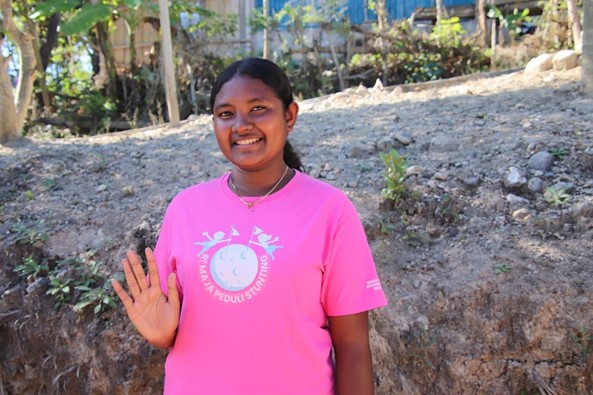
The activities are all carried out by youth posyandu cadres – young people who volunteer and are trained to provide health services for adolescents at the centres. After realising the importance of the posyandus for young people’s health, Magdalena decided to become a cadre to support teenagers in her community and develop her leadership skills.
“The adolescent posyandu is very important for me and other teenagers in our village because it helps us understand and take care of our health,” says Magdalena. “It has become a community forum that makes it easier for adolescents to understand their health problems. The posyandu needs willing volunteers who have the time to care for adolescent health services.”
As cadres, Magdalena and her fellow youth volunteers facilitate discussions on issues such as reproductive health, mental health and the effects of unhealthy behaviours such as unsafe sex, binge drinking and tobacco use. The role of the cadres is crucial for the adolescent posyandus, as they can help identify and address the health issues affecting young people in their community.
“My friends and I have learnt more about healthy eating habits and taken part in training on reproductive health, such as how to prevent unwanted pregnancies among adolescent girls,” says Magdalena. “We have learnt that preventing teenage pregnancy and tackling pregnancy- related mortality and morbidity are fundamental to achieving positive health outcomes.”
Programme coordinator Herlina Bolling explains that the project aims to develop young people’s skills and knowledge about adolescent health, particularly reproductive health. “The adolescent posyandus are essential in providing education and health services to adolescents living in rural villages. In order to develop healthily and avoid various health problems, adolescents need regular health checks to measure their height, weight and blood pressure.”
“The main benefit of adolescent posyandus is the prevention of stunting,” Herlina continues. “Ensuring that young people get enough nutrients and health information can reduce the risk of stunting in the next generation. They also receive advice on reproductive health, adolescent nutrition and early marriage prevention.”
To date, nine adolescent posyandus have been established in seven villages. In addition, 32 cadres have been trained to manage the health posts, which have been operational for two years now. “I hope the adolescent posyandus can be developed in the seven villages, including my village,” says Magdalena. “I want teenagers to stay healthy and fulfil their dreams for the future.”
Magdalena, 16, says young people in her community often make poor lifestyle choices that can damage their health. “Problems include smoking, drinking alcohol, pornography and social media addiction,” she explains. “There are also other social issues such as bullying, child marriage and teenage pregnancy that affect people’s mental health.”
To address these challenges, Plan International supported the creation of adolescent posyandus (health centres), which provide community-based health services and education to young people, making it easier for them to get information about healthy lifestyles and access support services.
The activities are all carried out by youth posyandu cadres – young people who volunteer and are trained to provide health services for adolescents at the centres. After realising the importance of the posyandus for young people’s health, Magdalena decided to become a cadre to support teenagers in her community and develop her leadership skills.
As a key component of Plan Indonesia’s stunting prevention campaign and to encourage more adolescents to join Posyandu activities, Plan International Indonesia in Soe held a competition on 13th -14th August 2024 which utilized a 5-table system and participated by 32 Posyandu cadres, significantly advanced the campaign objectives.
Through the activities of Adolescent Posyandu, adolescents’ knowledge of reproductive health improved, and their skills in managing adolescents Posyandu improved. This community service activity is also in line with other community services where the adolescent Posyandu can be used as a forum for adolescents to create a forum for coaching and understanding the importance of a healthy lifestyle, increasing adolescent knowledge about reproductive health, nutrition, reducing the incidence of juvenile delinquency.


