

Kemenko PMK and Plan Indonesia Evaluate Stranas PPA, Highlight the Effectiveness of Reducing Child Marriage Rates
04 February 2025
Child marriage continues to be a crucial issue that threatens the fulfillment of rights and the future of children in Indonesia.
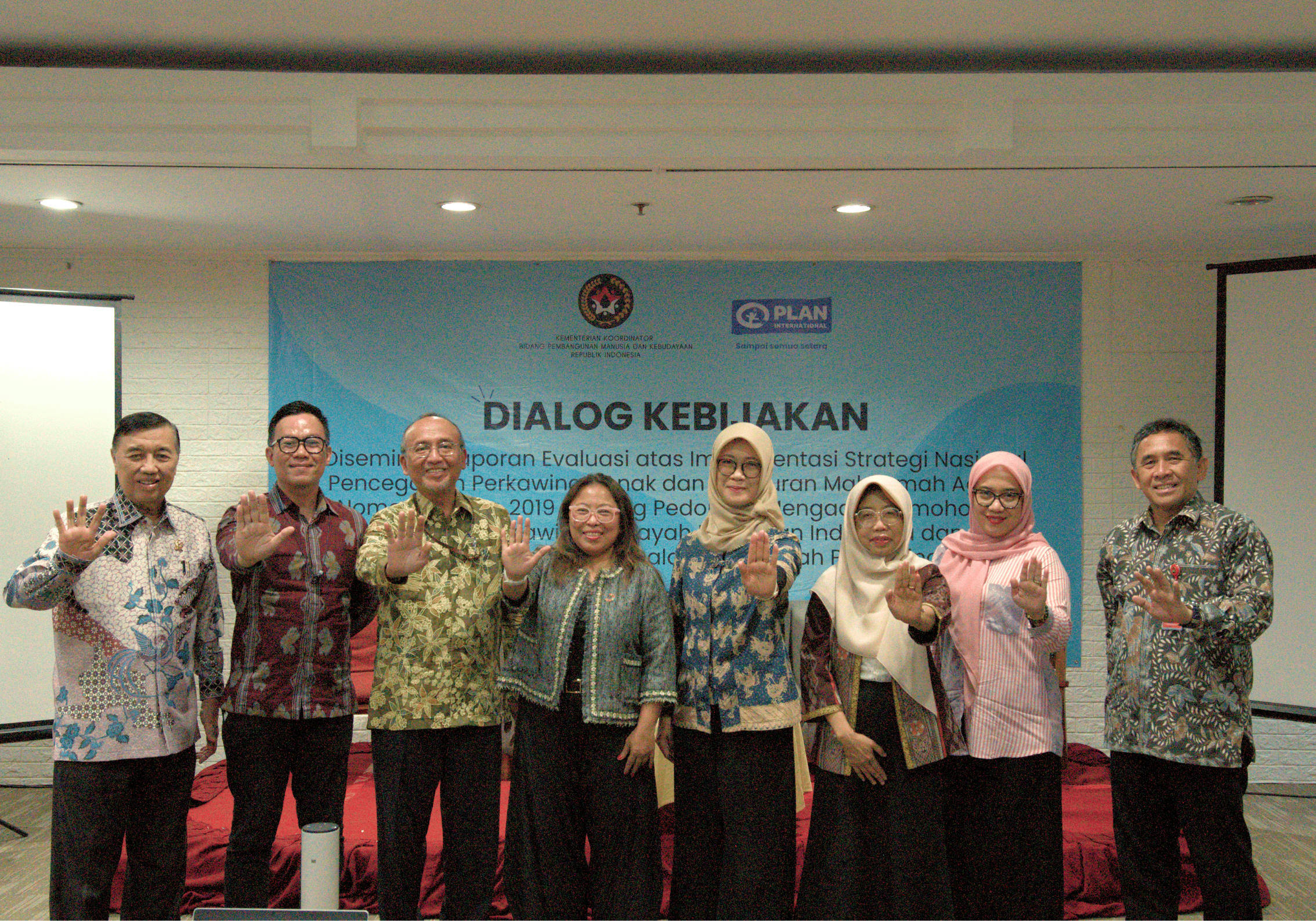
To support the elimination of child marriage, Yayasan Plan International Indonesia (Plan Indonesia) in collaboration with the Coordinating Ministry for Human Development and Culture (KemenkoPMK) held a policy dialogue as well as dissemination of a report entitled “Evaluation of the Implementation of the National Strategy for the Prevention of Child Marriage (Stranas PPA) and Supreme Court Regulation (PerMA) Number 5 of 2019 concerning Guidelines for Adjudicating Marriage Dispensation Requests in Plan Indonesia’s Working Areas and the Role of Friend of the Court in Preventing Child Marriage”.
This report covers five locations, namely Sukabumi, West Java, West Lombok, North Lombok, and Mataram, West Nusa Tenggara, and Lembata and Nagekeo. East Nusa Tenggara. It also involves participants in the Gema Cita, Bloom, Let’s Talk, and Yes I Do programs, which are Plan Indonesia’s initiative programs to prevent child marriage.
The aim is to evaluate the effectiveness of policies in reducing child marriage rates, as well as protecting children’s rights, especially in the marriage dispensation process. The findings are as follows:
-
Low Participation of Child Marriage Victims to Continue Education
Although the government through the Office of Women’s Empowerment, Child Protection, Family Planning, and Community Empowerment (DP2KBP3A) has provided programs such as Open School and Study Group of Packages, the participation of child marriage victims to continue their education remains low. Contributing factors include social stigma, low family support, and children’s reluctance to leave home. This shows the need to strengthen education to children and parents on the importance of education.
-
Unoptimal recording of child marriage cases
The lack of recording of child marriage cases, both through marriage dispensation and informally, makes policy monitoring and evaluation difficult. Accurate data is needed to formulate targeted child protection policies.
-
Subjective Judgment in Granting Dispensation for Marriage
The reasons for granting marriage dispensation are often based on subjective considerations such as “fear of harm.” This assessment tends to override aspects of age adequacy and psychological maturity of the child. Plan Indonesia recommends that the Supreme Court require certification of juvenile judges to improve the quality of decisions.
-
Lack of Understanding of Women’s and Children’s Perspectives among Community Leaders and the Police
The views of religious and traditional leaders, which are limited to the fiqh of marriage without considering positive law, pose a challenge to the elimination of child marriage. Educational programs for community leaders are needed to raise awareness about children’s rights.
In addition, the handling of cases of sexual violence against women and children is still constrained by the limited number of police personnel who have the perspective of protecting women and children. Comprehensive and integrative training to support the implementation of the Juvenile Justice System (SPPA) is an urgent need.
-
Limited Budget for Educational Programs
Reproductive health and child protection education programs are often stalled due to budget constraints. Continued budget support from the government is needed to ensure program sustainability in vulnerable areas.
Joint Efforts to Fight Child Marriage
Deputy of the Coordinating Ministry for Human Development and Culture, Woro Srihastuti Sulistyaningrum, said that although regulations such as laws, presidential regulations, and regulations are available, the main challenge is still in implementation. Therefore, collaboration with youth, religious leaders, traditional leaders, and organizations such as Plan Indonesia is also crucial in preventing child marriage.
“Kemenko PMK has a mandate to focus on education, health, and protection of girls. Although the data shows a downward trend in child marriage nationally, there are still provinces with an increase in cases, such as Riau, South Sulawesi, Jambi, and Central Sulawesi. Evaluation of national strategies and regulations needs to be carried out continuously so that the policies implemented remain relevant and effective in preventing child marriage,” she said.
Dini Widiastuti as Executive Director of Plan Indonesia added, “Stranas PPA and PerMA 5/2019 provide a strong framework, but implementation challenges still exist. Therefore, through this report we encourage policy revisions to narrow the gap of marriage dispensation, increase the effectiveness of education programs, expand access to information and reproductive health services for young people, and strengthen the coordination of various parties for effective policy implementation,” she explained.
In this event, Plan Indonesia also raised the role of the Gema Cita program which has been implemented since January 2022 in Sukabumi, West Lombok and Nagekeo. One of its initiatives, Sahabat Pengadilan, in collaboration with the Giri Menang Religious Court in West Lombok, is a forum for children to voice their opinions in efforts to prevent child marriage.
Fira, a representative of Kaum Muda Gema Cita, presented recommendations, including maintaining the “From Children, By Children, and For Children” approach to strengthen children’s role as agents of change, providing ongoing education to children, parents, and communities, and implementing a culture-based approach involving religious and traditional leaders in areas with strong cultural influence.


