

Collective Action for an Equal World
04 December 2023
On December 3, the world celebrates the International Day of Persons with Disabilities (IDPD), and this year’s theme, “United in action to rescue and achieve the SDGs for, with and by persons with disabilities,” underscores the global commitment for inclusivity. This commemoration represents a collective action to foster equality for individuals with disabilities, ensuring the fulfillment of their needs, rights, and well-being, particularly among children. This aligns with SDG 6, emphasizing access to adequate water and sanitation.
Persons with disabilities face challenges, exacerbated by extreme climate changes like droughts, rising temperatures, and prolonged dry seasons. According to data from Indonesia’s Meteorology, Climatology, and Geophysics Agency (BMKG), the country experienced an average temperature of 27.0°C in September 2023, marking the fourth-highest temperature since observations began in 1981.
In 2023, the Meteorology, Climatology, and Geophysics Agency (BMKG) identified four regions in East Nusa Tenggara (NTT) Province with the potential for drought. These areas are sub-districts in Kupang Regency, Kupang City, Malaka Regency, and Sikka Regency. Correspondingly, data from the Regional Disaster Management Agency (BPBD) of West Nusa Tenggara Province (NTB) reveals three areas at risk of potential drought, including several sub-districts in Dompu Regency, Bima Regency, Bima City, East Lombok Regency, West Lombok, and Sumbawa.
Several factors contribute to water scarcity in NTT and NTB Provinces, including limited water sources, lack of access to water at the district or city level, illegal logging, land burning, and so on. This drought exacerbates the challenges faced by marginalized groups, notably children, women, the elderly, and individuals with disabilities, impacting their overall well-being and survival.
Persons with disabilities encounter various challenges, including physical, institutional, and societal barriers while accessing water, sanitation, and hygiene (WASH) facilities, both at the household and community levels. These obstacles elevate the susceptibility of these vulnerable groups to infections, injuries, and compromised safety.
This contradicts the SDG 6, which strives for universal access to clean water and sanitation, including persons with disabilities. Even children with disabilities continue to be deprived of their full rights, revealing a prevailing underestimation and neglect of persons with disabilities within society.
The prevailing assumption that persons with disabilities are burdensome, helpless, and incapable significantly holds back the untapped potential within this community. The facilities at home are notably lacking, especially as many aspects related to water and sanitation remain inaccessible to those with disabilities. For instance, the absence of handrails, ramps, accessible housing structures with stairs, and similar features further compounds these challenges. Moreover, the escalating issue of water scarcity poses additional barriers for persons with disabilities in asserting their rights.
During periods of drought, persons with disabilities often encounter difficulties accessing clean water sources, limiting their capacity to maintain personal hygiene. The scarcity of water complicates the management of basic needs such as showering, handwashing, or cleaning disability aids. Additionally, the drought heightens the risk of skin diseases and infections, negatively impacting mental health. The heightened susceptibility to stress, anxiety, or depression further underscores the importance of addressing the challenging situations faced by individuals with disabilities.
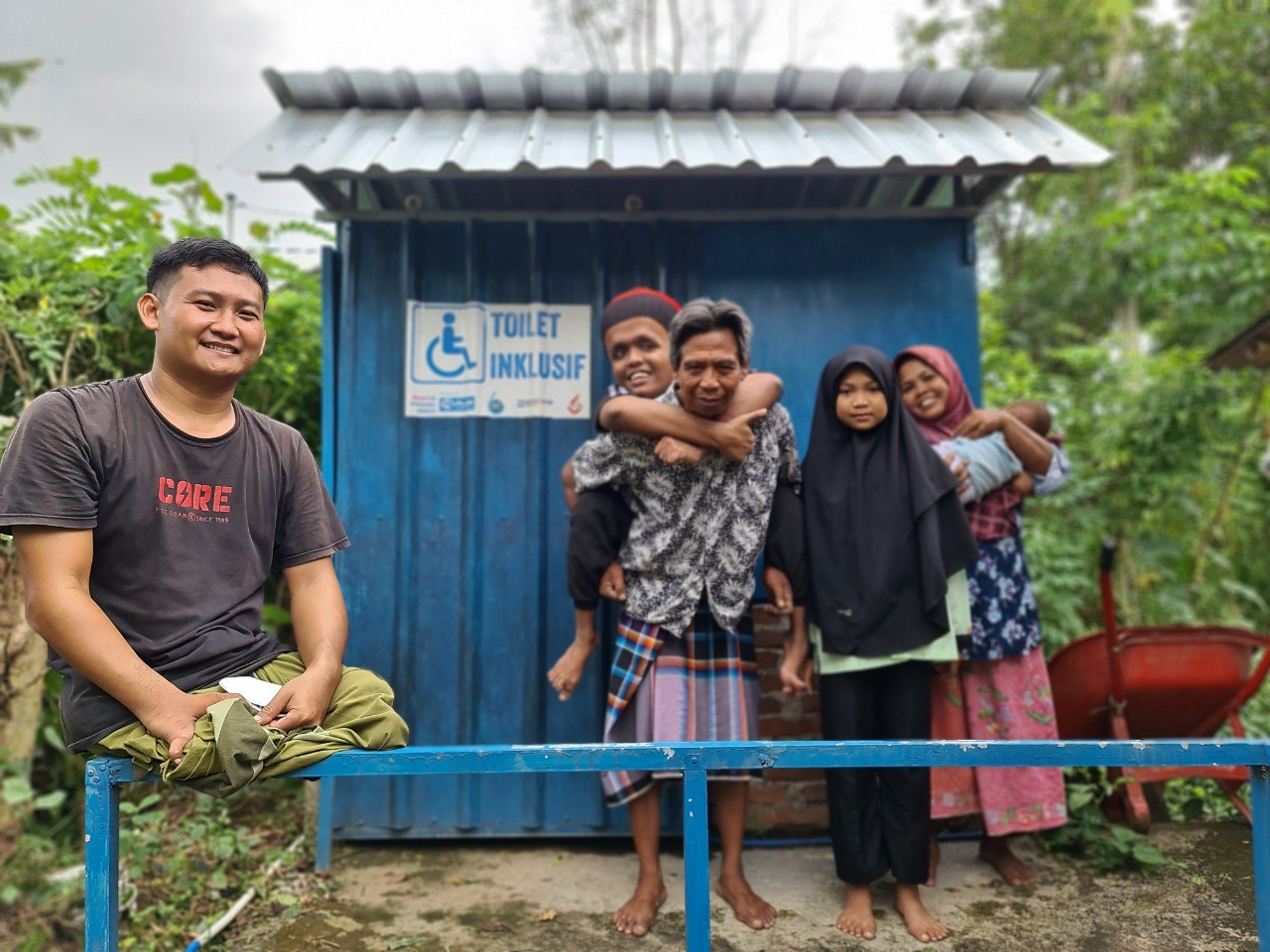
Plan Indonesia, through the Women and Disability Inclusive WASH and Nutrition Sensitive (WINNER) project and the Water for Women (WfW) STBM GESI (WASH GEDSI) program, advocates for the meaningful participation of persons with disabilities in every stage of the water and sanitation development process, from planning to evaluation. This commitment aligns with the overarching development principle of leaving no one behind.
As of November 2023, Plan Indonesia has partnered with 16 disability and women’s organizations in the provinces of NTT and NTB. The collaboration aims to promote the realization of the right to water and sanitation while ensuring the meaningful involvement of persons with disabilities in managing Community-Based Total Sanitation (STBM) teams. Plan Indonesia’s initiatives also facilitate discussions among stakeholders, particularly the Water and Sanitation Working Group, and disability organizations to explore effective ways of engaging persons with disabilities in water and sanitation development. Notably, the implementation involves 331 children and 1593 adults with disabilities, and 80 accessible toilet facilities for persons with disabilities have been built in supported areas.
The commemoration of IDPD 2023 serves as a crucial reminder for the government to persist in implementing strategic measures for an inclusive water and sanitation system accessible to all segments of society, with a particular emphasis on ensuring adequacy for persons with disabilities. This is especially critical in regions susceptible to drought, such as certain districts in NTT and NTB Provinces. Local governments must exhibit innovative approaches to foster a just and inclusive society. Recognizing, respecting, and implementing the rights of persons with disabilities at all levels is not only a matter of human rights but is also fundamental to achieving sustainable development and national prosperity.
Beyond government efforts, the private sector should contribute to ensuring inclusive water access through initiatives like Corporate Social Responsibility (CSR). The private sector can undertake water projects targeting improved accessibility and availability, particularly in areas possibly overlooked by government interventions. Moreover, the private sector holds the potential to introduce innovative solutions to water resource management, including efficient and sustainable technologies for enhanced water distribution and sustainability. Engaging the private sector in endeavors for inclusive water provision is a pivotal step toward realizing SDG 6, which aims for universal access to clean water and sanitation.
Meeting the inclusive water and sanitation needs of society is paramount for building resilience to climate change, especially for persons with disabilities. By fostering inclusivity in addressing water and sanitation needs and actively involving persons with disabilities in the process, we pave the way for a community that can withstand the impacts of climate change. While challenging, this goal is not insurmountable with widespread efforts. Let us collaboratively create an inclusive environment for everyone. Happy International Day of Persons with Disabilities 2023! Let’s encourage collective action to shape a world of equality.


