

At the Mount Ebulobo Foothill, I Learned to Grow
14 October 2026
Nensi’s small journey with Plan Indonesia amidst dreams, responsibilities, and changes toward hope and aspirations
Childhood on the Slopes of Ebulobo
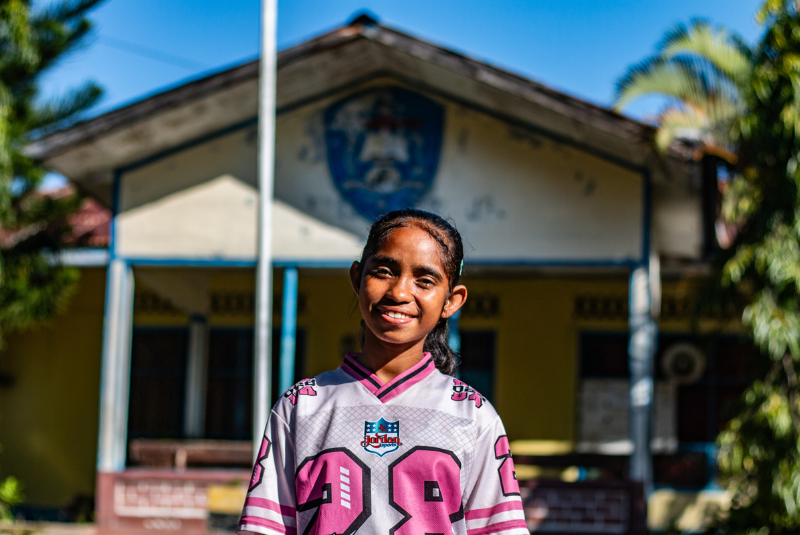
My name is Nensi. I am currently 13 years old and in the eighth grade. I come from a village nestled at the foot of Mount Ebulobo, Nagekeo Regency.
From our village, the mountain always stands calmly in the distance. Its slopes are covered with dense green trees. Tucked between these trees are the villagers’ farms, which serve as the daily lifeline for our families.
Most people in our village work as farmers. Our lives revolve around the seasons and the farm yields. Almost every day, parents have to walk about five kilometers to reach their fields. They leave early in the morning and often return only when darkness begins to fall.
Since I was little, I was used to seeing my mother cook before sunrise. After preparing breakfast and packed meals, both my mother and father would head off to the farm. Because our parents spent most of their time in the fields, my siblings and I learned to be independent from a young age.
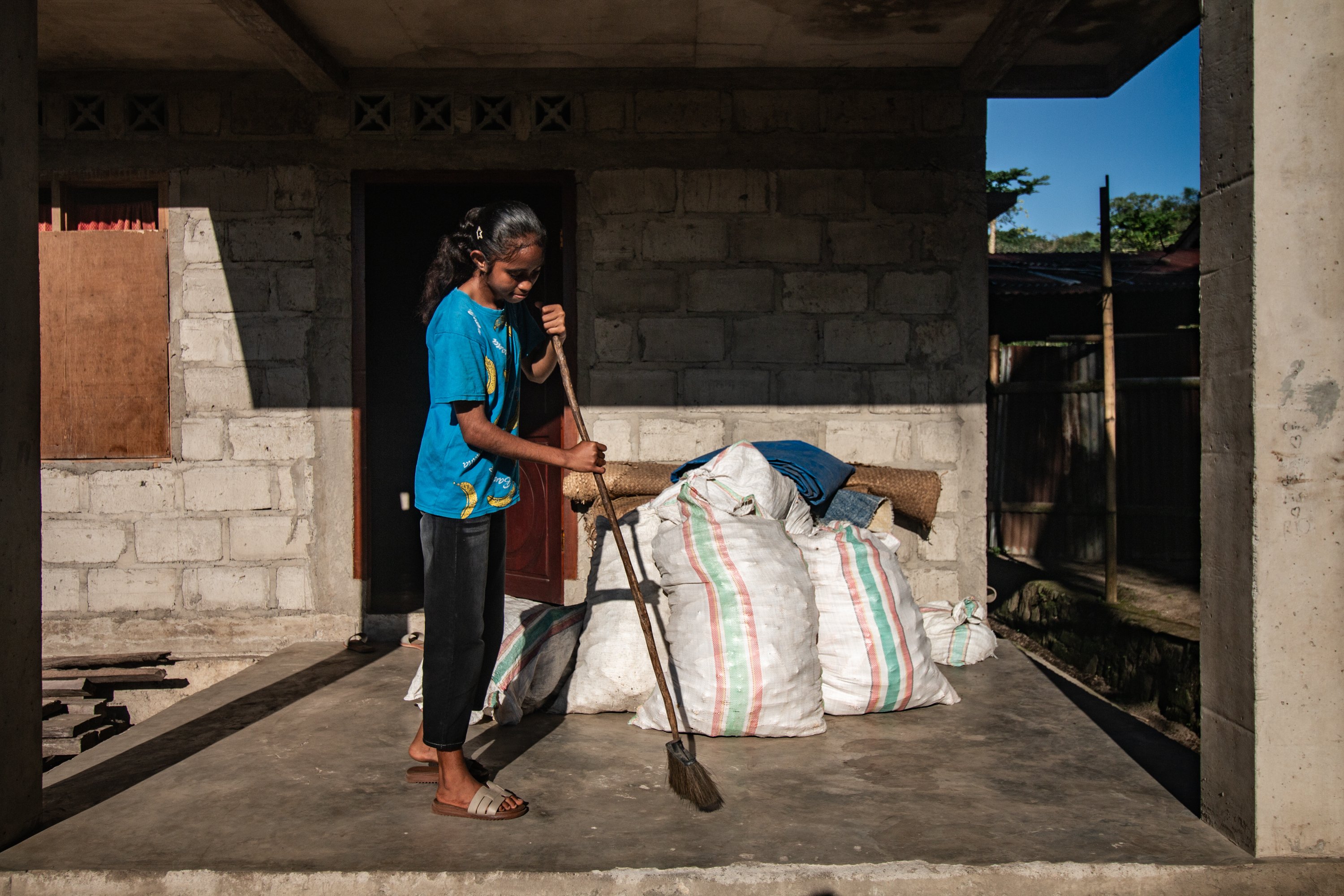
However, back then, I didn’t fully understand the true meaning of responsibility. I preferred playing with my friends over helping with household chores. My mother often scolded me for being lazy to wake up early or for letting house chores pile up until they returned from the farm.
My life’s journey began to change when I became a sponsored child with Plan Indonesia while I was in the second grade.
At that time, I didn’t quite grasp what it meant to be a sponsored child. I simply felt happy to receive care and support for my education. For a farming family like ours, receiving school supplies, stationery, blankets, toiletries, and hygiene essentials was an immense help in our daily lives.
Here is the English translation of the remaining story, maintaining the inspiring, reflective, and humanitarian NGO tone:
One of the experiences I remember most vividly was when I first started writing letters to my sponsor. I shared stories about my life, my school, my family, and our daily activities in the village. Through letter writing, I learned how to express myself, craft stories, and share my experiences with others.
Beyond educational assistance, my friends and I frequently received education and hygiene support kits, which kept us motivated to learn and encouraged us to maintain clean and healthy living habits.
During the COVID-19 pandemic, our family also received health kits containing items like face masks and hygiene products. This support meant the world to us at a time when so many families were facing hardship and limitations.
Back in primary school, I was known as an active and outspoken kid. I loved joking around, but sometimes my jokes crossed the line. If a friend got angry or cried because I teased them, I used to brush it off as a harmless prank.
My perspective began to shift when I entered junior high school and participated in various activities facilitated by Plan Indonesia.
Through child protection workshops and the “No, Go, Tell” campaign, I learned that every child has the right to feel safe and protected from violence.
I learned that:
- No means having the courage to say no to behavior that feels uncomfortable or unsafe.
- Go means walking away from risky or dangerous situations.
- Tell means having the courage to report to a trusted adult if you experience or witness abuse.
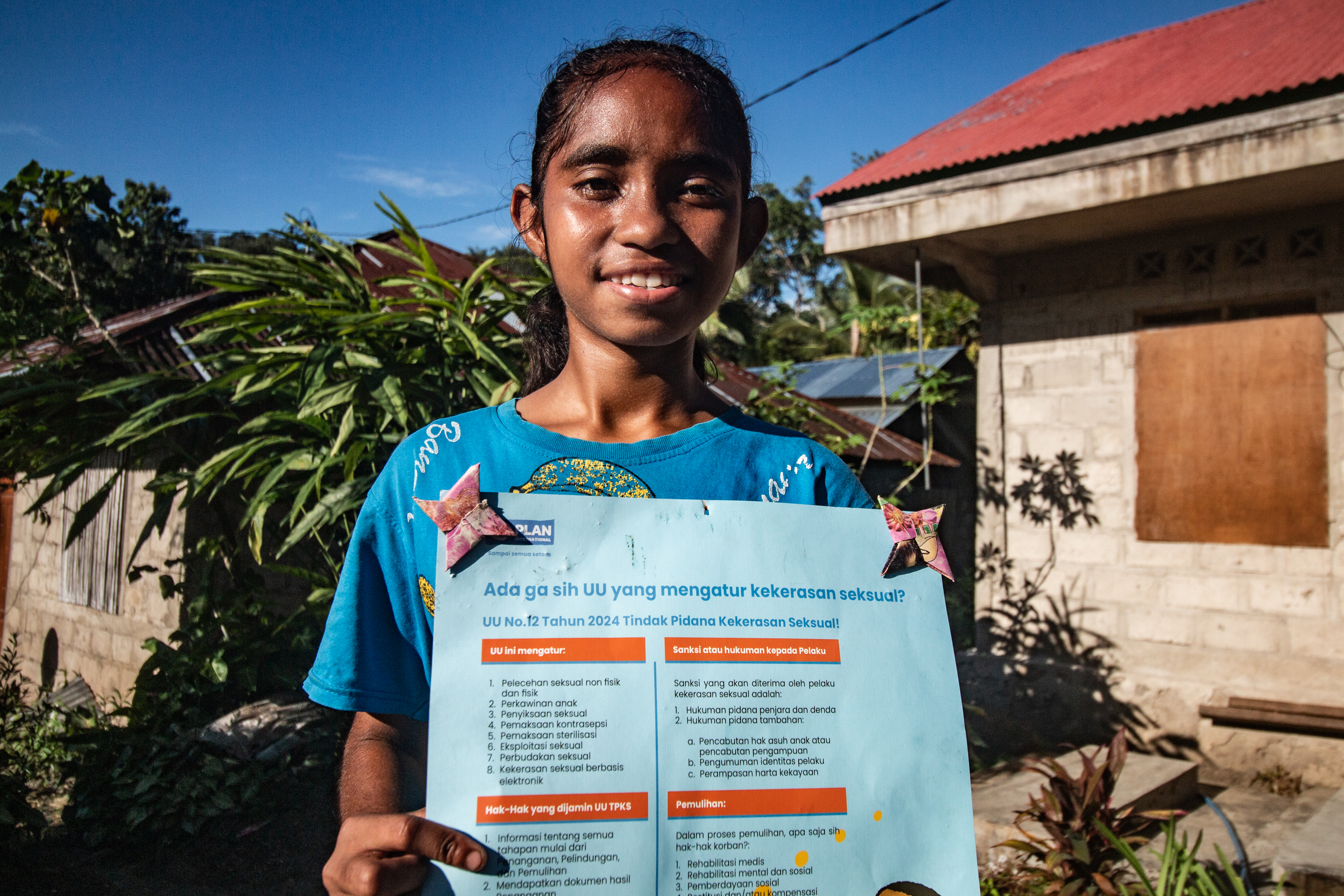
Through these discussions, I came to realize that violence isn’t always physical—it’s not just about hitting or shouting. Words that make others feel ashamed, scared, or sad are also forms of violence.
I reflected on how I used to tease my friends just for fun. From then on, I began changing my attitude step by step. I became more mindful when joking, learned to apologize when I made mistakes, and made a conscious effort to understand other people’s feelings.
One of the most transformative experiences of my life was joining the Future Planning Class (Kelas Mapan).
In this class, I learned about many things I had never understood before—such as self-discovery, self-worth, reproductive health, building healthy relationships, planning for the future, avoiding risky behaviors like smoking, unhealthy peer pressure, unsafe internet use, and the importance of continuing my education.
Through the Mapan class, I realized that the future doesn’t just happen on its own; it must be planned and actively pursued starting today.
I also learned that every child—including every young girl—has the right to dream, set goals, and make good decisions for their own future.
A Little Notebook That Transformed My Habits
The shift within me became even more noticeable when participants in the Mapan class were encouraged to create daily schedules.
I started keeping a small notebook detailing my daily routine from morning until night. It taught me how to balance my time between going to school, helping my parents, studying, playing, and resting.
Slowly but surely, I began waking up early without my mother having to remind me. I made it a habit to wash my own dishes after meals, tidy up the house, and assist with other daily chores.
Small tasks that once felt like heavy burdens became habits I performed out of my own initiative.
This newfound sense of responsibility carried over into our home life.
Since I finish school earlier than my two older siblings who are in senior high school, I often help look after my younger sibling while my mother and father are still out in the farm.
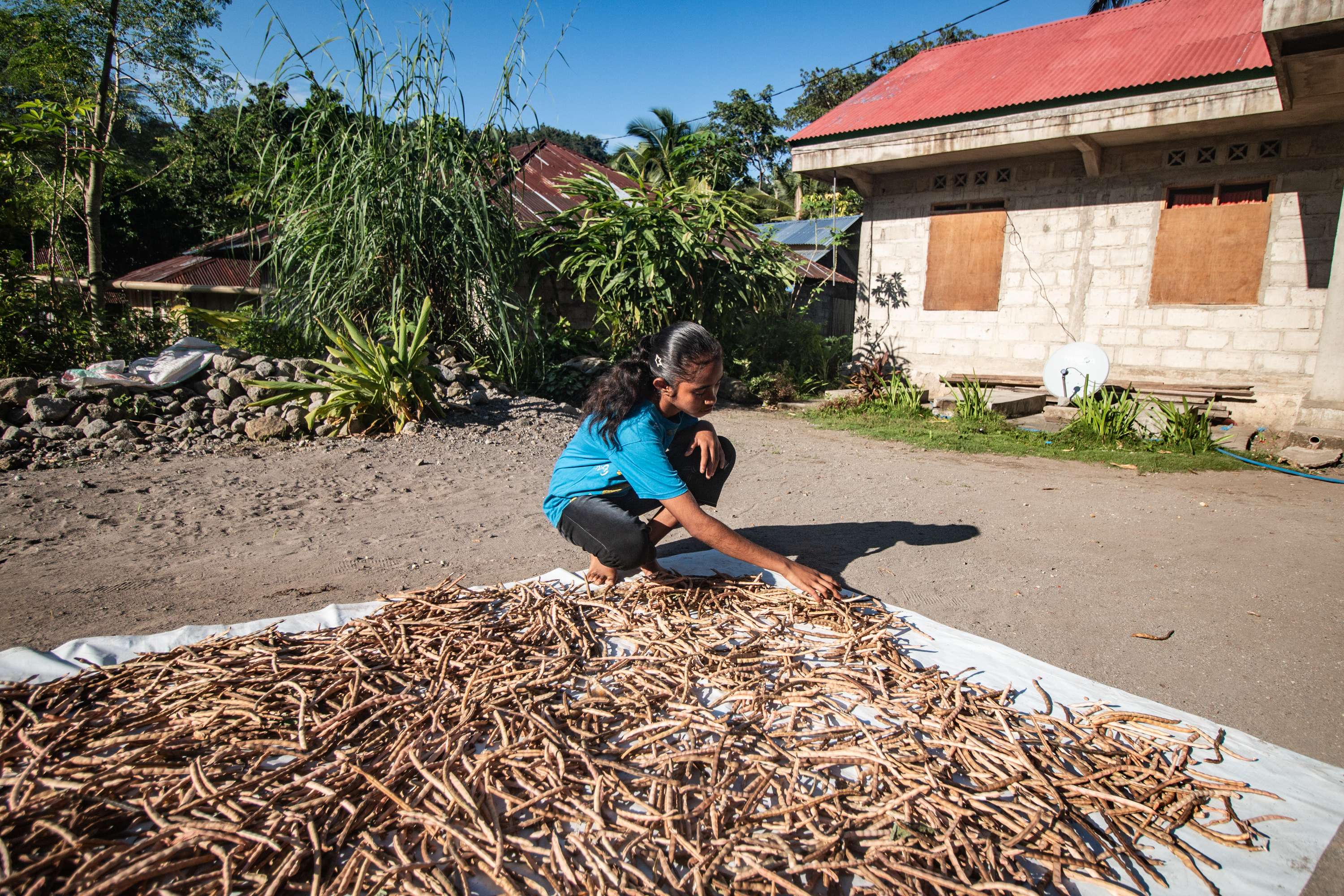
I play with my younger sibling, feed them, and keep an eye on the harvested crops drying in the yard. If it starts to rain, I help gather the dried corn or beans.
I used to view these chores as a burden. Now, I understand that helping my parents is a meaningful expression of care and responsibility toward my family.
Alongside learning discipline and responsibility, I was also given opportunities to join various children’s activities organized by Plan Indonesia, such as youth gatherings, basic leadership training, and peer group activities.
Through these events, I learned to speak in front of my peers, share my opinions, and collaborate with others.
At first, I was too shy to speak in front of a group. But the facilitators always ensured that every single child had an opportunity to express their views.
Gradually, my confidence grew. I learned not only how to listen, but also how to voice my ideas, ask questions, and actively participate in discussions regarding the lives of children in our village.
Over time, the atmosphere at home transformed as well.
Where we used to be wrapped up in our own separate chores, we now gather more frequently for dinner. We share stories about our day.
I often share the things I learn from Plan Indonesia’s activities. My parents love listening to my stories about school, my friends, and my aspirations.
These simple moments of togetherness have brought our family much closer and warmer.
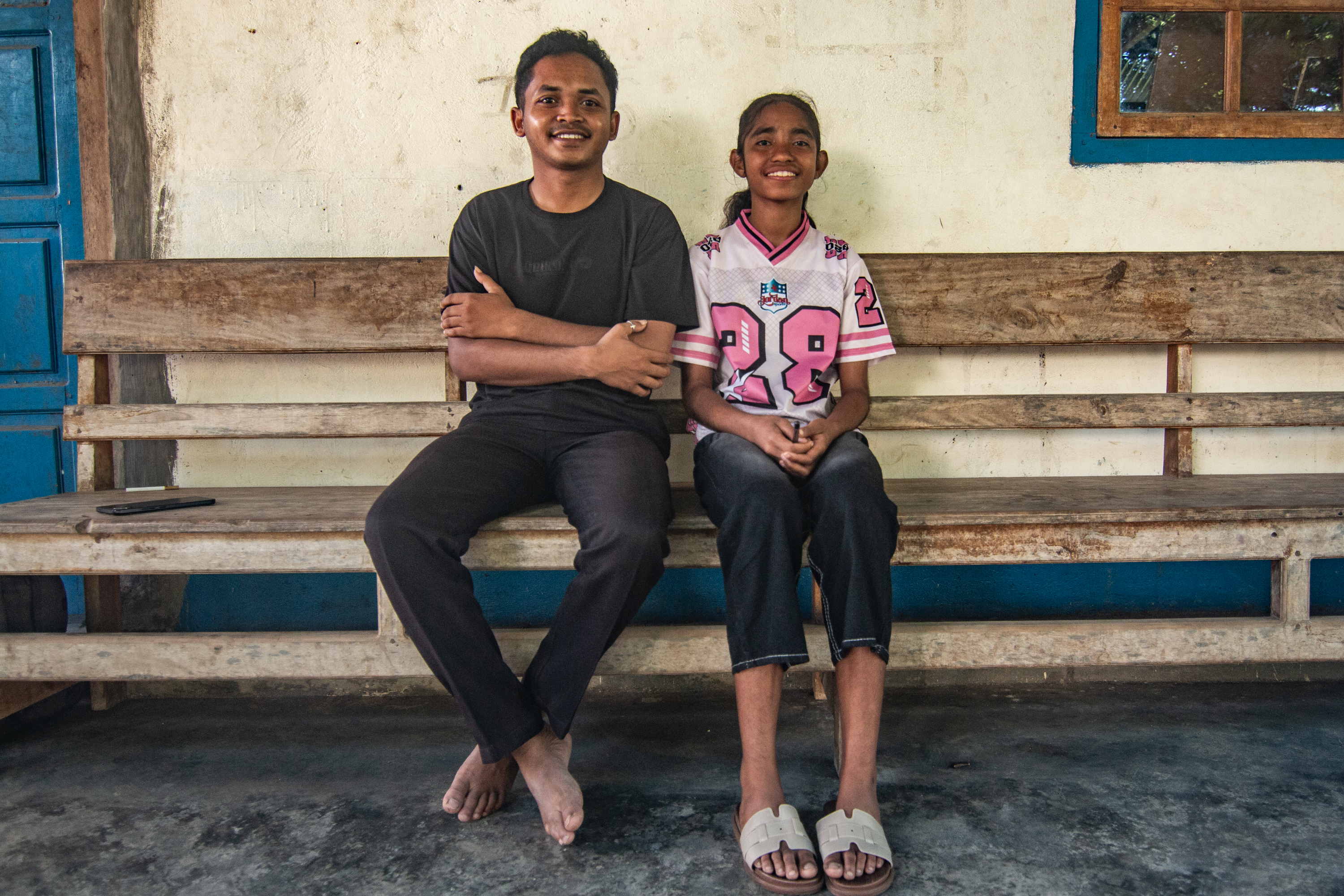
A Dream Growing Along the Journey
Looking back on this journey, I feel that so much within me has transformed.
I have become more disciplined, more empathetic toward others, more responsible at home, and more confident when interacting with my peers.
At school, I am more active in student organizations and find it much easier to collaborate with others without resorting to teasing or hurting anyone.
Today, I hold a dream of becoming a religious nun. I often see the nuns at school and church helping others with pure sincerity. I want to become someone who can serve others and bring positive value to those around me, just like them.
Behind that dream lies a simple hope: I want to make my mother and father happy and take care of them as they grow older.
To Plan Indonesia and the sponsors, I want to express my deepest gratitude for being a part of my life journey since childhood.
Through all your support—from child sponsorship programs, letter exchanges, educational and hygiene kits, child protection campaigns, and family gatherings, to the Mapan classes and various learning spaces—I have gained so many priceless lessons.
I have learned that big changes do not always begin with grand gestures.
Sometimes, change starts with the simplest things: waking up on time, washing your dish after a meal, looking after a younger sibling, respecting a friend’s feelings, finding the courage to speak up, and striving every day to become a better version of yourself.
At the foot of Mount Ebulobo, I learned that every child deserves the opportunity to grow. And I am deeply grateful to be one of the children given that chance through this journey with Plan Indonesia.
Written by: Agus Haru | Editor: Dewi Sri Sumanah| Photo: Agus Haru / Plan Indonesia


