

6 Years of Realizing Climate Resilient and Inclusive Access to Water and Sanitation in Manggarai
05 December 2024
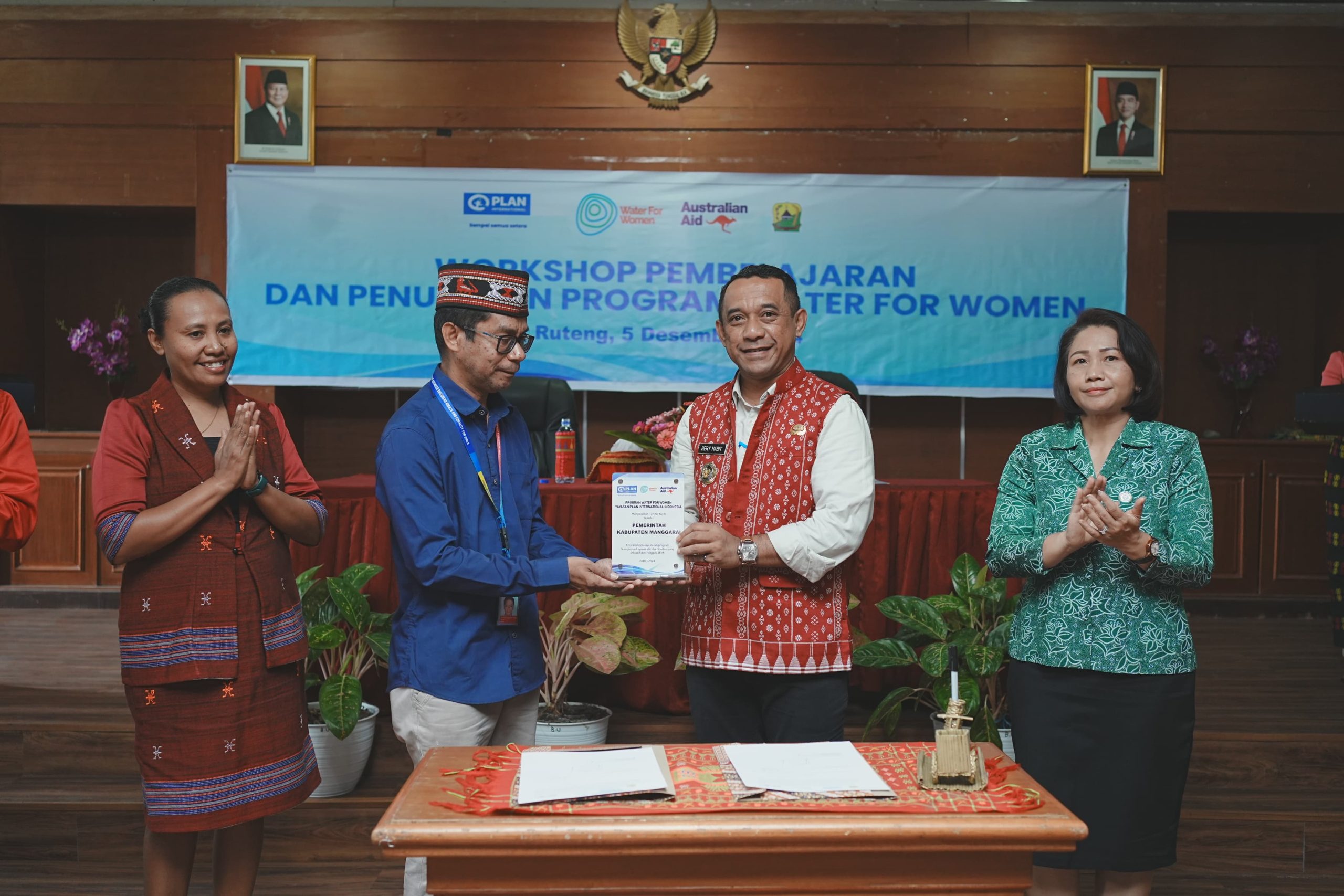
Ruteng, 5 December 2024 – Manggarai successfully achieved pillar 1 (Stop Defecating) and pillar 2 (Handwashing with Soap) of Community-Based Total Sanitation (STBM) with the support of Yayasan Plan International Indonesia (Plan Indonesia) through the Water for Women (WfW) program. Kabupaten Manggarai and Plan Indonesia realized climate-resilient and inclusive access to water and sanitation by involving more than 600 young people, more than 1500 women, and nearly 100 people with disabilities.
At the closing handover of the program to the Government of Kabupaten Manggarai today (05/12), the Regent of Manggarai, Herybertus G.L. Nabit, expressed his appreciation to WfW who continues to strive to create access to climate-resilient water and sanitation with all communities including vulnerable groups, namely children, women, and people with disabilities.
“Kabupaten Manggarai has sufficient water resources, but it is very important to manage them well. We are grateful that the WfW program is here to encourage several things that can be a solution to the water problem in Manggarai,” said Herybertus.
Sammy Apsalon Niap, Area Manager of Plan Indonesia explained that since 2018, the WfW program has assisted 12 schools and 18 health centers in 60 villages in Sumbawa Regency to improve water and sanitation services that are climate resilient and gender equitable. In addition, Plan Indonesia also encourages safe sanitation through the Fecal Sludge Treatment Plant (IPLT) which has been included in the 2025 work plan of the Public Works and Public Housing Regional Government Organization (OPD PUPR).
Integrative Water Resources Management
Limited water resources often cause conflicts for communities. The Integrated Water Resources Management Forum (PSDAT) has been activated with assistance from the WfW program. The involvement of all lines of society, such as women’s organizations, indigenous peoples, and disability communities is also the focus of the PSDAT forum to achieve inclusive and equal access to water.
Sabinus Ngadu, Chairperson of the Manggarai District Disability Consortium, expressed the importance of inclusive water access.
“The benefits of what we do today will be felt by future generations. Therefore, the impact must be inclusive and equitable for all groups,” said Sabinus.
During the six years of implementation, the WfW Program has directly impacted nearly nine thousand people in Kupang City, Manggarai Regency in East Nusa Tenggara and Sumbawa Regency in West Nusa Tenggara including marginalized groups namely women, girls, people with disabilities, and the elderly. Furthermore, since 2018, WFW has contributed to the achievement of the five pillars of Community-Based Total Sanitation (STBM) for Manggarai and Sumbawa.
(***)


